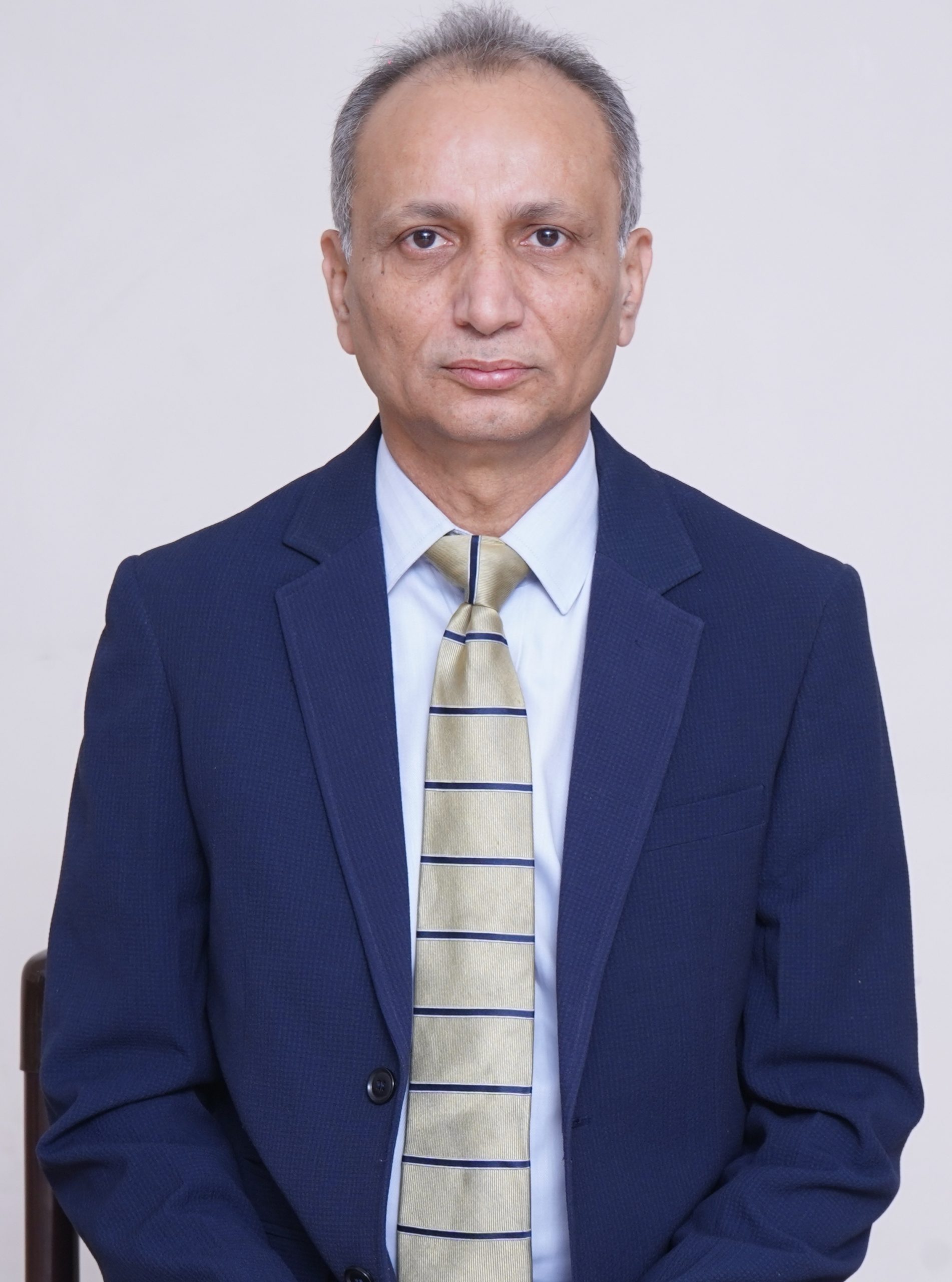
Prof.Dr.Rashid Naseem - College of Medicine
It is an honor for us that Liaquat College of
Medicine and Dentistry has successfully completed
twenty years of it academic life with recognition
from Pakistan Medical and Dental Council and
affiliation with Jinnah Sindh Medical University,
Karachi.
The environment at the college is peaceful, pleasant
and disciplined.
Our graduates recognize their place in a dynamic and
rapidly changing health care environment and have a
life-long commitment to continued professional
development.
We have highly experienced, qualified and devoted
faculty members who try to equip the students with
standard skill-based quality education which can
help them to become competent
professionals.
I welcome the newly admitted students and pray to
ALLAH Almighty that His Blessings and Guidance allow
us to guide these students to become highly skilled
and dedicated healthcare professionals.
Prof.Dr.Asif Quereshi - College of Medicine
"At Liaquat College of Medicine and Dentistry, we are dedicated to fostering excellence in medical and dental education,
research and patient care. Our commitment to academic excellence, innovation and compassionate care sets us apart
as a leader in medical and dental education in the region.
Through our dynamic curriculum, state-of-the-art facilities and experienced faculty members, we strive to provide our students with the knowledge,
skills and values necessary to excel in their chosen fields and make meaningful contributions to healthcare.
I wish our students a successful future as healthcare providers!".
• Student-centred, integrated curriculum,
• Interactive teaching.
• Histology practical.
• Formative assessment aligned with learning outcomes. (Module test)
• Mentorship.
• Academic support (faculty always available to help the students in their studies)
• Co-curricular activities (Role Play during neurosciences module)
• Professional development through workshops, CHPE course.
• Academic activities through lectures, demonstrations, tutorials and PBL&SDL.
• Non-academic activities, role play, student week.
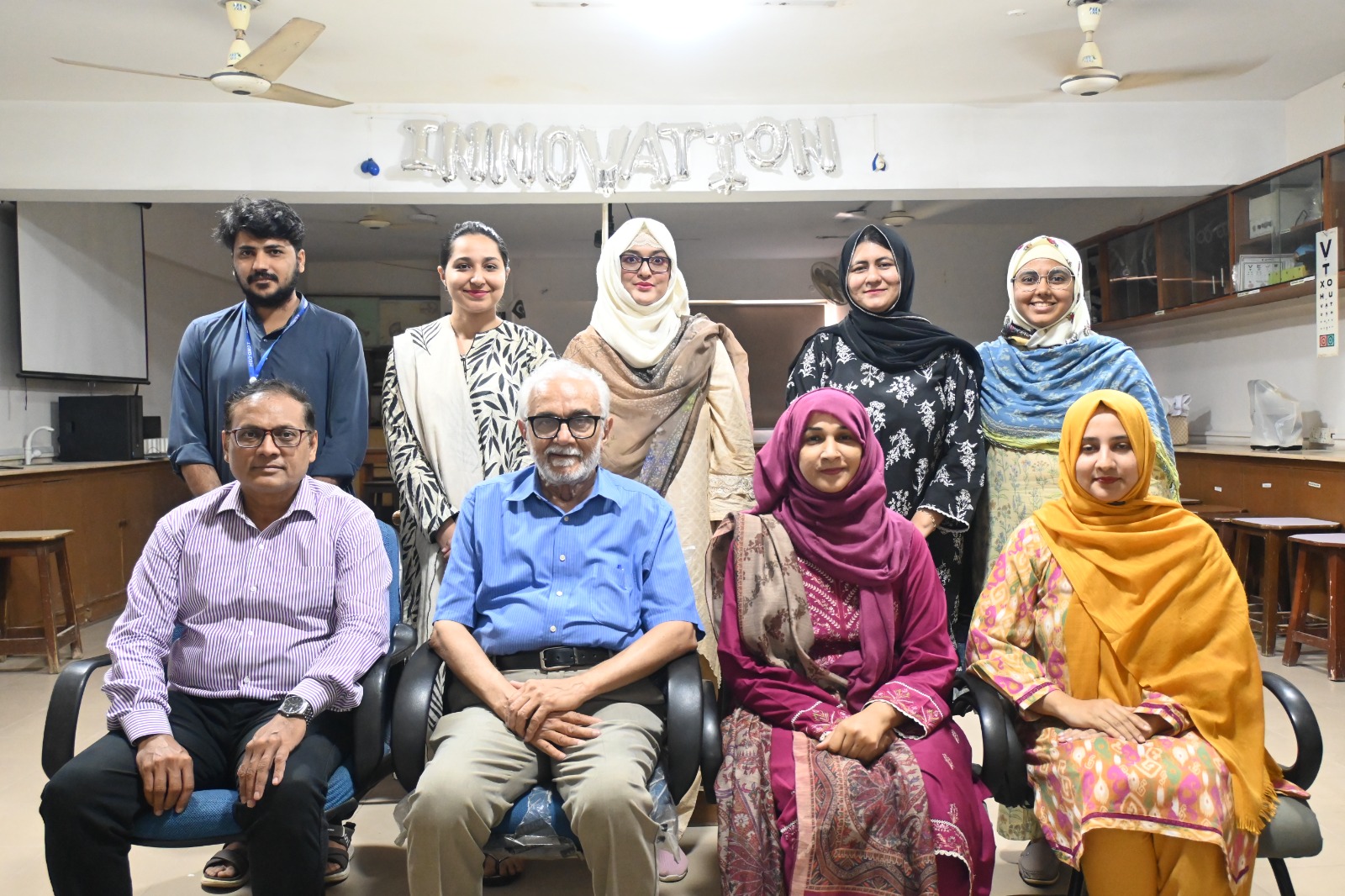
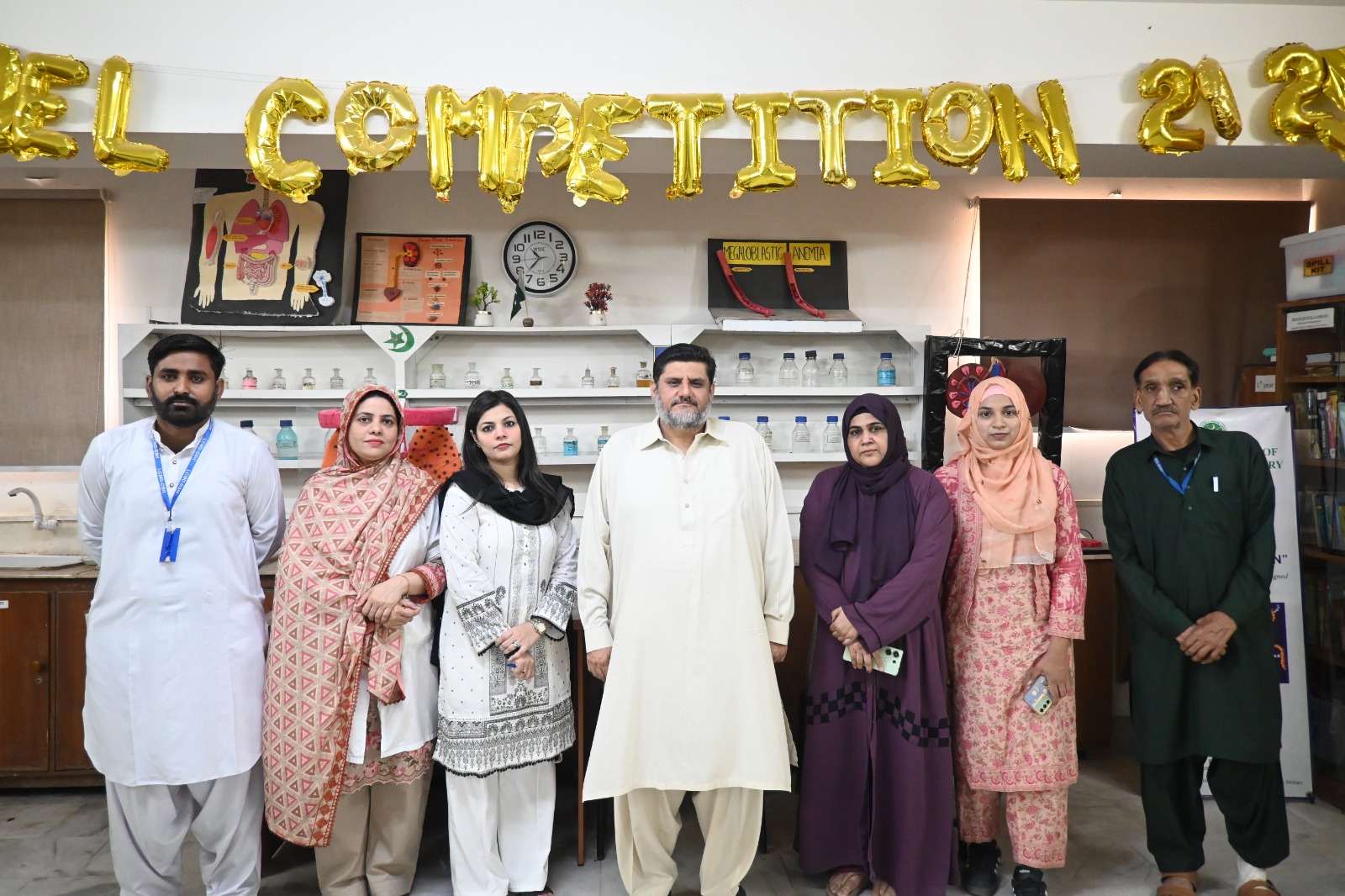
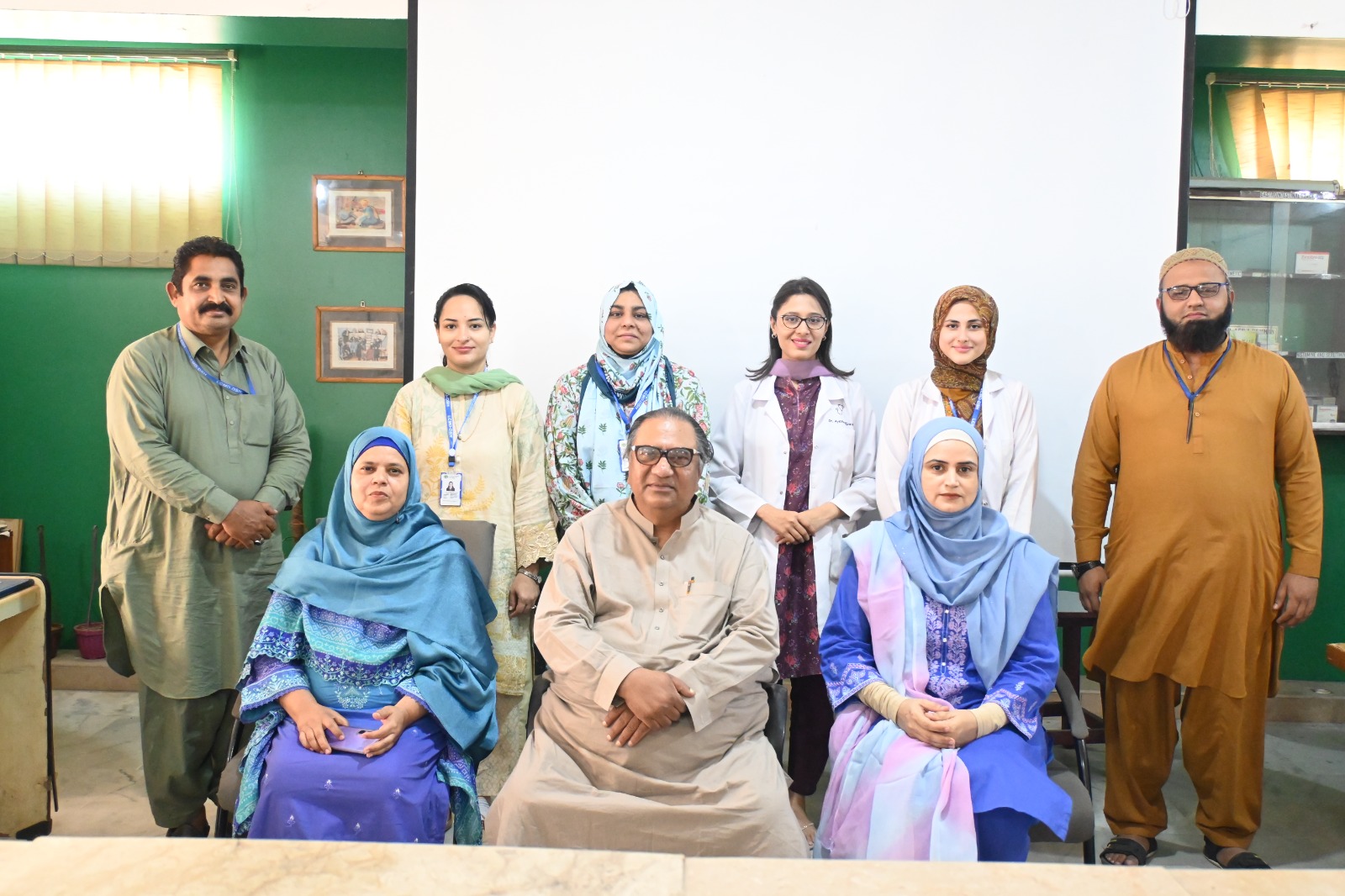
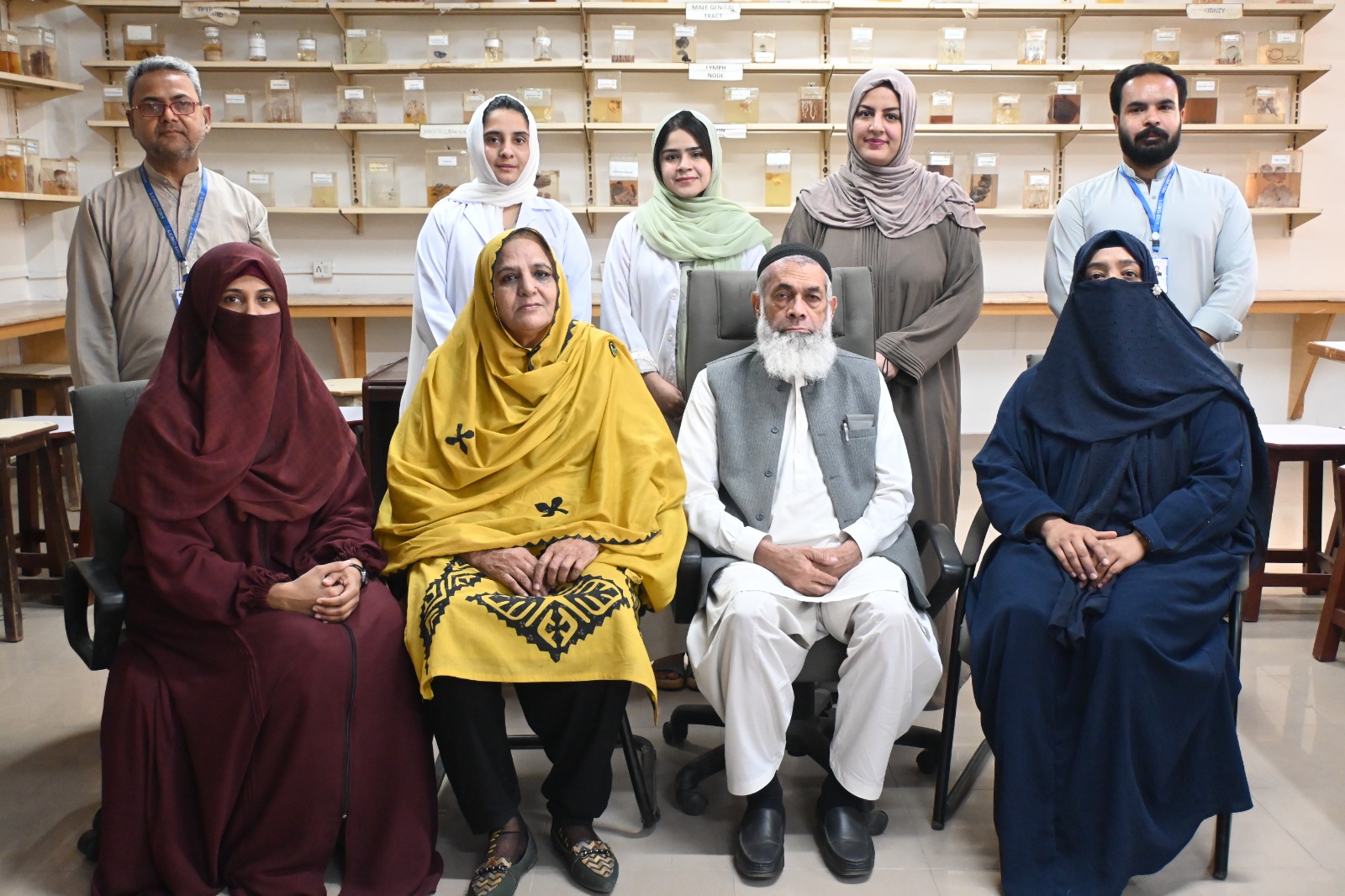
- Prof. Dr. Talat Yasmeen, HOD Anatomy
• ACADEMIC :
- Dr. Irfan Ashraf, Professor
- Dr. Sadia Sundus, Associate Professor
- Dr. A Rehman, Assistant Professor
- Dr. Farah Malik, Assistant Professor
- Dr. Qurat Ul Ain, Assistant Professor
- Nil, Sr Lecturer
- Dr. Osama, Demonstrator
- Dr. Zuna, Demonstrator
- Dr. Abu Bakar, Demonstrator
- Dr. Afsa, Demonstrator
- Dr. Shahmeera, Demonstrator
- Dr. Khadija, Demonstrator
• ADMINISTRATION :
- Nil, Lab Technician
- Syed Kumail Abbas, Lab Assistant
- Shayan Shaharyar, Lab Assistant
• Prof. Dr. Talat Yasmeen, MBBS, M.Phil, Ph. D. (Anatomy)
• Conducting lectures to first and second year MBBS students
• Supervision of all curricular activities of the department
• Managing all the administrative responsibilities as the departmental chair
• Conducting regular departmental meetings
• Faculty including Professors, Associate Professors, Assistant Professors, and Demonstrators, covering core areas and sub-specialties like gross anatomy, histology and embryology.
• undergraduate and postgraduate teaching, assessment,
• curriculum delivery (interactive lectures,
• PBL, CBL, SDL, integrated teaching sessions
• model competitions, poster competitions applied learning.
• Student’s week.
• Tutorial room
• Departmental library
• Histology lab
• e-learning resources (Moodle and google class room),
• IT facilities for faculty
• 3rd Year and 4th year research groups assigned to faculty
• Two of the faculty members are enrolled in M.Phil. Anatomy and oral pathology programs
• One of the faculty is pursuing a MBA degree from DUHS.
The Department of physiology at Liaquat College of Medicine and Dentistry (LCMD) is a core Basic Medical Sciences Department committed to building a strong foundation in Human Physiology, enabling undergraduate medical students to understand normal body functions and their alterations in disease for effective clinical application.
The department’s mission is to develop competent health practitioners who apply Physiological principles thoughtfully in diagnosis, reasoning, and patient care.
- Academic
• Lectures (First year and Second year)
• Practical classes (First year and Second year)
• Tutorials / SGDs
• Case-based learning
• Integrated teaching
• Formative assessments
• Internal assessments
• Remedial sessions
- Non-Academic
• Poster competition
• Research activities
• Curriculum meetings
A notable achievement of the Department is that it has consistently been awarded the “Best Department in Basic Sciences and the Departmental Excellence Award” for the past three years.
Reflecting its commitment to academic quality, innovation in teaching, and student development.
The teaching structure of the department of physiology functions in alignment with the academic policies of LCMD and JSMU. The hierarchy of the teaching faculty is as follows:
• Head of Department (HOD) : Prof. Dr. Perwaiz Sandila (MBBS, MPhil)
• Assistant Professor : Dr. Nasir Jamil (MBBS, MPhil Physiology, MSc Diabetes & Endocrinology, CHPE, PhD Scholar)
• Senior Lecturer : Dr. Maliha Shameem (MBBS, MPhil, CHPE)
• Senior Lecturer : Dr. Hina Rashid (MBBS, MPhil, CHPE, PhD Scholar)
• Demonstrator : Dr. Abeer Ather Khan (MBBS, CHPE Scholar)
• Demonstrator : Dr. Marium Naz Siddiqui (MBBS, CHPE)
• Demonstrator : Dr. Misbah Karim (MBBS, CHPE, Diploma in Family Medicine)
• Demonstrator : Dr. Seerat Baig (MBBS, CHPE Scholar)
This hierarchical structure supports effective teaching, coordination of academic activities, and efficient delivery of the undergraduate curriculum.
Professor Dr. Perwaiz Sandila is a distinguished academician and an experienced leader in the field of Physiology in Pakistan. With a teaching career spanning several decades, he has made significant contributions to medical education and is well known for promoting the integration of Physiological concepts with clinical practice.
Prof. Sandila is currently serving as professor and Head of the department of Physiology at LCMD, a position he has held since July 2008. Prior to this, he served as Professor and Head of department at Ziauddin University from 1998 to 2006, where he played an important role in strengthening undergraduate Integrated Problem Based Physiology curriculum.
Prof. Sandila is recognized for his vision in modernizing physiology education. At Ziauddin he was amongst the pioneers of Integrated Problem Based Learning for the first time in any medical college of Pakistan. He was instrumental in introducing the Power Lab teaching system in physiology laboratories in Pakistan, which helped transform traditional practical teaching into an interactive, data-based learning experience.
Prof. Sandila continues to inspire medical students and young educators in the field of Physiology.
Full name: Prof. Dr Pervaiz Sandila
Designation: Professor
Qualification(s): MBBS, MPhil Physiology
Area of specialization: Physiology
Current role/responsibilities Teach MBBS and BDS undergraduate students the subject of Physiology.
- Foresee the academic and administrative affairs of the department of Physiology
- Student mentoring whenever needed
- Academic Council Member
- Member of Core Academic group
- Member of Core assessment Committee
- Member of curriculum Committee
- Foresee all paper setting and Q bank activities
Full name. Dr.Nasir Jamil
Designation: Assistant Professor
Qualification(s): MBBS,M.Sc(Phy),M.Phil(Phy),M.Sc(D&E),CHPE, Ph.D(Scholar)
Area of specialization: Physiology, Diabetes & Endocrinology
Current role/responsibilities:
- 1.Basic Science Coordinator
- 2. Focal Person of department
- 3.PMDC Inspection Focal Person
- 4.LJHR Asst Editor
- 5.Academic Council Member
- 6.Member of Core Academic group
- 7. Member of Core assessment Committee
- 8.Member of curriculum Committee
- 9.Attendance & Grievance Committee Member
- 10.JSMU & SIPRM Examiner
- 11. MSMD Program Class Instructor
Full name: Dr. Maliha Shameem
Designation: Senior Lecturer
Qualification(s): MBBS, M.Phil (Physiology), CHPE
Area of specialization: Reproductive Physiology Research
Current role/responsibilities
- Delivering lectures, tutorial and practical’s in Physiology to both MBBS and BDS students.
- Year Coordinator of 1st year MBBS, Batch 21
- Secretory Core Assessment Committee (COM)
- Head Mentor of 1st year MBBS, Batch 21
- Research Supervisor of 3rd year MBBS and 4th Year MBBS student groups
- Second in line of Leave Management of Physiology Department
- Research Coordinator 1st year MBBS (Batch 21)
- Academic Council Member
- Member of curriculum Committee
- Conduct small group discussions (SGDs)
- Facilitate problem-based learning (PBL)
- Paper setting (MCQs, SEQs, SAQs)
- OSPE/OSCE station preparation
- Internal assessments
Full name Dr Hina Taimur Qureshi
- Designation Senior Lecturer
- Qualification(s) MBBS, MPhil Physiology, CHPE,PhD scholar.
- Area of specialization Physiology
- Current role/responsibilities
• Deliver lectures to MBBS and BDS programs in the subject of Human Physiology
• Conduct small group discussions (SGDs)
• Facilitate problem-based learning (PBL)
• Paper setting (MCQs, SEQs, SAQs)
• OSPE/OSCE station preparation
• Internal assessments
• Conduct independent or collaborative research
• Associate coordinator First year MBBS
• Member of DHPE
• Coordinator Newsletter Healing Herald
• Member of Undergrad Research Committee
Full Name: Dr Marium Naz Siddiqui
Designation: Demonstrator (Physiology)
Qualification: MBBS
Area of Specialization: Physiology
Current Role / Responsibilities:
• Teaching undergraduate tutorials and practical sessions
• Preparation and assignment of academic tasks
• Conducting and evaluating examinations
• Providing student mentorship
• Serving as the departmental Learning Management System (LMS) lead
• Serving as Associate Co-ordinator basic sciences
• Member of Codebook Committee
Full Name: Dr Seerat Baig
- Designation: Demonstrator (Physiology)
- Qualification: MBBS
- Area of Specialization: Physiology
- Current Role / Responsibilities:
• Teaching undergraduate tutorials and practical sessions
• Preparation and assignment of academic tasks
• Conducting and evaluating examinations
• Providing student mentorship
• Serving as the departmental Learning Management System (LMS) lead.
Full name: Dr. Abeer Ather Khan
- Designation: Demonstrator/ Junior Lecturer Physiology - COM
- Qualification(s): MBBS
- Area of specialization: None
- Current role/responsibilities:
• Demonstrator
• QEC member
• PREE Documented Preparation
• Mentor
• Invigilator
• Internal Examiner
• Result Compilation and Checking
• Editor Physiology Journal
• CHPE candidate.
Full Name: Dr Misbah Karim
Designation: Demonstrator (Physiology)
Qualification: MBBS
Area of Specialization: Physiology
Current Role / Responsibilities:
• Teaching undergraduate tutorials and practical sessions
• Preparation and assignment of academic tasks
• Conducting and evaluating examinations
• Providing 2nd year student mentorship
The Department of Physiology follows a student-centred, integrated curriculum that promotes active learning and strong conceptual understanding.
Curriculum delivery includes a variety of teaching strategies such as interactive lectures, problem-based learning (PBL), case-based learning (CBL), self-directed learning (SDL), practical and tutorials with communication skills.
A strong emphasis is placed on practical skills and experiential learning through laboratory sessions. These sessions allow students to develop hands-on skills, interpret Physiological data, and understand the clinical relevance of Physiological mechanisms.
In addition, the department organizes revision sessions and review classes to help students prepare effectively for their university examinations.
Through these structured academic activities, along with mentorship and academic support, the department of physiology ensures holistic learning and academic development of its students.
The Department of Physiology actively participates in extracurricular activities organized by the college, promoting student engagement, creativity, and professional growth while helping students develop communication skills, teamwork, and professional confidence.
Both students and faculty take part in workshops, model-making competitions, competitions, sports events, health awareness awareness campaigns, and intercollegiate events.
Notable activities include the physiology competition themed “From Atmosphere to Alveoli,” where students showcased their creativity, innovation, and understanding of Physiological concepts.
Students have also recently participated in “National Physiology Quiz Competition” organized by Dow University of Health Sciences, where they showcased their critical thinking skills.
The Department of Physiology provides a range of learning resources to support student education and research.
These include a dedicated Departmental library stocked with the latest editions of Physiology textbooks and reference materials.
Lecture notes, presentations, and other learning materials are regularly uploaded in soft copy on Moodle and Google Classroom for easy access.
The department also features a well-equipped, spacious physiology laboratory, a state-of-the-art Power Lab, and a physiology tutorial room with modern audio-visual aids alongside traditional whiteboards,
providing students with a comprehensive environment for practical learning, and interactive sessions.
Our highly research-oriented faculty actively engages students in research, scholarly, and community projects.
Faculty members provide mentorship throughout the research process, guiding students from topic selection, data collection, and IRB approval to data analysis, manuscript writing, and research publication.
A notable achievement includes the second-place award won by a research group supervised by Dr. Maliha Shamim for their project titled
“From Search to Stress: Examining Psychological Consequences of Cyberchondria Across Medical and Non-Medical Students” in the Undergraduate Research Poster Competition of Batch 17.
This reflects the department’s commitment to fostering research skills, critical thinking, and scholarly excellence among students.
The Department of Biochemistry is committed to delivering a student-centered and clinically integrated curriculum that builds a strong foundation in basic sciences while linking concepts to real-life medical practice.
Teaching is designed to promote active participation through interactive lectures, case-based discussions, small group learning, and problem Based Learnings.
Practical training is an essential component of the program. Students gain hands-on experience in biochemical laboratory techniques, interpretation of investigations, and clinical correlation. Assessment strategies include regular formative assessments and OSPEs, ensuring that learning outcomes are continuously monitored and achieved.
The department fosters a supportive academic environment through structured mentorship and accessible faculty guidance. Students are provided academic support sessions, remedial teaching when required, and encouragement to participate in research and co-curricular activities.
Through continuous professional development of faculty and curriculum enhancement, the department strives to maintain high academic standards and prepare students for competent, ethical, and evidence-based medical practice.
As per College Academic Calendar
- Prof Dr. Farhan Jaleel, HOD Biochemistry
- Dr Zubia Babar, Assistant Professor
- Dr Saba Arif, Demonstrator
- Dr Faiza Shoaib, Demonstrator
- Dr Afifa Khalid, Demonstrator
Prof Dr. Farhan Jaleel, Head of the Department of Biochemistry, is a committed medical educator with vast experience in undergraduate and postgraduate teaching and academic leadership. With a strong focus on integrating basic biochemical concepts with clinical application, he promotes a student-centered and concept-based learning environment.
Under the guidance of Dr. Farhan Jaleel, the department encourages interactive lectures, case-based discussions, and practical skill development. The faculty maintains an approachable and supportive teacher–student relationship, ensuring academic mentoring and continuous feedback.
The department is equipped with well-maintained laboratory and tutorial room with multimedia, structured practical training, and OSPE-based assessments, providing students with a strong foundation for their medical careers.
The department Offer MBBS and BDS undergraduate programs.
- Prof Dr. Farhan Jaleel, HOD Biochemistry (Lectures, MCQ’s and OSPE Preparation, Department Management)
- Dr Zubia Babar, Assistant Professor (Lectures, Exam Duties, MCQ’s and OSPE Preparation)
- Dr Saba Arif, Demonstrator (Lectures, Practical’s, Tutorials, CBL, PBL and SGS of 1st and 2nd Year MBBS, Exam duties)
- Dr Faiza Shoaib, Demonstrator(Practical’s, Tutorials, CBL, PBL and SGS of 1st and 2nd Year MBBS)
- Dr Afifa Khalid, Demonstrator (Practical’s, Tutorials, CBL, PBL and SGS of 1st and 2nd Year MBBS)
• Practical’s,
• Tutorials,
• CBL,
• PBL and
• SGS of
1st and 2nd Year MBBS
• Model Competition (1st and 2nd Year MBBS)
• Poster competition (1st year and 2nd year)
• Presentation competitions
• Practical Laboratory
• Tutorial Room with Multimedia
• Departmental Library
• e-learning facilities (Moodle)
Ongoing Research Projects with 3rd and 4th Year MBBS
• Student-centred, integrated curriculum,
• Interactive teaching.
• Histology practical.
• Formative assessment aligned with learning outcomes. (Module test)
• Mentorship.
• Academic support (faculty always available to help the students in their studies)
• Co-curricular activities (Role Play during neurosciences module)
• Professional development through workshops, CHPE course.
• Academic activities through lectures, demonstrations, tutorials and CBL&SDL.
• Non-academic activities, role play, student week.
- Prof. Dr. Ittefaq hussain qureshi, HOD Pharmacology
• ACADEMIC :
- Dr Ittefaq Qureshi, Professor
- Dr. Zareen Naz, Associate Professor
- Dr. Rabab Zehra, Assistant Professor
- Nil, Sr Lecturer
- Dr Ayesha bint e khalid, Demonstrator
- Dr Zaiema nuzhat, Demonstrator
- Dr Aaila haider, Demonstrator
- Dr Ayesha Rizwan, Demonstrator
• ADMINISTRATION :
- Nil, Lab Technician
- Mohammad Akmal, Lab Assistant
- Waleed gul, Lab Assistant
• Prof. Dr. Ittefaq hussain, MBBS, M.Phil, Ph. D. (Pharmacology)
• Conducting lectures to 3rd and 4th year MBBS students
• Supervision of all curricular activities of the department
• Managing all the administrative responsibilities as the departmental chair
• Conducting regular departmental meetings
• Faculty including Professors, Associate Professors, Assistant Professors, and Demonstrators, covering and integrating Basic and Clinical Pharmacology.
• undergraduate and postgraduate teaching, assessment,
• curriculum delivery (interactive lectures, CBL, SDL, integrated teaching sessions
• Go green activity.
• Student’s week.
• Tutorial room
• Departmental library
• Pharmacology lab
• Museum (for drugs)
• e-learning resources (Moodle and google class room)
• IT facilities for faculty
• 3rd Year and 4th year research groups assigned to faculty
• Faculty is actively involved in conductiong researches.
• Two demonstrators are enrolled in CHPE programme.
• One of the faculty is pursuing PHD from BMSI.
The Department of Pathology at LCMD is a multidisciplinary department. The Department of Pathology is committed to providing student-centered education through an integrated curriculum that connects basic medical sciences with clinical practice. The department emphasizes interactive teaching strategies, including lectures, small-group discussions, case-based learning, and laboratory sessions to enhance students’ understanding of disease mechanisms and diagnostic principles. A strong focus is placed on the development of practical laboratory skills through hands-on training in Microbiology, Histopathology, and Clinical Pathology. Students are encouraged to actively participate in laboratory work, microscopy sessions, and diagnostic demonstrations to strengthen their clinical and analytical abilities. The department follows a structured system of formative assessments aligned with defined learning outcomes, ensuring continuous feedback and academic improvement. Faculty members provide mentorship and academic support, guiding students in their academic progress, professional growth, and research interests. In addition to academic activities, the department promotes co-curricular engagement and professional development, encouraging students to participate in seminars, workshops, and academic discussions. Through these initiatives, the Department of Pathology aims to cultivate competent, ethical, and skilled healthcare professionals prepared for future clinical and research challenges.
The Department of Pathology is headed by Professor Dr. Saleem Khanzada, BSc, MBBS, MPhil (Histopathology), a distinguished academician and experienced educator dedicated to excellence in medical education, research, and diagnostic services. Under his leadership, the department fosters a supportive and intellectually stimulating environment that strengthens the teacher–student academic relationship, encouraging mentorship, collaborative learning, and the development of analytical and clinical skills among students.
• TEACHING FACULTY :
- Prof. Dr Saleem Khanzada , Bsc. MBBS ,M.phil (histopathology), Head of Dept. Pathology
- Prof. Dr Rizwana Yasmeen , MBBS ,M.phil , PhD (Microbiology), Head of DSH Lab
- Dr. Al farah Rehmat ullah , MBBS ,M.phil (pathology), Assitant professor
- Dr. Shahida Kashif , MBBS ,M.phil (Microbiology), Assitant professor
- Dr. Anam Sheikh , MBBS , FCPS (Hematology), Assitant professor
- Dr Hania Ahmed , MBBS, FCPS (clinical pathology), Assitant Prof
- Dr Duriya Masood , Demonstrator
- Dr Haleema Bibi , Demonstrator
- Dr Yousra Sualeh , Demonstrator
- Dr Erum Iqbal , Demonstrator
- Dr Duriya Masood , Demonstrator
• NON TEACHING FACULTY :
- Mr. Mughees Siddiqui , Laboratory Technician
- Mr Shabbir , Lab Assistant
1. Prof. Dr. Saleem Khanzada [HOD of Pathology Dept.]
Bsc, MBBS, M phil. (histopathology)
2. Prof. Dr Rizwana Yasmeen
MBBS, M. Phil, PhD(Microbiology)
3. Dr. Al Farah Rehmat Ullah
MBBS, M Phil (Pathology)
Assitant Professor
4. Dr. Shahida Kashif
MBBS, M Phil (Microbiology)
Assistant Professor
5. Dr. Anam Shaikh [HOD of DSH lab]
MBBS, M phil (Histopathology)
Assitant Professor
6. Dr Hania Ahmed
MBBS, FCPS (Clinical pathology)
Assistant Professor
7. Dr Erum Iqbal (senior lecturer)
8. Dr Yousra Sualeh (Demonstrator)
9. Dr Duriya Masood (Demonstrator)
10. Dr Haleema Bibi (Demonstrator)
Delivery of undergraduate and postgraduate education, evaluation, and curriculum execution through interactive lectures, problem-based learning (PBL), case-based discussions (CBL), self-directed study (SDL), clinical placements, and assigned off-campus academic duties.
Involvement in sports tournaments and intercollegiate programs, community health outreach camps, academic seminars, model and poster presentations, experiential learning activities, student society engagement, and initiatives focused on strengthening communication abilities and professional development
Availability of well-equipped lecture theatres, library services, laboratory facilities, digital learning platforms (including Moodle and Google Classroom), and dedicated IT infrastructure to support student learning.
Active participation in research initiatives, project work, journal club discussions, scholarly contributions, and compliance with ethical standards in research practice.
Forensic Medicine & Toxicology in effect deals with the application of medical knowledge to the purposes of the law. The subject has gained added importance in the current scenario of escalating societal violence & terrorism. The department at LCMD follows a multi-pronged teaching strategy. Lectures, tutorials, practicals, etc. are conducted on college premises. But to acquaint the students with real-life situations, we also arrange small group visits to outdoor medico-legal happenings whenever feasible. The department houses a forensic museum having a variety of forensic & toxicology specimens, a well-equipped forensic laboratory & a modest library. The faculty is qualified, experienced and dedicated. All modern means of communication as well as knowledge sharing are freely utilized by the faculty to educate the students. It is the policy of the department to lend its share in preparing a medical professional who would not only be a boon to the ailing humanity but also, if needed, aid in the administration of justice.
We organize visits of students to the medicolegal sections of various government hospitals. We also take them to the mortuaries to get first-hand knowledge of how post-mortems are conducted. We conduct mock court scenes to familiarize the students with legal procedures.
• Prof. Dr. Syed Perwez Alam: HOD
• Dr. Summaiya Tariq: Assistant Professor
• Dr. Imdad Ali: Demonstrator
• Dr. Yumna Amir: Demonstrator
• Prof. Dr. Syed Perwez Alam
MBBS(Dow),DMJ(DUHS),CHPE
-Having 23 years’ experience of teaching the subject
-Joined LCMD on 11th November 2019
-In addition to providing departmental direction & academic leadership in his role as Head of the department, he is also the Director of College Q-Bank and Course Coordinator for Social Sciences courses. He maintains a close interaction & liaison with the students.
• Dr Summaiya Tariq: Assistant Professor
• Demonstrators: Dr Imdad Ali, Dr Yumna Amir: In addition to taking demonstrations / tutorials as per schedule, they accompany students in outdoor medico-legal work and also assist students in research work.
Our teaching is at undergraduate level, the emphasis being on lectures which are interactive with students’ participation, followed by formative & summative assessments.
Models & Posters competitions among students depicting various events of medicolegal importance are a regular feature during the academic session.
We have ample lecture hall facilities with modern tools of communication; we encourage students to avail the facilities of the departmental museum as well as the library.
We facilitate students’ participation in research projects. Presently Dr Yumna is supervising a student’s research project regarding infection control.
The Department of Community Medicine at Liaquat College of Medicine and Dentistry is dedicated to promoting excellence in public health education, research, and community-oriented medical training. The department focuses on key disciplines including epidemiology, demography, public health, and research methodology. Teaching is student-centred and integrated, incorporating interactive lectures, practical sessions, field exposure, and research mentorship. The department encourages analytical thinking, preventive medicine practices, and ethical research among undergraduate medical students.
The department conducts academic and non-academic activities throughout the year including undergraduate teaching sessions, research methodology training, field visits, research supervision, and participation in health awareness campaigns such as World No Tobacco Day. Students also participate in educational visits to facilities such as blood banks and EPI centres to enhance practical learning.
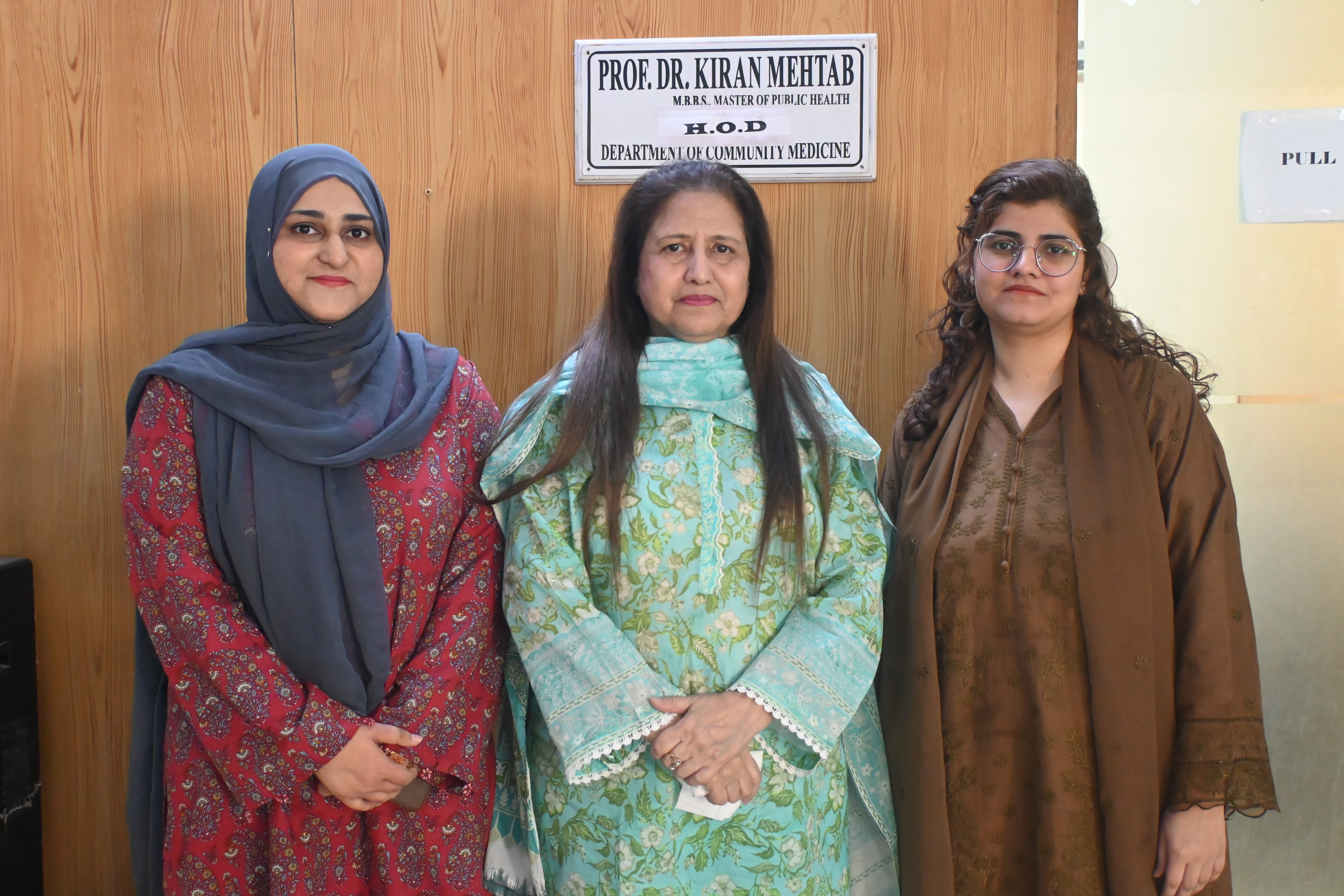
- Head of Department: Prof. Dr. Kiran Mehtab
- Professor: Prof. Dr. Athar Khan
- Demonstrator: Dr. Javeria Ali
- Demonstrator: Dr. Aqeela Zehra
Prof. Dr. Kiran Mehtab is the Head of the Department of Community Medicine and Chairperson of the Undergraduate Research Committee. She holds a Master of Science in Public Health (MSPH) and provides academic leadership in public health education and research. Under her guidance, the department focuses on student mentorship, community engagement, and development of research skills among undergraduate medical students.
The department consists of dedicated faculty members actively involved in undergraduate teaching, research supervision, and curriculum delivery. Prof. Dr. Kiran Mehtab holds a Master of Science in Public Health (MSPH) and has extensive experience in public health education and research. Dr. Javeria Ali and Dr. Aqeela Zehra are MSPH scholars, contributing to teaching, research mentorship, and student academic support. Faculty expertise covers key areas including epidemiology, demography, preventive medicine, and public health research.
The department provides undergraduate teaching for MBBS students using interactive lectures, self-directed learning sessions, and practical demonstrations. Research methodology is taught in 3rd and 4th year MBBS, enabling students to develop research design, data collection, and scientific writing skills. The department also conducts hands-on SPSS training sessions for both students and research supervisors.
The department organizes and participates in various extracurricular and community-oriented activities including health awareness campaigns such as World No Tobacco Day, educational visits to blood banks and EPI centres, and applied learning activities that promote community health awareness and student engagement.
The department provides multiple academic resources including Learning Management System (LMS) for lecture and assignment uploads, statistical software such as SPSS and STATA, WHO sample size calculator, a multipurpose laboratory, departmental museum, and a departmental library to support student learning and research.
The Undergraduate Research Committee, chaired by Prof. Dr. Kiran Mehtab, promotes research culture among medical students. Secretary: Dr. Aqeela Zehra. Member: Dr. Javeria Ali along with additional members from other departments. In 2025, sixteen undergraduate research studies were completed, while 29 projects are in progress for 2026 and 29 projects are planned for completion in 2027. The department organized a poster presentation competition in early 2026 for MBBS Batch 17. It also compiled an Undergraduate Research Project Book (2022–2025) containing 30 student research projects, highlighting the research contributions of undergraduate students.
The Department of Medicine is committed to delivering high-quality medical education through a student- centered and integrated curriculum that aligns with modern standards of medical training. The department emphasizes active learning, clinical relevance, and the development of competent, compassionate future physicians.
Our teaching approach focuses on interactive and learner-focused strategies, including case-based discussions, problem-based learning, small-group teaching, and bedside clinical sessions. These methods encourage critical thinking, clinical reasoning, and the application of theoretical knowledge to real-world patient care.
A key priority of the department is the development of practical clinical skills. Students receive structured training in history taking, physical examination, diagnostic reasoning, and patient communication through clinical rotations, simulated learning environments, and supervised patient encounters.
Assessment within the department is designed to be formative, continuous, and aligned with defined learning outcomes. Regular quizzes, case presentations, OSCEs/OSPEs, reflective learning activities, and feedback sessions allow students to monitor their progress and identify areas for improvement.
The department also maintains a strong mentorship and academic support system. Faculty members guide students in their academic journey, professional conduct, and career development while providing support for learning challenges and personal growth.
In addition to formal teaching, the department promotes co-curricular and professional development activities such as seminars, journal clubs, research opportunities, clinical workshops, and community health initiatives. These activities enhance leadership, teamwork, ethical practice, and lifelong learning skills.
Through this comprehensive approach, the Department of Medicine aims to produce competent, ethical, and patient-centered physicians who are well prepared to meet the healthcare needs of society.
-
The Prof. Shahid Ahmed (HOD) of Medicine provides academic and administrative leadership to ensure effective teaching, learning, and clinical training within the department. The HOD plays an important role in guiding both faculty and students, promoting a positive teacher–student relationship that supports academic growth, clinical competence, and professional development.
Under the leadership of the HOD, the department follows a student-centered and integrated approach to medical education, using interactive teaching methods such as lectures, case-based discussions, bedside teaching, and clinical demonstrations. The HOD ensures that teaching activities are aligned with learning outcomes and that students receive continuous academic guidance, mentorship, and formative feedback.
The Department of Medicine provides diverse teaching and learning facilities, including lecture halls, clinical wards, outpatient departments, skill-based training sessions, seminars, and journal clubs. These facilities help students develop essential clinical skills, diagnostic reasoning, and patient communication abilities.
The department offers undergraduate medical programs and clinical courses in Medicine, including clinical rotations, bedside teaching, and practical assessments designed to strengthen students’ knowledge and clinical skills. Through effective leadership and academic support, the HOD ensures that students receive comprehensive training to become competent, ethical, and patient-centered healthcare professionals.
- PROFESSOR:
• Prof. Rashid Naseem Khan Professor of General Medicine is a senior faculty member with expertise in diagnosing and managing a wide range of medical conditions. They lead undergraduate and postgraduate teaching, clinical training, and case discussions, while mentoring students, overseeing research, and promoting professional development and clinical excellence.
• Prof. Abdul Malik Professor of Neurology is a senior faculty member specializing in neurological disorders. They guide undergraduate and postgraduate students through lectures, bedside teaching, and case discussions, while also mentoring students, supporting research, and contributing to curriculum development. Their role ensures students gain both clinical expertise and professional skills in neurology.
- ASSOCIATE PROFESSOR:
• Dr. Bushra Faheem Associate Professor of General Medicine is a senior faculty member specializing in the diagnosis and management of general medical conditions. They are involved in undergraduate and postgraduate teaching, clinical supervision, and case discussions, while also guiding students in research, practical skills, and professional development.
- ASSISTANT PROFESSOR:
• Dr. Mukesh Kumar Assistant Professor of Gastroenterology is a faculty member specializing in the diagnosis and management of gastrointestinal disorders. They engage in undergraduate and postgraduate teaching, clinical training, case discussions, and practical skill development, while also supporting student mentorship and research activities to build clinical competence and professional growth.
• Dr. Syed Ahmed Assistant Professor of General Medicine is a faculty member involved in teaching and training students in the diagnosis and management of general medical conditions. They conduct lectures, bedside teaching, and case discussions, while guiding students in clinical skills, research, and professional development.
• Dr. Shirjeel Hussain Assistant Professor of General Medicine is a faculty member involved in teaching and training students in the diagnosis and management of general medical conditions. They conduct lectures, bedside teaching, and case discussions, while guiding students in clinical skills, research, and professional development.
• Dr. Azhar Hussain Assistant Professor of General Medicine is a faculty member involved in teaching and training students in the diagnosis and management of general medical conditions. They conduct lectures, bedside teaching, and case discussions, while guiding students in clinical skills, research, and professional development.
• Dr. Sarfaraz Alam Assistant Professor of General Medicine is a faculty member involved in teaching and training students in the diagnosis and management of general medical conditions. They conduct lectures, bedside teaching, and case discussions, while guiding students in clinical skills, research, and professional development.
• Dr. Shafi Mansoori Assistant Professor of Psychiatry is a faculty member specializing in mental health and psychiatric disorders. They engage in undergraduate and postgraduate teaching, clinical training, and case discussions, while mentoring students and supporting research to develop clinical skills, ethical practice, and professional competence in psychiatry.
• Dr. Samina Shamim Assistant Professor of Nephrology is a faculty member specializing in kidney diseases and related medical conditions. They are involved in undergraduate and postgraduate teaching, clinical training, and case-based learning, while guiding students in developing practical skills, research understanding, and professional competence in nephrology.
• Dr. Bushra Ammad Taimuri Assistant Professor of Neurology is a faculty member specializing in neurological disorders. They are involved in undergraduate and postgraduate teaching, clinical training, and case discussions, while guiding students in developing practical skills, research knowledge, and professional competence in neurology.
• Dr. Ibrahim Ali Khan Assistant Professor of Pulmonology is a faculty member specializing in respiratory and lung-related disorders. They participate in undergraduate and postgraduate teaching, bedside training, and case discussions, while mentoring students and supporting research to develop clinical skills and professional competence in pulmonology.
• Dr. Sabeika Raza Assistant Professor of Dermatology is a faculty member specializing in skin, hair, and nail disorders. They engage in undergraduate and postgraduate teaching, clinical training, and case discussions, while guiding students in practical skills, research, and professional development in dermatology.
- SENIOR REGISTRAR:
• Dr. Suwaiba Azim Senior Registrar of Neurology is an undergraduate & postgraduate trainee specializing in neurological disorders. They assist in clinical teaching, bedside training, and case discussions, while gaining advanced clinical experience and contributing to research, patient care, and skill development under faculty supervision.
• Dr. Sarang Memon Senior Registrar of General Medicine is an undergraduate & postgraduate trainee specializing in the diagnosis and management of general medical conditions. They assist in clinical teaching, bedside training, and case discussions, while gaining advanced clinical experience and contributing to patient care, research, and professional development.
• Dr. Hisala Rehman Senior Registrar of General Medicine is an undergraduate & postgraduate trainee specializing in the diagnosis and management of general medical conditions. They assist in clinical teaching, bedside training, and case discussions, while gaining advanced clinical experience and contributing to patient care, research, and professional development.
• Dr. Kashif Sadruddin Senior Registrar of General Medicine is an undergraduate & postgraduate trainee specializing in the diagnosis and management of general medical conditions. They assist in clinical teaching, bedside training, and case discussions, while gaining advanced clinical experience and contributing to patient care, research, and professional development.
• Dr. Yahya Memon Senior Registrar of General Medicine is an undergraduate & postgraduate trainee specializing in the diagnosis and management of general medical conditions. They assist in clinical teaching, bedside training, and case discussions, while gaining advanced clinical experience and contributing to patient care, research, and professional development.
• Dr. Fozia Sheikh Senior Registrar of Dermatology is a postgraduate trainee specializing in skin, hair, and nail disorders. They assist in clinical teaching, bedside training, and case discussions, while gaining advanced clinical experience and contributing to patient care, research, and professional development.
• Dr. Zeenat Ullah Senior Registrar of Psychiatry is a postgraduate trainee specializing in mental health and psychiatric disorders. They assist in clinical teaching, bedside training, and case discussions, while gaining advanced experience in patient care, research, and professional skill development.
• Dr. Samar Kashif Senior Registrar of Endocrinology is a postgraduate trainee specializing in hormonal and metabolic disorders. They assist in clinical teaching, bedside training, and case discussions, while gaining advanced experience in patient care, research, and professional development.
The Department of Medicine is actively involved in a wide range of curricular activities that support both undergraduate and postgraduate medical education. These activities are designed to ensure effective curriculum delivery, promote clinical competence, and enhance students’ academic and professional development.
Undergraduate and Postgraduate Teaching:
Faculty members participate in structured teaching for undergraduate medical students and postgraduate trainees. Teaching includes lectures, clinical rotations, ward teaching, outpatient department (OPD) sessions, and academic discussions that help students develop strong theoretical knowledge and clinical skills.
Curriculum Delivery Methods:
To support a student-centered and integrated curriculum, the department uses various modern teaching strategies, including:
• Interactive lectures to encourage active student participation.
• Problem-Based Learning (PBL) sessions to develop analytical and clinical reasoning skills.
• Case-Based Learning (CBL) to connect theoretical concepts with real clinical scenarios.
• Self-Directed Learning (SDL) activities that promote independent learning and critical thinking.
• Integrated teaching sessions conducted in collaboration with other departments to provide a multidisciplinary understanding of diseases and patient care.
Assessment and Evaluation:
The department conducts both formative and summative assessments to monitor student progress and ensure achievement of learning outcomes. These include written examinations, clinical assessments, case presentations, OSCE/OSPE, and continuous feedback to support learning improvement.
Clinical Responsibilities:
Faculty members hold important clinical positions in affiliated teaching hospitals, where they provide patient care in wards, outpatient clinics, and emergency services. These clinical settings also serve as essential training platforms for students to gain hands-on experience in patient management.
Off-Campus Responsibilities:
The department also participates in community-based and off-campus activities, including medical camps, community health programs, public health awareness initiatives, and outreach clinical services. These activities help students understand healthcare delivery in community settings and promote social responsibility.
Through these curricular activities, the Department of Medicine ensures a comprehensive educational experience that prepares students for effective clinical practice and lifelong learning.
The Department of Medicine encourages students to participate in a variety of extra-curricular activities that support their overall personal and professional development. Students take part in sports events and intercollegiate activities, which promote teamwork, leadership, and physical well-being.
The department also organizes and participates in health awareness camps, seminars, and community outreach programs, allowing students to apply their medical knowledge in real-life settings and contribute to public health education.
In addition, students are encouraged to engage in model competitions and poster competitions, which enhance research interest, creativity, and applied learning. Participation in student societies and academic groups further helps students develop strong communication skills, leadership abilities, and professional confidence, preparing them for future medical practice.
The Department of Medicine provides a range of learning resources to support effective teaching and student learning. Students have access to well-equipped lecture halls designed to facilitate interactive teaching sessions and academic discussions.
The institution also provides library access, offering a wide collection of medical textbooks, reference materials, and journals to support academic study and research. In addition, laboratory facilities are available to enhance students’ practical understanding of medical concepts.
To support modern learning approaches, the department utilizes e-learning platforms such as Moodle and Google Classroom, where students can access lecture materials, assignments, and additional learning resources.
Furthermore, adequate IT facilities are available for students, enabling them to access digital resources, online learning platforms, and educational tools that support their academic development.
The Department of Medicine actively promotes research and scholarly activities among both undergraduate and postgraduate students. Students are encouraged to participate in research projects, fostering critical thinking, analytical skills, and evidence-based learning.
Regular journal club sessions provide opportunities for students to review current medical literature, discuss research findings, and stay updated on advances in the field. Emphasis is placed on ethical research practices, ensuring that all academic investigations follow professional and ethical guidelines.
Through these activities, students develop a strong foundation in scientific inquiry, critical appraisal, and applied medical research, preparing them for future academic and professional contributions.
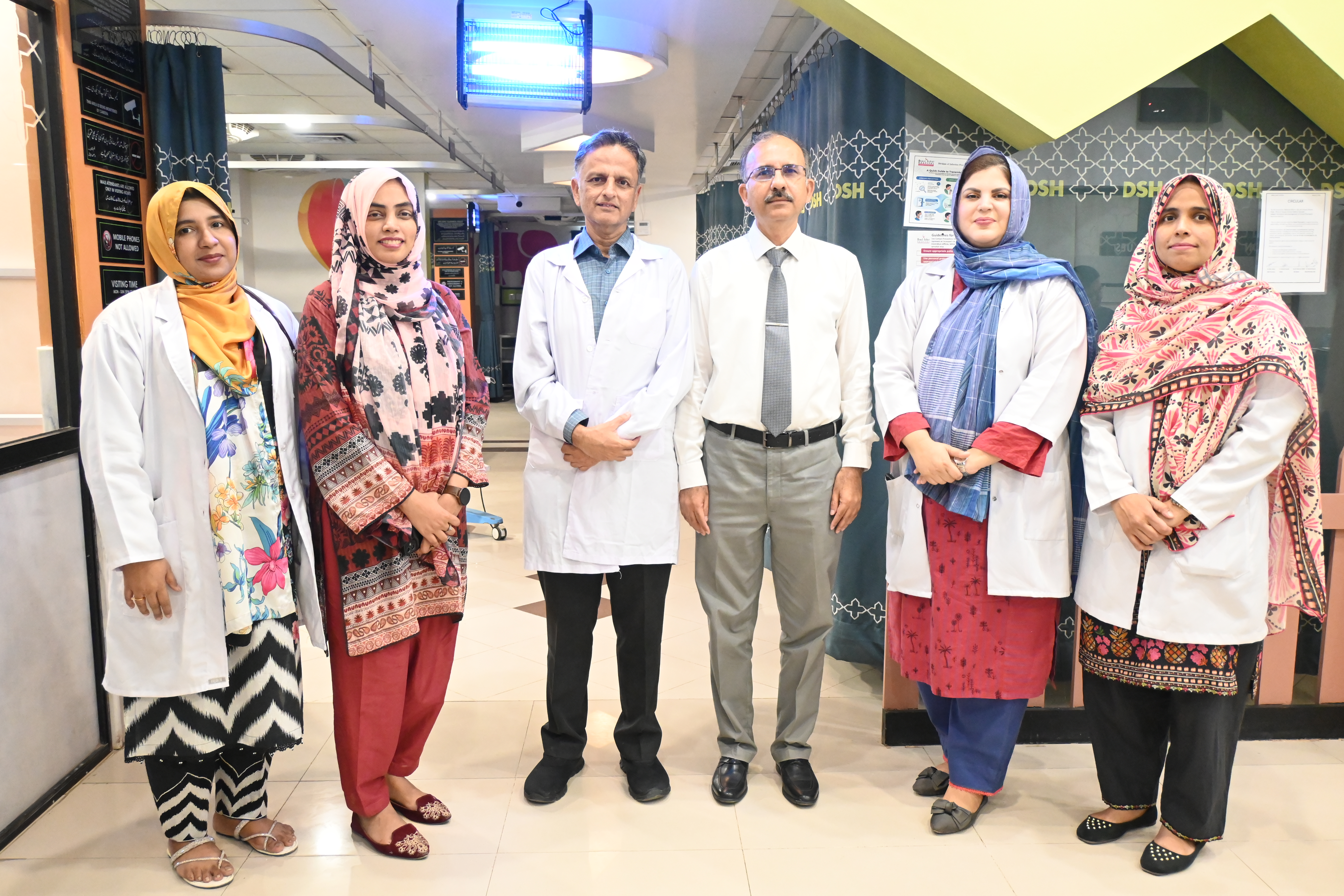
Our mission is to cultivate a holistic approach emphasizing evidence based practices, ethical principles and community engagements.
We strive to educate health care professionals through innovative research and collaboration and contribute to the overall health of the pediatric patients and society.
- H ealth for Every Child: Ensuring a Brighter Future for All
- E mpowering Healing: Passionate Care Driven by Research
- A dvancing Care: Critical Thinking, and Unwavering Dedication
- L eading with Excellence: Comprehensive Health and Lifelong Care
The Department of Pediatrics at Liaquat College of Medicine and Dentistry, in collaboration with Darul Sehat Hospital, is a well-established and comprehensive academic and clinical unit.
The department is also affiliated with Sindh Employees' Social Security Institution (SESSI) and Fauji Foundation Hospital (SOMH), where outpatient departments are operated by qualified pediatric consultants.
At Darul Sehat Hospital, the department provides round-the-clock services through a well-equipped pediatric ward, Neonatal Intensive Care Unit (NICU), Pediatric Intensive Care Unit (PICU), and a 24/7 Pediatric Emergency Department.
FCPS trainee residents rotate in different hospitals like SICHN, NICH, NICVD and AKUH, during their training to gain full insight of pediatric sub specialty like pediatric neurology, pediatric cardiology and infectious disease and haem-oncology.
Several developmental projects are currently under consideration as the institution continuously strives to upgrade its facilities in accordance with international standards.
The faculty comprises highly specialized and dedicated professionals committed to maintaining excellence in healthcare delivery, teaching, and research. A multidisciplinary approach is adopted to address the unique needs of each child,
ensuring individualized and comprehensive treatment plans.
The department’s mission is to promote a holistic approach to pediatric care, emphasizing evidence-based practice, ethical principles, and community engagement.
It is dedicated to educating healthcare professionals through innovative research and collaboration, while contributing meaningfully to the advancement of pediatric healthcare and the well-being of society.
The Department follows a well-structured academic calendar that integrates comprehensive theoretical instruction with practical clinical training.
Third- and fourth-year students undertake a four-week clinical rotation, while final-year MBBS students complete an eight-week rotation including evening posting.
During these rotations, students are assigned to the clinical settings of Darul-Sehat Hospital (DSH), Shaukat Omer Memorial Hospital (SOMH), and Sindh Employees' Social Security Institution Hospital (SESSI) Hospital.
Under close supervision, students gain hands-on experience in the assessment and management of common paediatric diseases.
They work collaboratively with consultants, faculty members, and healthcare staff, fostering teamwork, professionalism, and effective communication skills.
In addition to clinical and academic training, the Department actively promotes holistic development through regular Continuing Medical Education (CME) sessions, health awareness workshops, Students’ Week, sports activities,
research initiatives, and student presentations. These co-curricular engagements are thoughtfully integrated into the academic timetable to ensure a well-rounded educational experience.
- HOD : Prof Dr. Zafar Mehdi
- Professor : Dr. Farhan Saeed
- Assistant Professor : Dr. Sadaf Saeed
- Assistant Professor : Dr. Sarah Aslam
- Assistant Professor : Dr. Ayesha Khatoon
- Assistant Professor : Dr. Neelofar
- Senior Registrar : Dr.Tauqeer
- Senior Registrar : Dr. Maria
• Professor Dr. Syed Zafar Mehdi
He is the Head of the Department of Pediatrics at Liaquat College of Medicine and Dentistry. He completed his MCPS and FCPS in Pediatric Medicine from the College of Physicians and Surgeons Pakistan.
With more than two decades of experience in pediatrics, he has extensively managed children suffering from malnutrition, infectious diseases, and neonatal disorders. He is an accredited supervisor of the College of Physicians and Surgeons Pakistan and has mentored numerous postgraduate trainees.
Professor Zafar Mehdi has authored multiple research papers published in both national and international journals and has presented his work at various national and international forums. He recently received the Best Research Paper Award at Liaquat College of Medicine and Dentistry. In addition, he serves as a peer reviewer for several reputable journals.
He is a Master Trainer in Lactation Management and an assessor for Baby-Friendly Hospitals. He has played a pivotal role in the promotion and support of exclusive breastfeeding for the first six months of life, on which he has published several papers and delivered numerous presentations.
Furthermore, he is a Master Trainer in the updated management of childhood diarrhea and pneumonia, early detection of childhood cancers, and the Helping Babies Survive program. He has conducted numerous continuing medical education (CME) sessions and workshops to disseminate knowledge in these areas.
He has completed certified courses in CHPE (Certificate in Health Professions Education) and CRCP (Certificate in Research and Clinical Practice). Recently, he was honored with the Distinguished Teaching and Academic Award and secured first position across all clinical science departments through multidimensional faculty evaluation conducted by the Quality Enhancement Cell at Liaquat College of Medicine and Dentistry.
Professor Zafar Mehdi is also among the authors of Pakistan’s first National Oxygen Therapy Guidelines for Children and has conducted multiple workshops across the country to support their implementation.
• Professor Farhan Saeed
He is DCH, FCPS, has served LCMD for more than a decade. He has been awarded best teacher consistently several times. He holds numerous research papers published in national and international journals. He has done second fellowship training in haemoncology. He had worked as a director Professional Development Centre of LCMD. He has completed CHPE.
• Dr. Sadaf Saeed Shami
She is an Assistant Professor of Paediatrics, holding an MBBS and FCPS, serving since September 2018. She is Secretary of the Core Academic Committee and Focal Person for Final Year MBBS, actively involved in academic coordination and student mentorship. She also serves as Secretary of the Grievance and Anti-Harassment Committee and is a member of the Disciplinary, BFHI, and DHPE committees. In addition, she contributes to academia as a peer reviewer for LJHR.
• Dr. Sarah Aslam
She is an Assistant Professor of Pediatrics (MBBS, FCPS) who joined on 24th May 2021 and currently serves as In-Charge NICU and Deputy Director of the Research Cell. She is the Secretary of IRB, CME Coordinator for Pediatrics, and Focal Person for 4th Year MBBS. She contributes academically as Assistant Editor of LJHR and peer reviewer for Eastern Mediterranean Health Journal and Journal of the Pakistan Medical Association. She is a Research Fellow at Aga Khan University Hospital and has secured a research grant through the Bill & Melinda Gates Foundation.
• Dr. Ayesha Khatoon
She is an Assistant Professor of Paediatrics (MBBS, FCPS) who joined in February 2022. She serves as Clinical Coordinator and Focal Person for 3rd Year MBBS, Associate Attendance Coordinator, and Secretary of Departmental Meetings. She is a Member of the QEC and BFHI committees and functions as CME Coordinator for Paediatrics. She has completed EPEMC, APEMC, and CHPE, reflecting her strong commitment to medical education and academic quality assurance.
• Dr. Neelofar Ghaffar
She is an Assistant Professor of Paediatrics (MBBS, FCPS) who joined the department in June 2022. She is actively involved in undergraduate medical education and clinical Paediatric care. With expertise in general paediatrics. She contributes to both academic teaching and patient management. Her commitment reflects dedication to quality child healthcare and professional development.
• Dr. Maria Ahmad
is a Senior Registrar in Pediatrics (MBBS, FCPS) who joined in December 2025. She participates in clinical management across pediatric wards, emergency, and outpatient services. She is engaged in undergraduate teaching and bedside training of students. Her work reflects dedication to compassionate child healthcare and continuous professional growth.
• Dr. Tauqeer Hussain
is a Senior Registrar in Pediatrics (MBBS, MCPS, FCPS) who joined in June 2022. He is actively involved in inpatient and outpatient Pediatric care, contributing to emergency and ward services. With comprehensive clinical training, he supports academic activities and postgraduate teaching. His interests include evidence-based Pediatric practice and quality patient care.
The curriculum is thoughtfully designed to provide a dynamic and student-centred learning experience through interactive lectures, case-based learning (CBL), Clinical Pathological Conference (CPC), skills lab sessions, workshops, and self-directed learning (SDL) and CMEs on
regular basis especially on BFHI, immunization and infectious diseases. External subject experts are invited to evaluate students skills and case presentation. Gifts are distributed among best performers. Students receive comprehensive clinical training in Pediatrics at affiliated on-campus teaching hospitals. During their rotations, students are assigned in small groups to outpatient clinics, inpatient wards, the labour room, the emergency department, and operating theatres (OT), ensuring structured exposure to a wide range of clinical scenarios. The Department also places strong emphasis on community outreach and public health education, encouraging students to actively participate in initiatives that promote maternal and child health awareness.
Students participate in sports events, intercollegiate activities including debates, sports, quiz programs, health awareness programs, and poster competitions. These activities enhance leadership skills, teamwork, and professional confidence. The department organise celebrates World Children Day on annual basis.
The department offers access to state-of-the-art lecture halls, a well-equipped library, and a Skill lab for hands-on training. E-learning platforms such as Moodle and Google Classrooms are used to support learning and teaching. IT facilities are available for students to access research materials and online courses.
Students are encouraged to participate in research projects related to child health advancements. Paediatric department has also received research grant from Malinda and Gates Foundation for adolescent health. The department also participates in the journal club, promoting scholarly discussions and the development of research skills. Ethical research practices are emphasized throughout the program. Department itself conducting research.
The Department of Medicine at
Darul
Sehat Hospital helps in the needs of
hunDreds of
patients daily. We have full-time services
of
different subspecialties which
include:
In the section of Gastroenterology and
Hepatology, we have separate endoscopy areas
and
provide 24 hours services for GI bleed
patients.
We are doing over 1500 procedures per year
of
different natures and also having
state-of-the-art ERCP facilities for CBD
stones
and biliary obstructions. In the section of
pulmonology, we are routinely doing
bronchoscopies for different indications and
also performing pleural biopsies and chest
tube
placements on a routine basis. In
Nephrology, we
have a separate area for dialysis and having
24-hour services for end-stage renal disease
patients.
CPSP has accredited LCMD & DSH for
postgraduate
programs. It is the 3rd batch of
postgraduate
students getting training in the hospital.
We
have recognized and approved supervisors for
this purpose.
The Pediatric department of Liaquat college of Medicine and Dentistry & Darul Sehat Hospital is well established.
It has affiliated hospitals SESSI and Fauji foundation (SOMH) with outpatient departments operated by different Pediatric consultants.
They also have a Pediatric emergency care that operates 24/7.Indoor patients are admitted based on the level of the care they require. .
We have well equipped ward, Neonatal intensive care unit and Pediatric emergency at Darul Sehat hospital.
Some projects are still under consideration for implementation, as LCMD is always trying to upgrade according
to international criteria. The faculty is highly specialized and dedicated to uphold international standards of healthcare and research.
They adopt a multidisciplinary approach to address the unique needs of every child and developed tailored treatment plans..
Our aim is to train graduates and postgraduates with practical knowledge that can benefit them in Pediatrics and other fields of medicine.
The Section of Neurology is a specialized part of the Department of Medicine that focuses on the diagnosis and treatment of diseases affecting the nervous system.
It encompasses the brain, spinal cord, and peripheral nerves, and includes a wide range of conditions such as stroke, epilepsy, movement disorders, brain infections, autoimmune neurologic disorders, sleep disorders, brain injury, headache disorders, tumors of the brain, and dementias like Alzheimer's disease.
We at the Neurology Section deals not only the patients services, but also the part of all the under as well post graduates teaching i.e.
Student and patient centered teaching with integrated curriculum.
Interactive teaching, practical skills, and formative assessment aligned with learning outcomes.
Mentorship, academic support, and co-curricular activities.
Research activities
Lectures, clinical teaching rounds, CME
We as the Section of Neurology part of the Department of Medicine, LCMD/ DSH.
Prof. Dr. Abdul Malik
MBBS, MD (Neurology), FRCP (Edinburgh),
FAAN (Fellow of American Academy of Neurology)
Masters of Headache Disorders (University of Copenhagen- Denmark),
DCN (Neurology), PGDN,
MBA (Hospital & Health Management) & Certificate of Health Professions Education (CHPE)
Professor of Neurology & Consultant Neurologist
Secretary Academic Council- College Medicine LCMD, Karachi
Department of Medicine, Liaquat College of Medicine & Dentistry (LCMD)
Dr. Suwaiba Azim, FCPS-Neurology, Senior Registrar
Undergraduate and postgraduate teaching, assessments, ward tests, curriculum delivery provided through interactive lectures, PBL, CBL, SDL, and integrated teaching sessions, clinical rotations, research based learning.
Also arranged Continued Medical Education activities in context to the different days like Epilepsy, Stroke, Parkinson's etc.
We do advocacy work related to the different diseases of the neurology, arranged poster competition, did patients centric welfare activities.
Lecture halls, Library access, laboratories, e-learning resources (Moodle and Google Classroom), Skills Lab
Students participate in research paper writing where they are taught ethical research practices
Projects
Journal club; case discussions, clinical rounds.
The Department of Medicine at
Darul
Sehat Hospital helps in the needs of
hunDreds of
patients daily. We have full-time services
of
different subspecialties which
include:
In the section of Gastroenterology and
Hepatology, we have separate endoscopy areas
and
provide 24 hours services for GI bleed
patients.
We are doing over 1500 procedures per year
of
different natures and also having
state-of-the-art ERCP facilities for CBD
stones
and biliary obstructions. In the section of
pulmonology, we are routinely doing
bronchoscopies for different indications and
also performing pleural biopsies and chest
tube
placements on a routine basis. In
Nephrology, we
have a separate area for dialysis and having
24-hour services for end-stage renal disease
patients.
CPSP has accredited LCMD & DSH for
postgraduate
programs. It is the 3rd batch of
postgraduate
students getting training in the hospital.
We
have recognized and approved supervisors for
this purpose.
The Pediatric department of Liaquat college of Medicine and Dentistry & Darul Sehat Hospital is well established.
It has affiliated hospitals SESSI and Fauji foundation (SOMH) with outpatient departments operated by different Pediatric consultants.
They also have a Pediatric emergency care that operates 24/7.Indoor patients are admitted based on the level of the care they require. .
We have well equipped ward, Neonatal intensive care unit and Pediatric emergency at Darul Sehat hospital.
Some projects are still under consideration for implementation, as LCMD is always trying to upgrade according
to international criteria. The faculty is highly specialized and dedicated to uphold international standards of healthcare and research.
They adopt a multidisciplinary approach to address the unique needs of every child and developed tailored treatment plans..
Our aim is to train graduates and postgraduates with practical knowledge that can benefit them in Pediatrics and other fields of medicine.
The Pediatric department of Liaquat college of Medicine and Dentistry & Darul Sehat Hospital is well established.
It has affiliated hospitals SESSI and Fauji foundation (SOMH) with outpatient departments operated by different Pediatric consultants.
They also have a Pediatric emergency care that operates 24/7.Indoor patients are admitted based on the level of the care they require. .
We have well equipped ward, Neonatal intensive care unit and Pediatric emergency at Darul Sehat hospital.
Some projects are still under consideration for implementation, as LCMD is always trying to upgrade according
to international criteria. The faculty is highly specialized and dedicated to uphold international standards of healthcare and research.
They adopt a multidisciplinary approach to address the unique needs of every child and developed tailored treatment plans..
Our aim is to train graduates and postgraduates with practical knowledge that can benefit them in Pediatrics and other fields of medicine.
Liaquat College of Medicine and Dentistry, Karachi. The Department of Surgery & Allied at Liaquat College of Medicine and Dentistry, Karachi, is committed to excellence in surgical education, clinical care, and research. The department plays a vital role in the MBBS undergraduate and post-graduate training program, providing students with comprehensive exposure to the principles and practice of modern surgery.
The department focuses on developing competent, ethical, and skilled medical graduates through a combination of bedside teaching, clinical rotations, case discussions, and surgical skills training. Students are actively involved in ward rounds, outpatient clinics, and operating theatre observations to gain practical clinical experience.
The Department provides a wide range of surgical services through its affiliated teaching hospital, including General Surgery, Urology, Orthopedic Surgery, Neurosurgery, Pediatric Surgery, Plastic and Reconstructive Surgery, and Trauma & Emergency Surgery. The department works in close collaboration with allied specialties such as Anesthesiology, Radiology, Pathology, and Intensive Care to ensure multidisciplinary patient care.
Modern operation theatres, surgical wards, outpatient clinics, and intensive care facilities support both patient management and medical education. The department also promotes research and academic activities, encouraging faculty members and students to participate in clinical research, scientific presentations, and publications in recognized medical journals.
Through its commitment to quality education, patient-centered care, and continuous academic development, the Department of Surgery & Allied aims to prepare future physicians and surgeons capable of addressing the evolving healthcare needs of society.
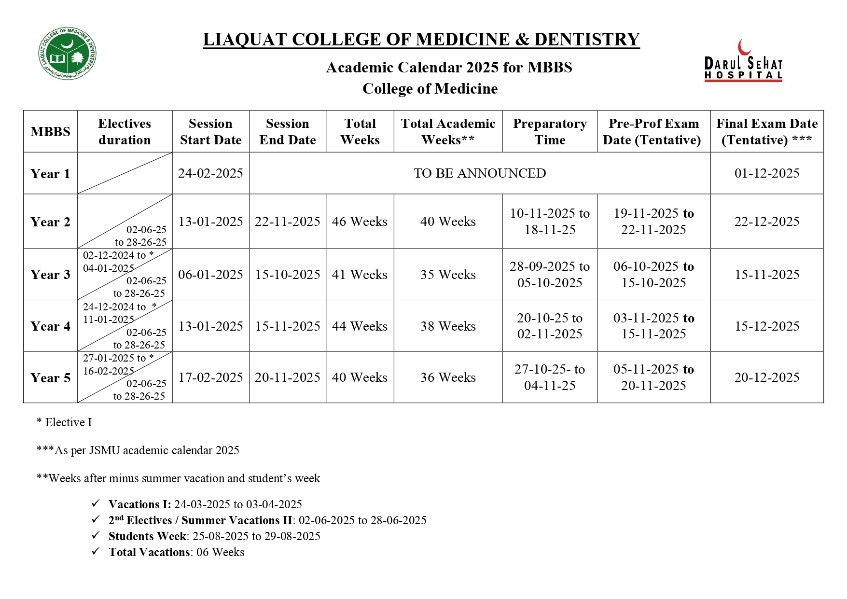
Total Vacations: 6 Weeks
| Year | Total Weeks | Academic Weeks | Hours/Week |
|---|---|---|---|
| Year 1 | - | - | - |
| Year 2 | 46 | 40 | 37.5 |
| Year 3 | 41 | 35 | 39.7 |
| Year 4 | 44 | 38 | 40 |
| Year 5 | 40 | 36 | 35.6 |
Head of Department: Prof. M. Asif Qureshi
Professors
Prof. M. Arif (General Surgery)
Prof. Ashraf Ganatra (Plastic Surgery)
Prof. Khurram Zia (General Surgery)
Associate Professor
Dr. S. M. Azfar (Orthopedics)
Assistant Professors
Dr. Sundas Dastagir (General Surgery)
Dr. Sunil Dutt (SESSI)
Dr. Tasleem Alam (SOMH)
Dr. Hammad Hanif (SOMH)
Dr. Anees Ur Rehman (Urology)
Dr. Yusra Afzal (Plastic Surgery)
Dr. Osama Bin Zia (Orthopedics)
Dr. Yousuf Yaqoob (SOMH)
Dr. Usamah Bin Waheed (Neurosurgery)
Senior Registrars
Dr. Ali Haider (General Surgery)
Dr. Waseem Akram (General Surgery)
Dr. Sajid Naseem Khan (Orthopedics)
Dr. Bushra Mughal (Pediatric Surgery)
Dr. Muizuddin (Neurosurgery)
The Department of Surgery and Allied is led by Prof. Asif Qureshi, Head of Department (HOD), who is responsible for providing academic leadership, clinical guidance, and administrative oversight to ensure the highest standards of medical education and patient care. The HOD plays a pivotal role in developing and implementing the departmental vision, promoting excellence in surgical training, and maintaining quality clinical services.
Under the leadership of the Head of Department, the department is committed to delivering comprehensive undergraduate and postgraduate surgical education, fostering research activities, and providing advanced surgical care to patients. The HOD supervises teaching programs, coordinates academic activities, and ensures that the curriculum aligns with the standards set by the Pakistan Medical and Dental Council (PMDC).
The Head of Department also oversees the professional development of faculty members, encourages innovation in surgical techniques, and promotes interdisciplinary collaboration among allied specialties including Urology, Orthopedics, Neurosurgery, Plastic Surgery, and Pediatric Surgery.
With a strong commitment to clinical excellence, research, and community service, the Head of Department strives to cultivate a learning environment that nurtures competent, ethical, and skilled future surgeons.
PROF. M. ASIF QURESHI - Head of Department
PROF. M. ARIF - General Surgery
PROF. ASHRAF GANATRA - Plastic Surgery
PROF. KHURRAM ZIA - General Surgery
DR. S.M AZFAR - Orthopedics
DR. ANEES UR REHMAN - Urology
DR. YUSRA AFZAL - Plastic Surgery
DR. OSAMA BIN ZIA - Orthopedics
DR. SUNDAS DASTAGIR - General Surgery
DR. USAMAH BIN WAHEED - Neurosurgery
DR. ALI HAIDER - General Surgery
DR. SAJID NASEEM KHAN - Orthopedics
DR. BUSHRA MUGHAL - Pediatric Surgery
DR. MUIZUDDIN - Neuro Surgery
DR. WASEEM AKRAM - General Surgery
DR. SUNIL DUTT (SESSI) - General Surgery
DR. TASLEEM ALAM (SOMH) - General Surgery
DR. HAMMAD HANIF (SOMH) - General Surgery
DR. YOUSUF YAQOOB (SOMH) - Orthopedics
1. Undergraduate Teaching (MBBS Program)
The Department of Surgery and Allied provides structured teaching to undergraduate medical students in accordance with the PMDC/PMC curriculum. Teaching focuses on developing clinical knowledge, surgical skills, and professional attitudes.
Key components include:
Didactic Lectures
Principles of General Surgery
Trauma and emergency management
Surgical infections
Gastrointestinal surgery
Hepatobiliary and pancreatic surgery
Urology, Orthopedics, Neurosurgery, and Plastic Surgery topics
Interactive Teaching Sessions
Case-based discussions
Problem-based learning (PBL)
Clinical scenario discussions
2. Clinical Ward Teaching
Clinical teaching forms the core of surgical education.
Activities include:
Bedside teaching rounds
History taking and physical examination training
Differential diagnosis formulation
Development of patient management plans
Interpretation of laboratory and radiological investigations
Students are trained to develop clinical reasoning and decision-making skills.
3. Outpatient Department (OPD) Teaching
Students are exposed to outpatient surgical practice where they learn:
Evaluation of common surgical conditions
Preoperative patient assessment
Postoperative follow-up
Patient counseling and communication skills
4. Operation Theatre (OT) Exposure
Students are provided supervised exposure to the operation theatre to understand:
Surgical asepsis and sterilization
Operating room protocols
Basic surgical instrumentation
Steps of common surgical procedures
Role of the surgical team
5. Surgical Skills Training
The department conducts training sessions to develop basic surgical skills, including:
Suturing techniques
Knot tying
Wound dressing
Catheterization
Nasogastric tube insertion
Basic trauma management
Simulation-based training may also be conducted where available.
6. Academic Meetings
Regular academic activities are conducted to enhance clinical learning:
Case presentations
Journal club meetings
Morbidity and Mortality meetings
Clinical audits
Interdepartmental meetings
These sessions promote critical thinking and evidence-based practice.
7. Clinical Rotations
Students are rotated through different surgical units to gain exposure to a wide spectrum of surgical conditions, including:
General Surgery
Urology
Orthopedics
Neurosurgery
Pediatric Surgery
Plastic Surgery
8. Assessment and Evaluation
Student performance is assessed through multiple methods:
Continuous formative assessment
Clinical case presentations
Short tests and quizzes
Objective Structured Clinical Examination (OSCE)
End-of-rotation assessments
Final professional examination
9. Research and Scholarly Activities
The department encourages participation in research activities:
Undergraduate research projects
Clinical audits
Case reports and case series
Poster and oral presentations at scientific conferences
Students are introduced to research methodology and evidence-based medicine.
10. Internship / House Job Training
The department also contributes to house job training, where fresh graduates receive supervised clinical exposure in:
Surgical wards
Operation theatre
Emergency department
Intensive care units
This training helps graduates develop independent clinical skills and professional competence.
1. Surgical Workshops and Skill Development Programs
The Department of Surgery and Allied regularly organizes workshops aimed at enhancing practical skills and exposure to modern surgical techniques. These workshops are conducted for medical students, house officers, and postgraduate trainees.
Activities include:
Basic Surgical Skills Workshops
Suturing and Knot-Tying Training Sessions
Laparoscopic Surgery Workshops
Endoscopic and Minimally Invasive Surgery Demonstrations
Hands-on training on surgical instruments and equipment
These workshops help participants develop confidence and practical competence in surgical procedures.
2. Seminars and Guest Lectures
The department frequently invites renowned surgeons and experts from various institutions to deliver guest lectures and seminars on current developments in surgery.
Topics often include:
Advances in minimally invasive surgery
Surgical oncology updates
Trauma management
Innovations in urology and reconstructive surgery
Patient safety and surgical ethics
These sessions broaden students’ academic exposure beyond the routine curriculum.
3. Surgical Awareness Programs
The department participates in community outreach and health awareness programs to educate the public about common surgical diseases.
Activities include:
Public awareness sessions on kidney stones, prostate diseases, breast cancer, and trauma prevention
Free surgical consultation camps
Screening programs for early detection of surgical conditions
These initiatives promote community engagement and preventive healthcare.
4. Medical Camps and Community Services
Faculty members and students participate in medical camps and community service programs organized by the institution or affiliated hospitals.
Activities include:
Free surgical consultations
Minor surgical procedures
Health education sessions
Referral of complex cases to tertiary care facilities
These activities help students develop social responsibility and patient-centered care values.
5. Student Participation in Scientific Conferences
Students are encouraged to actively participate in national and international conferences.
Participation may include:
Poster presentations
Oral presentations
Surgical quiz competitions
Research paper presentations
These opportunities enhance academic confidence and research exposure.
6. Surgical Quiz and Academic Competitions
The department organizes and supports participation in:
Interclass surgical quizzes
Clinical case competitions
Surgical knowledge competitions
Inter-college academic contests
These events stimulate academic interest and competitive learning among students.
7. Surgical Society Activities
The department supports the Student Surgical Society, which organizes:
Surgical interest group meetings
Career counseling sessions for surgery
Mentorship programs with faculty surgeons
Interactive case discussions
These activities encourage students to pursue careers in surgery
Lecture halls
Library access
Laboratories
E-learning resources (Moodle and Google Classroom)
IT facilities
Student participation
Projects
Journal club
Ethical research practices
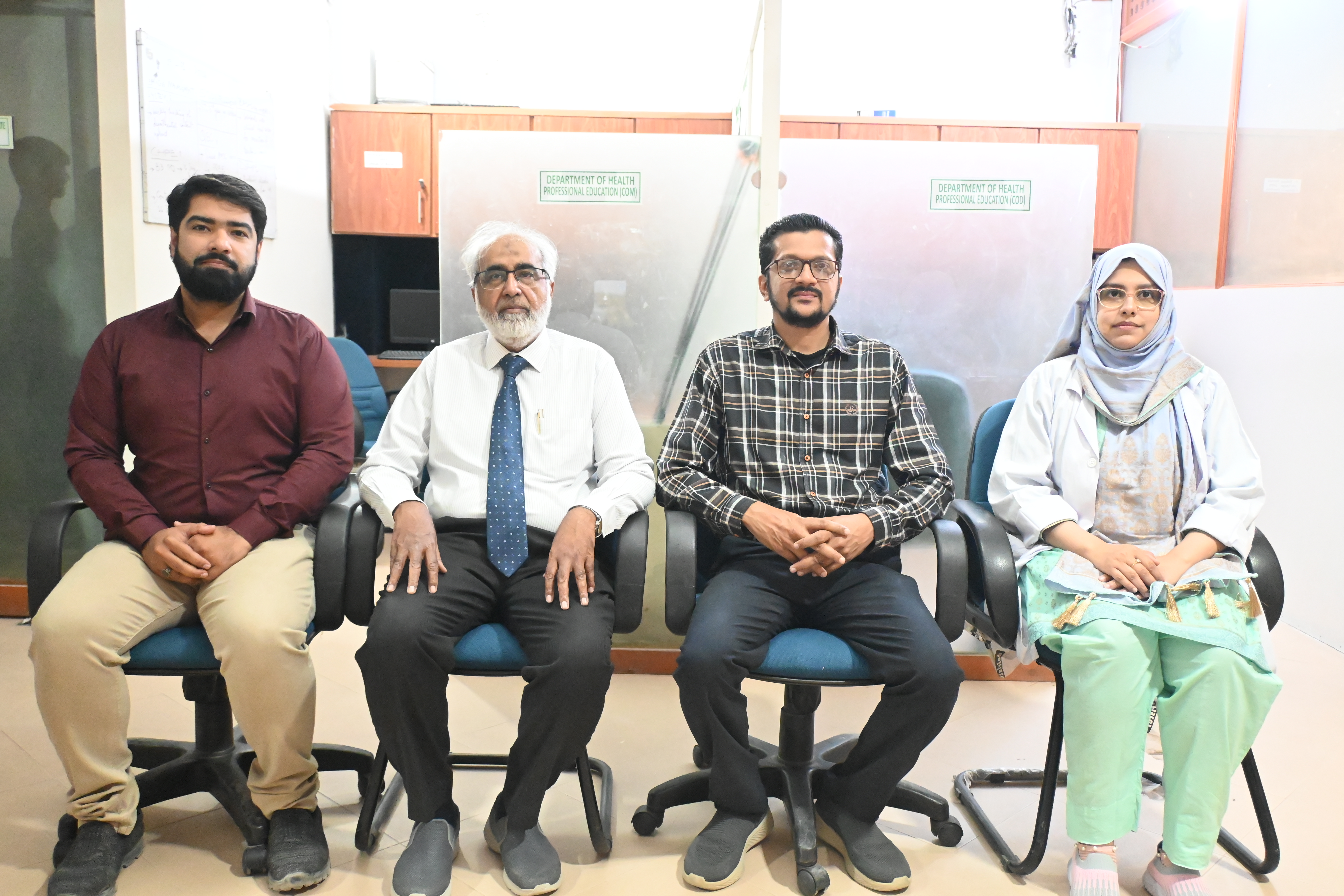
The Department of Otolaryngology – Head and Neck Surgery at Liaquat College of Medicine and Dentistry is committed to excellence in patient care, education, and research. With a student-centred, integrated curriculum and a strong focus on clinical skills, the department prepares future physicians to deliver compassionate and evidence-based care.
Our mission is to provide high-quality education, clinical services, and research in Otolaryngology – Head and Neck Surgery. We aim to foster professional development, mentorship, and innovation, while equipping students and faculty with the skills necessary to meet evolving healthcare challenges.
The department offers comprehensive services in:
General Otolaryngology (ENT)
Head and Neck Surgery
Otology and Neurotology
Rhinology and Allergy
Laryngology and Voice Disorders
Paediatric ENT
Facial Plastic and Reconstructive Surgery
Undergraduate Teaching: Integrated curriculum with interactive lectures, tutorials, problem-based learning (PBL), case-based learning (CBL), and self-directed learning (SDL).
Postgraduate Training: Advanced clinical teaching in clinics and wards, with structured assessments aligned to learning outcomes.
Continuing Professional Development (CPD): Faculty development programmes, workshops, and seminars to enhance teaching and clinical practice.
The department encourages student and faculty participation in research projects, journal clubs, and scholarly activities. Ethical research practices are emphasised, with opportunities for publication and presentation at national and international forums.
Professor Khalid Hussain Mahida (Head of Department): Provides academic oversight, curriculum development, and faculty mentorship. MBBS, DLO, FCPS, MHPE(AKU), interests in Otology and Medical Education
Assistant Professor Shaikh Sjjad: MBBS, FCPS, CHPE
Senior Registrar, Khubeb Yousif Shaikh: MBBS, FCPS, CHPE
Senior Registrar Dr Hira Muzzamil: MBBS, FCPS
Registrar Dr Faiza Sajjad: MBBS, (FCPS)
Lecture halls and tutorial rooms
Clinical teaching facilities in wards and outpatient clinics
Access to library and e-learning platforms (Moodle, Google Classroom)
Laboratories and IT resources for students
Patients can access outpatient clinics, referrals, and specialized ENT services. Appointment details and referral pathways are available through the hospital administration.
The department actively participates in the events organized by the institution
Health awareness camps
Intercollegiate sports and cultural activities
Seminars, poster competitions, and model exhibitions
Conferences and workshops in Otolaryngology
Course guidebook (JSMU-approved)
Academic calendar
Department of Otolaryngology – Head and Neck Surgery, Liaquat College of Medicine and Dentistry
Address: St-19, Johar Chowrangi Road, KDA Scheme, Abul Asar Hafeez Jalandhari Rd, Block 15, Gulistan-e-Johar, Karachi.
Phone Numbers: +92 21-34610271, 021-111300999
The department follows the curriculum and guidelines established by Jinnah Sindh Medical University (JSMU) and maintains academic affiliation with JSMU.
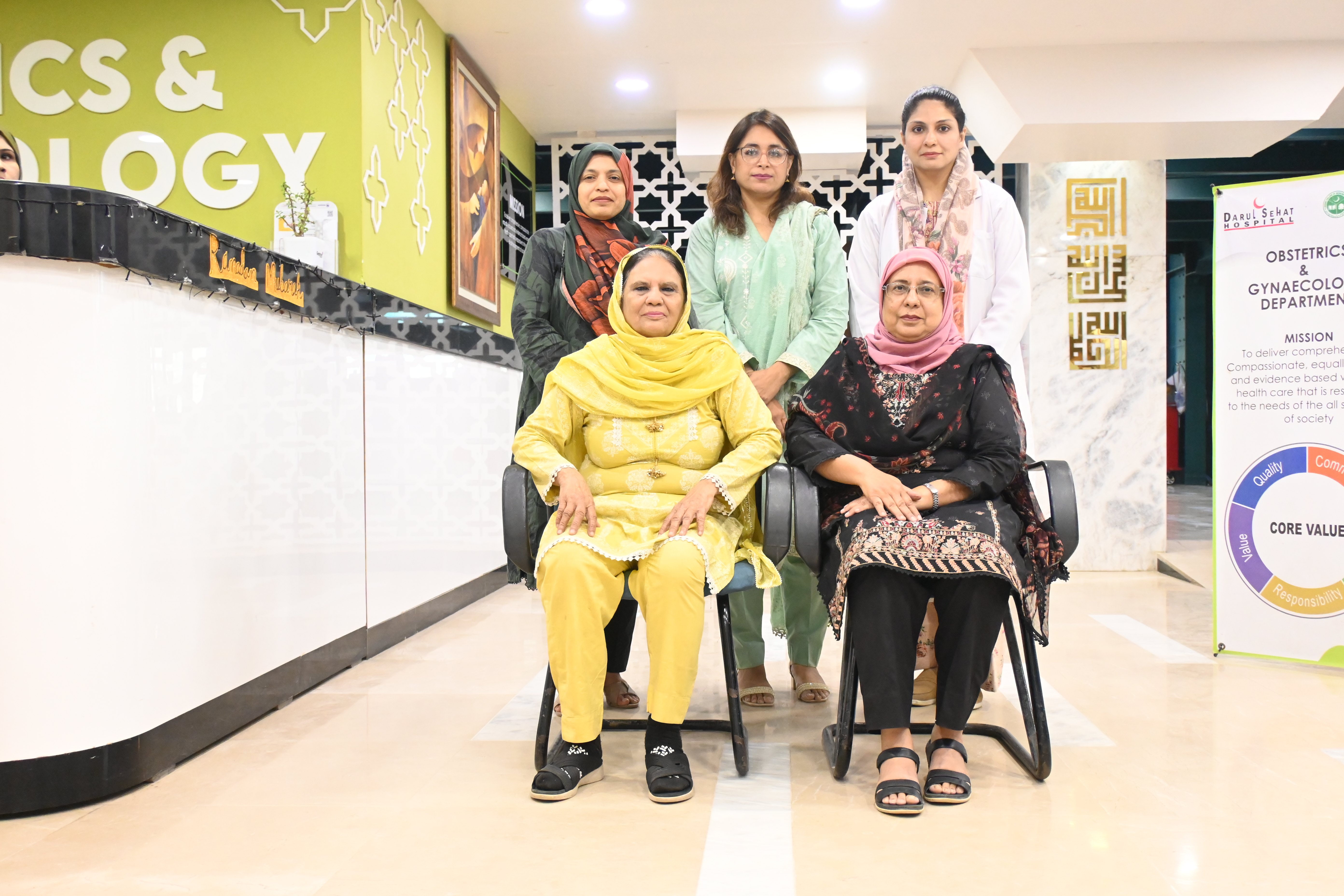
To strive to achieve higher standards in Obstetrics, Gynecology, and reproductive health care of women through excellence in clinical care, education, and research.
To deliver comprehensive, compassionate, equally focused, and evidence-based women's healthcare that is responsive to the needs of all segments of society.
The Department of Obstetrics and Gynecology, as a teaching and training center, plays a vital role in undergraduate and postgraduate medical education. We emphasize competency-based learning, clinical skill development, ethical practice, and professional excellence. We align our mission with the institute's vision by offering a student-centered approach with an integrated curriculum covering key areas such as feto-maternal health, childbirth, and reproductive health. Emphasis is placed on both clinical skills and theoretical knowledge. Mentorship, academic support, and access to hands-on learning through clinical placements and co-curricular activities are core elements of the program.
The department actively promotes clinical research and evidence-based practice to improve maternal and reproductive health outcomes and contribute to advancements in women's healthcare. Through patient-centered care, academic excellence, and community engagement, the Department of Obstetrics and Gynecology strives to improve the health and well-being of women and families while maintaining the highest standards of clinical and professional practice.
The Department follows a well-structured academic calendar that integrates comprehensive theoretical instruction with practical clinical training.
Third- and fourth-year students undertake a four-week clinical rotation, while final-year MBBS students complete an eight-week rotation. During these rotations, students are assigned to the clinical settings of Darul-Sehat Hospital (DSH), Shaukat Omer Memorial Hospital (SOMH), and Sindh Employees' Social Security Institution Hospital (SESSI) Hospital.
Under close supervision, students gain hands-on experience in the assessment and management of common obstetric and gynecological conditions. They work collaboratively with consultants, faculty members, and healthcare staff, fostering teamwork, professionalism, and effective communication skills.
In addition to clinical and academic training, the Department actively promotes holistic development through regular Continuing Medical Education (CME) sessions, health awareness workshops, Students' Week, sports activities, research initiatives, and student presentations. These co-curricular engagements are thoughtfully integrated into the academic timetable to ensure a well-rounded educational experience.
UNIT I (DSH) & UNIT III (SOMH)
Prof Dr. Fouzia Perveen, Professor
Dr. Aliya Nasim, Associate Professor
Dr. Farzana Azhar, Assistant Professor
Dr. Huma Fiaz, Assistant Professor
Dr. Mehvish Kanwal, Senior Registrar
Dr. Sobia Naseem, Senior Registrar
UNIT II (SESSI)
Prof Dr. Subhana Tayyab, Professor
Dr. Humera Tahir, Assistant Professor
Dr. Zakia Bano, Assistant Professor
Dr. Nighat Shah, Senior Registrar
Prof Dr Fouzia Perveen, MBBS, MCPS, FCPS, HOD Obstetrics and Gynecology Department LCMD, Head Unit I (DSH) & II (SOMH)
The Head of the Department of Obstetrics and Gynecology oversees academic development and ensures the department's commitment to providing a balanced learning experience in both theory and practice. The department offers undergraduate and postgraduate programs focusing on the medical and surgical aspects of obstetrics and gynecology.
She is responsible for overall leadership, clinical governance, academic development, and administrative management of the department. Besides this, looking after patient care oversight, teaching, research, and strategic planning of the department.
Professor Dr Subhana Tayab, MBBS, MCPS, FCPS, Head Unit II (SESSI)
She is a senior academic clinician and professor responsible for teaching, clinical care, research, and academic leadership within the department. The role integrates patient management, medical education, and scholarly work.
Provide specialist obstetric and gynecological care, including management of complex and high-risk cases. Participate in maternal mortality reviews and clinical governance activities.
Associate Professor Dr Aliya Naseem, MBBS, MCPS, FCPS
An academic clinician and consultant who plays a major role in clinical care, teaching, research, and departmental administration. The position bridges leadership and operational responsibilities while supporting the Professor and mentoring junior faculty.
Participate in departmental committees (teaching, examination, quality assurance, research). Promote safe clinical practices and infection control.
Assistant Professor Dr Zakia Bano, MBBS, FCPS
She is an academic clinician and consultant responsible for clinical service, teaching, research participation, and supporting departmental activities under senior faculty supervision.
Provide obstetric and gynecological care in OPD, wards, labor room, and operating theatre and management of complicated and high-risk pregnancies.
She is working as acting director of QEC and Head of Program Evaluation Committee. She is 4rth year MBBS coordinator and focal person of the department.
Assistant Professor Dr Farzana Azhar, MBBS, FCPS, MIS, MHPE
She is consultant and a medical educationist responsible for clinical service, teaching, research participation, and supporting departmental activities under senior faculty supervision.
Provide obstetric and gynecological care in OPD, wards, labor room, and operating theatre and management of complicated and high-risk pregnancies.
She is deputy Director Health Profession Education and member of Academic council. She is Final year MBBS coordinator and focal person of the department.
Assistant Professor Dr Humaira Tahir MBBS, FCPS
She is an academic consultant responsible for clinical teaching, research participation, and supporting departmental activities under senior faculty supervision.
Assistant Professor Dr Huma Fiaz, MBBS FCPS
She is an academic consultant responsible for clinical teaching, of undergraduate students under senior faculty supervision.
Senior Registrar Dr Mehvish Kanwal, MBBS, FCPS
She is an academic consultant responsible for clinical teaching, research participation, and supporting departmental activities under senior faculty supervision. She is 3rd year MBBS coordinator and focal person of the department.
Senior Registrar Dr Sobia Naseem Siddiqui, MBBS, FCPS
She is an academic consultant responsible for clinical teaching, of undergraduate students under senior faculty supervision.
Senior Registrar Dr Nighat Sultana, MBBS, FCPS
She is an academic consultant responsible for clinical teaching, of undergraduate students under senior faculty supervision.
The curriculum is thoughtfully designed to provide a dynamic and student-centered learning experience through interactive lectures, case-based learning (CBL), skills lab sessions, workshops, and self-directed learning (SDL).
Students receive comprehensive clinical training in Obstetrics and Gynecology at affiliated on-campus teaching hospitals. During their rotations, students are assigned in small groups to outpatient clinics, inpatient wards, the labor room, the emergency department, and operating theatres (OT), ensuring structured exposure to a wide range of clinical scenarios.
The Department also places strong emphasis on community outreach and public health education, encouraging students to actively participate in initiatives that promote maternal and women's health awareness.
Students participate in sports events, intercollegiate activities including debates, sports, quiz programs, health awareness programs, and poster competitions. These activities enhance leadership skills, teamwork, and professional confidence.
The department offers access to state-of-the-art lecture halls, a well-equipped library, and a Skill lab for hands-on training. E-learning platforms such as Moodle and Google Classrooms are used to support learning and teaching. IT facilities are available for students to access research materials and online courses.
Students are encouraged to participate in research projects related to maternal health, obstetric care, and gynecological advancements. The department also participates in the journal club, promoting scholarly discussions and the development of research skills. Ethical research practices are emphasized throughout the program. Department itself conducting research.
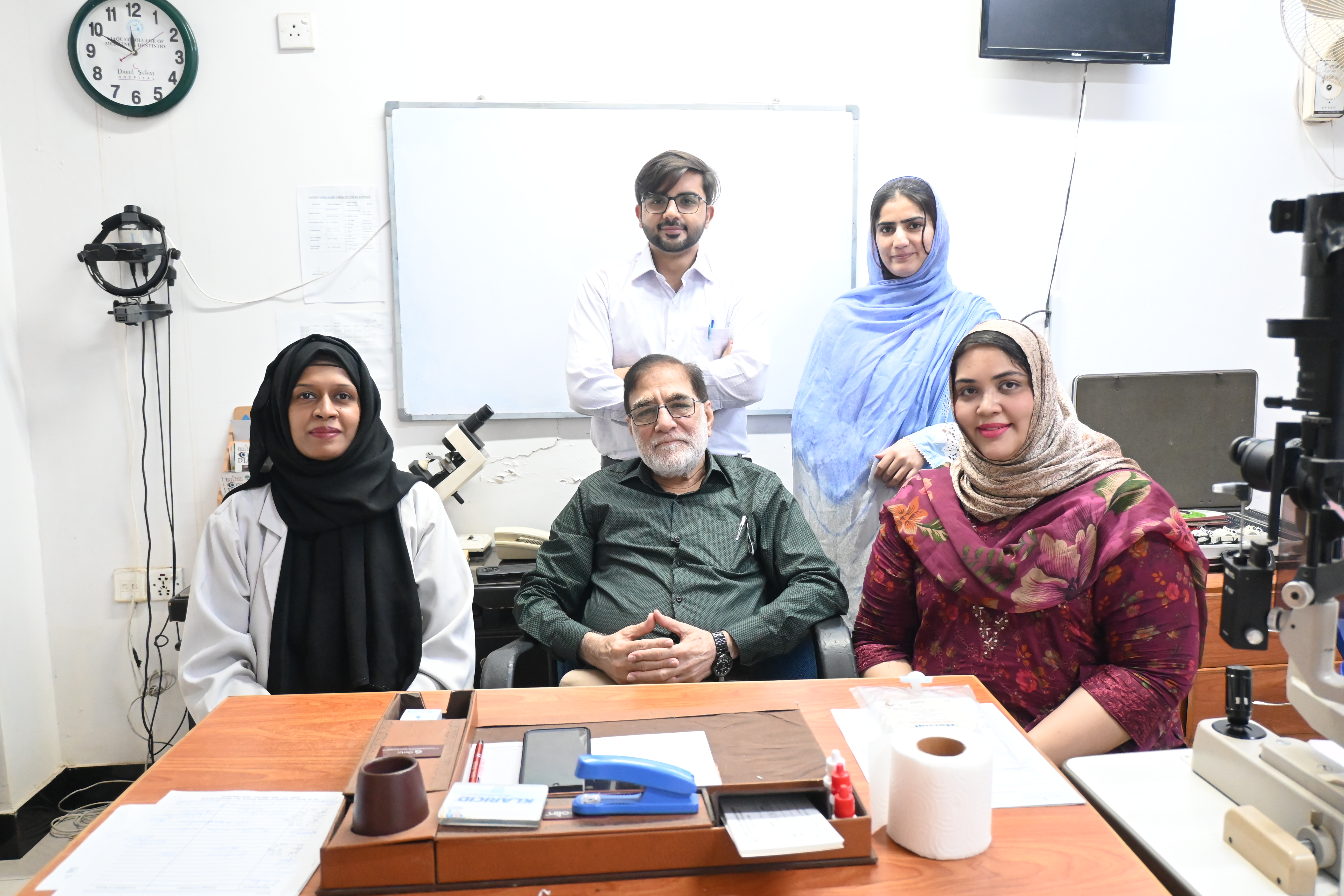
Mission: To provide excellence in undergraduate ophthalmic education, clinical care, and research.
Vision: To develop competent MBBS graduates capable of recognizing and managing common ocular conditions.
Core Focus Areas: Integrated longitudinal module teaching, clinical skills training, research mentorship, community eye health.
Orientation Week: The module is structured over 38 weeks, providing students with comprehensive academic and clinical exposure. Students are introduced to the faculty members and the clinical training units, which include Unit I – Darul Sehat Hospital (DSH), Unit II – SESSI, and Unit III – Sindh Oman Hospital (SOMH).
The curriculum is designed according to PMDC requirements, with a total of 150 teaching hours distributed between the 3rd and 4th year. During the 3rd year, students undergo one month of clinical posting, completing approximately 48 hours of training. This includes basic tutorials, interactive lectures based on symptomatology, and history taking in OPDs, along with case-based discussions focusing on the most common anterior segment ocular diseases.
In the 4th year, the curriculum includes 102 hours of teaching, consisting of interactive lectures, audiovisual sessions, case-based learning (CBL), and skill lab sessions. These sessions are designed to help students practice essential clinical skills such as fundoscopy and anterior segment examination techniques, under faculty supervision.
Clinical postings in the 4th year provide exposure to both anterior and posterior segment ocular diseases, as well as neuro-ophthalmological conditions, primarily through OPD-based learning. In addition, audiovisual operating room (OR) sessions are conducted to teach important surgical procedures, including phacoemulsification, intravitreal injections, chalazion excision, and pterygium excision.
Students are also encouraged to participate in research activities, where they undertake research projects under faculty supervision, along with poster presentations and other academic contributions to enhance their learning experience.
Clinical postings (3rd Year): Basic eye sciences: Anatomy, Physiology, Optics, Pathology.
Eye Module (4th Year): Clinical ophthalmology, OPD rotations, ward rounds.
Skills lab session: Visual acuity, pupillary examination, fundoscopy, tonometry training.
Assessments: Formative assessments, OSCE, case presentations, summative exams.
Leadership: Dean → Head of Department → Faculty Members
Academic Structure: Module Coordinators → Clinical Instructors → Student Representatives
Support Units: Skills Lab Team, Research Cell, Administrative Staff
Prof. Dr. Nisar Ahmed Sheikh (MBBS, MCPS, FRCS)
Experience: He has been serving as a Consultant Ophthalmologist and Head of Department for the past 10 years. With a broad vision and strong leadership, he brings extensive clinical and academic experience, including 10 years at King Fahad Specialist Hospital, Al-Qassim. He also has over 20 years of dynamic professional experience working in several reputable institutions in Pakistan, including Jinnah Medical College and Karachi Medical and Dental College. Throughout his career, he has been actively involved in clinical practice, academic teaching, research activities, OPD services, and surgical procedures.
Responsibilities: Curriculum development, faculty supervision, academic planning, member of Academic council and core curriculum committee and disciplinary committee.
Assistant Professor: Dr. Burhan Majeed (MBBS, FCPS, FCPSVR) (Consultant senior Vitreoretinal surgeon at POB.)
He is highly skilled academic and professional vitreoretinal (VR) surgeon who actively supports 3rd and 4th year medical students in navigating their academic journey. He is deeply involved in clinical teaching and regularly delivers lectures, contributing significantly to the learning and professional development of students.
Assistant Professor: Dr. Asma Shams Sheikh (MBBS, FCPS)
She is a Senior Consultant and Head of the SESSI Unit, actively involved in teaching and mentoring 3rd and 4th year medical students through clinical postings and academic lectures.
Senior Registrar: Dr. Farhat Fatima (MBBS, FCPS)
She is a Senior Registrar, is actively and enthusiastically involved in academics, research, and innovative teaching methods for both 3rd and 4th year medical students. She conducts workshops, organizes academic schedules to ensure smooth departmental functioning, and serves as a focal person for coordinating activities such as the skills lab and counseling sessions, promoting effective clinical and ethical practices. She also supervises and mentors students in their research projects, while actively engaging in clinical teaching and professional responsibilities in OPDs and clinics at both LCMD and SESSI. Additionally, she is involved in professional assessments at LCMD and JSMU. And also contributes to developing a centralized learning environment at LCMD and plays a key role in managing the departmental LMS (Learning Management System) portal.
Registrar: Dr. Noor-Us Sabah (MBBS, MCPS)
She is an emerging Registrar with excellent teaching skills, actively contributing to the education of both 3rd and 4th year medical students. She is closely involved in clinical postings and skills lab sessions, where she supports students in developing their clinical competencies. Her passion for adopting new learning strategies has led her to contribute to the development of BCQs under the supervision of the Head of Department (HOD) and to assist in lecture alignment. She diligently fulfills various assessment and administrative responsibilities at LCMD. Additionally, Dr. Noor plays an important role in developing a centralized learning environment at LCMD and assists in managing the department's Learning Management System (LMS) portal.
Clinical Instructors: All faculty members according to anticipated timetable.
3rd Year Focus - Basic sciences integration with clinical correlation.
4th Year Focus - Clinical examination, diagnosis, emergency eye care.
Teaching Methods - Lectures, TBL, case-based discussions, ward rounds.
Assessment Tools - MCQs, SAQs, OSCE, clinical viva.
Ophthalmology Interest Group - Student-led academic discussions and workshops.
Community Outreach - Vision screening camps and awareness campaigns.
Competitions - Quiz contests and research poster presentations.
Textbooks - Standard ophthalmology reference books.
Digital Resources - Online lectures, case banks, e-library access.
Skills Lab - Slit lamp simulators, fundoscopy models, refraction kits.
Student Research - Case reports, cross-sectional studies, audits.
Faculty Research Areas - Diabetic retinopathy, glaucoma, refractive errors.
Scholarly Output - Conference presentations and peer-reviewed publications.
Emergency department is a 30 bedded department.
Triage room
2 bedded isolation room
2 bedded minor OT
3 bedded resuscitation room with defibrillator
ECG room
POP and draining room
Paeds beds
Adult retention beds with and without monitoring
BLS workshops for staff and doctors.
Dr. Yusra Afzal, is FCPS plastic surgery. 10 year experience of plastic, reconstructive and trauma surgery. Expert in treating acute and chronic burns.
3 years of experience in leading trauma team and heading emergency department.
Emergency department is supervised by Professor RASHID NASEEM KHAN. Department is headed by Assistant Professor Dr. YUSRA AFZAL.
Trauma team has Orthopaedic Assistant Professor Dr. OSAMA BIN ZIA, Neurosurgery Assistant Professor Dr. USAMA BIN WAHEED and Professor KHURRAM ZIA (General Surgery).
Undergraduate (3rd year, 4th year and final year MBBS) evening posting in emergency department and postgraduate teaching (clinical and DOPS).
—
Books
E-learning Moodle
Google Classroom
—
Biochemistry is an important and
rapidly growing field that encompasses the
biochemical working of the cell, genetics,
molecular biology, nutrition, clinical
biochemistry, etiology, prevention, and
management of diseases.
We teach Biochemistry to MBBS 1st and
2nd-year
professional students and BDS 1st year
professional students. At the successful
conclusion of the session, students have the
basic concept of the role of biochemistry in
the
following two important aspects of diseases
i.e.diagnosis and treatment along with
medical
research.
Biochemistry is an important and
rapidly growing field that encompasses the
biochemical working of the cell, genetics,
molecular biology, nutrition, clinical
biochemistry, etiology, prevention, and
management of diseases.
We teach Biochemistry to MBBS 1st and
2nd-year
professional students and BDS 1st year
professional students. At the successful
conclusion of the session, students have the
basic concept of the role of biochemistry in
the
following two important aspects of diseases
i.e.diagnosis and treatment along with
medical
research.
The Department of Orthopedic Surgery at LCMD is committed to delivering student-centred, outcome-based education through an integrated curriculum. The department emphasizes interactive learning, early clinical exposure, and development of practical skills aligned with modern orthopedic practice. Teaching is structured to promote critical thinking, clinical reasoning, and professionalism.
Core strengths include skeletal trauma management, sports injuries, and joint replacement, supported by a strong focus on medical education and research. Students benefit from mentorship, structured academic support, and opportunities for professional growth through both curricular and co-curricular engagement.
The department follows the central LCMD academic calendar, incorporating:
Scheduled teaching blocks and clinical rotations
Continuous formative assessments and end-of-rotation evaluations
Participation in institutional academic and co-curricular activities throughout the year
Head of Department
Dr Syed Muhammad Azfar – Associate Professor Orthopedic Surgery
Faculty Members
Dr Osama Bin Zia – Assistant Professor Orthopedic Surgery
Dr Yousuf Yaqoob – Assistant Professor Orthopedic Surgery
Dr Hassaan Khan – Assistant Professor Orthopedic Surgery
Registrar
Dr Sajid Naseem Khan – Registrar Orthopedic Surgery
Dr Syed Muhammad Azfar is an experienced orthopedic surgeon and medical educator with over 21 years of clinical and academic experience. His areas of expertise include skeletal trauma, sports injuries, and joint replacement surgery. He has a strong interest in medical education and research, contributing actively to undergraduate teaching, curriculum development, and faculty development initiatives. His leadership focuses on integrating clinical excellence with educational innovation.
The department comprises a dedicated team of qualified orthopedic surgeons covering core areas of orthopedic practice. Faculty members are actively involved in undergraduate teaching, clinical supervision, and skill development.
Their collective expertise supports a comprehensive learning environment aligned with current clinical standards.
The department is actively involved in undergraduate orthopedic education, with structured teaching across clinical years.
Teaching modalities include:
Interactive lectures
Case-Based Learning (CBL)
Self-Directed Learning (SDL)
Bedside and clinical teaching
Integrated teaching sessions with allied disciplines
Students are trained in clinical assessment, interpretation of investigations, and decision-making in orthopedic conditions. Continuous assessment strategies are employed, including OSCEs and workplace-based assessments.
The department regularly organizes and participates in activities that enhance student engagement and professional development, including:
Workshop series for junior doctors on acute trauma management
Participation in seminars and academic discussions
Student involvement in awareness activities and applied learning experiences
These initiatives aim to build confidence, teamwork, and communication skills among learners.
Students have access to a range of institutional learning facilities, including:
Shared lecture halls equipped for interactive teaching
Shared clinical skills laboratory for procedural training
Library resources and digital access to academic materials
Learning Management System (LMS) for structured e-learning
IT infrastructure supporting blended learning approaches
The department encourages a culture of research and scholarly engagement. Students are involved in supervised research projects and academic discussions.
Key activities include:
Student research participation
Ongoing clinical and educational research
Journal club discussions
Emphasis on ethical research practices
The Plastic Surgery Department at Darul Sehat Hospital (DSH), the primary teaching affiliate of the Liaquat College of Medicine & Dentistry (LCMD), operates with a mission to integrate high-level clinical care with an advanced, student-cantered educational framework. The department follows a modern, integrated curriculum designed to move away from traditional rote learning toward a more holistic understanding of reconstructive and aesthetic surgery. Education is tailored to the learner's needs, focusing on active participation. This is facilitated through Case-Based Learning (CBL) and Problem-Based Learning (PBL) sessions where students analyse real clinical scenarios. Students and trainees gain exposure to a wide range of procedures, including cleft lip and palate repair, burn reconstruction, hand surgery, and cosmetic procedures. Regular "Module Tests" and continuous feedback loops allow students to identify areas for improvement before high-stakes examinations.
The department follows the central LCMD academic calendar, incorporating:
The academic calendar at the Department of Plastic Surgery is built upon a student-centered, integrated curriculum that prioritizes active engagement over passive learning. Throughout the year, students participate in interactive teaching sessions, including Problem-Based Learning (PBL) and Case-Based Learning (CBL), where they analyze complex reconstructive cases to develop critical clinical reasoning skills. These theoretical foundations are reinforced by structured practical skills training in the ward and operating theaters, focusing on essential maneuvers such as wound management, suturing techniques, and specialized interventions for conditions like cleft lip and palate. To ensure these activities align with established learning outcomes, the department utilizes continuous formative assessments and Objective Structured Practical Examinations (OSPE), providing students with the regular feedback necessary for professional growth.
Beyond the core rotations, the department fosters a culture of professional development through weekly Grand Rounds, Journal Clubs, and CME workshops that keep trainees abreast of global surgical advancements. Students are also integrated into the department’s academic support and mentorship framework, where faculty guidance helps them navigate research projects and clinical challenges. This rigorous academic environment is further enriched by participation in surgical missions and research expos, allowing students to apply their knowledge in diverse, high-impact clinical settings while fulfilling the requirements of a modern, holistic medical education.
The department encourages a balanced lifestyle to prevent burnout and foster a sense of community. A dedicated annual week featuring sports competitions (cricket, badminton, table tennis) and talent showcases. Welcoming new students into the medical fold with a focus on ethics and professionalism. Cultural programs and flag-hoisting ceremonies held every August 14th. Seminars for the public on "Burn Prevention" and "Hand Hygiene Awareness."
Professor: Muhammad Ashraf Ganatra
Assistant Professor: Yusra Afzal
Professor Dr. Muhammad Ashraf Ganatra is a titan of reconstructive surgery and a lifeline for Pakistan’s marginalized. Since 2004, he has waged a crusade against congenital orofacial deformities—a neglected crisis where "silent sufferers" often live in social exile. By restoring the faces of those broken by poverty, he rescues human beings from the fringes of society, turning a lifetime of stigma into a future of dignity.
Fellowship of professional bodies: A global authority, he is a member of the American Cleft Palate & Craniofacial Society and a visiting professor for ICOPLAST. He serves as a Cleft Educator for Operation Smile (USA) and a surgeon partner for Deutsche Cleft Kinderhilfe. Nationally, he is the visionary founder of the Pakistan Association of Plastic Surgeons and the Pakistan Cleft Palate & Craniofacial Association.
Service in difficult & hostile area: Driven by sheer philanthropic will, Prof. Ganatra bridged the gap for patients excluded from national health priorities. Over 22 years, he has performed 8,106 free surgeries at the Muskurahat Center. His bravery extends to the most remote corners of Sindh and Balochistan; having organized 134 surgical camps, he has personally operated on 7,178 patients in underserved regions from Sukkur to Mithi.
Teaching & mentorship: For 32 years at Dow Medical College, Prof. Ganatra has been a master educator, mentoring dozens of FCPS, MS, and MDS fellows. His influence is global, training surgeons from Ethiopia and serving as a Cleft Educator in Mexico and Egypt. As an MHPE holder, he has ensured the sustainability of his mission, training a new generation to restore speech and smiles to the poorest of the poor.
Number of articles published: A prolific researcher, he has 39 published articles and 5 book chapters. His groundbreaking work on amniotic membranes for burns has redefined treatment. He is the Managing Editor of JPAPS and a prestigious reviewer for the Journal of Plastic Reconstructive Surgery and JCPSP.
Proven impact on socio economic development: The economic impact of his mercy is staggering. By performing over 15,000 free surgeries, Prof. Ganatra has saved the national economy over PKR 4.5 Billion. Through the Muskurahat Foundation, he provides world-class, comprehensive care under one roof, entirely free of charge.
Community welfare & advocacy: From Khuzdar to Turbat, he has led aggressive awareness campaigns on birth defect prevention and folic acid advocacy, educating the public in Pakistan’s hardest-to-reach areas.
Recognition & awards: Beyond international accolades, he was honoured with the Lifetime Achievement Award (2022) by the Pakistan Association of Plastic Surgeons—a testament to a life dedicated to healing.
Faculty consist of professor and Assistant professor. Professor is Muhammad Ashraf Ganatra and Assistant Professor is Dr.Yusra Afzal
The academic calendar at the Department of Plastic Surgery is built upon a student-centered, integrated curriculum that prioritizes active engagement over passive learning. Throughout the year, students participate in interactive teaching sessions, including Problem-Based Learning (PBL) and Case-Based Learning (CBL), where they analyze complex reconstructive cases to develop critical clinical reasoning skills. These theoretical foundations are reinforced by structured practical skills training in the ward and operating theaters, focusing on essential maneuvers such as wound management, suturing techniques, and specialized interventions for conditions like cleft lip and palate. To ensure these activities align with established learning outcomes, the department utilizes continuous formative assessments and Objective Structured Practical Examinations (OSPE), providing students with the regular feedback necessary for professional growth.
Beyond the core rotations, the department fosters a culture of professional development through weekly Grand Rounds, Journal Clubs, and CME workshops that keep trainees abreast of global surgical advancements. Students are also integrated into the department’s academic support and mentorship framework, where faculty guidance helps them navigate research projects and clinical challenges. This rigorous academic environment is further enriched by participation in surgical missions and research expos, allowing students to apply their knowledge in diverse, high-impact clinical settings while fulfilling the requirements of a modern, holistic medical education.
The department encourages a balanced lifestyle to prevent burnout and foster a sense of community. It organizes Institutional Events like Student Week ( A dedicated annual week featuring sports competitions and talent showcases) White Coat Ceremony: (Welcoming new students into the medical fold with a focus on ethics and professionalism.) Independence Day Celebrations (Cultural programs and flag-hoisting ceremonies held every August 14th).Department also arrange Community & Social Outreach activities Lile Public Awareness Campaigns( Seminars for the public on "Burn Prevention" and "Hand Hygiene Awareness), Free Medical Camps (Diagnostic and consultation camps in underserved areas of Karachi (e.g., Gulistan-e-Jauhar and beyond) where students assist in screening patients and Annual Picnic ( A social outing for faculty, staff, and residents to relax outside the clinical environment.)
As the primary teaching affiliate of the Liaquat College of Medicine & Dentistry (LCMD), Darul Sehat Hospital (DSH) provides a diverse range of learning resources tailored for both undergraduate and postgraduate medical students. These resources are designed to support a modern, integrated curriculum through both physical infrastructure and digital platforms.The following learning resources are available at the institution:
Departmental Libraries: In addition to the main college library, specialized departments like Plastic Surgery maintain their own departmental collections, providing quick access to subject-specific textbooks and reference materials.
Tutorial & Seminar Rooms: Dedicated spaces equipped for small-group discussions, Problem-Based Learning (PBL), and Case-Based Learning (CBL) sessions.
Advanced Skill Labs: These include specialized facilities such as the Dentistry Skill Lab (equipped with phantom head workstations and intra-oral cameras) and clinical areas for surgical skill practice, allowing for hands-on training in a simulated environment.
Tertiary Care Clinical Wards: With 250 beds, the hospital offers extensive "bedside" learning opportunities across various specialties, including integrated medical and surgical units.
Digital Resource Center: A computer lab providing access to high-speed internet and digital databases.
Research Groups: Third and fourth-year students are assigned to faculty-led research groups, utilizing the hospital’s clinical data and academic support to conduct original studies.
Formative Assessment Tools: Resources for regular internal evaluations, including OSPE (Objective Structured Practical Examination) stations and modular testing aligned with defined learning outcome.
Research and scholarly activities at Darul Sehat Hospital (DSH), as part of the Liaquat College of Medicine & Dentistry (LCMD), are structured to transition students from passive learners to active contributors to medical science. The department emphasizes a culture of inquiry governed by strict ethical standards.
The following activities define the research landscape for students:
Biochemistry is an important and
rapidly growing field that encompasses the
biochemical working of the cell, genetics,
molecular biology, nutrition, clinical
biochemistry, etiology, prevention, and
management of diseases.
We teach Biochemistry to MBBS 1st and
2nd-year
professional students and BDS 1st year
professional students. At the successful
conclusion of the session, students have the
basic concept of the role of biochemistry in
the
following two important aspects of diseases
i.e.diagnosis and treatment along with
medical
research.
The Research Cell, College of Medicine, functions as the central academic body responsible for promotion, coordination, and governance of research activities within the institution. The department supports a student-centred and integrated research culture through structured mentorship, academic supervision, research training, and professional development. Research education is aligned with institutional learning outcomes and accreditation standards, emphasizing ethical research practices, evidence-based medicine, scholarly writing, and interdisciplinary collaboration. The Research Cell facilitates undergraduate, postgraduate, and faculty research development through organized committees and mentorship programs.
The Research Cell conducts academic and co-curricular activities throughout the year aligned with the institutional academic calendar. Activities include research methodology workshops, MBBS research module implementation, proposal writing sessions, statistical training workshops, journal clubs, faculty development programs, Research Day, Student Research Week, abstract submission activities, research competitions, and research dissemination events. Continuous academic mentoring and monitoring meetings are conducted periodically.
Chairperson Research Cell: Prof. Dr. Rashid Naseem Khan
Director Research Cell: Prof. Dr. M. Athar Khan
Deputy Director: Dr. Sarah Aslam
Research Officer: Dr. Anusha Khan
Undergraduate Research Committee – Coordinator: Prof. Dr. Kiran Mehtab
Postgraduate Research Committee – Coordinator: Dr. Azhar Hussain
Faculty Research Committee – Coordinator: Prof. Dr. M. Athar Khan
Ethical Review Committee (IRB LCMD) – Secretary COM: Dr. Sarah Aslam
Administrative Support: Mr. Majid Hussain
Prof. Dr. M. Athar Khan, Director Research Cell, is a Public Health Specialist and Professor of Community Medicine with extensive experience in epidemiology, medical education, research supervision, and institutional research governance. The Director oversees implementation of research policies, research capacity building, mentorship of undergraduate and postgraduate students, faculty scholarly development, ethical compliance, and promotion of institutional research productivity.
The Research Cell operates through multidisciplinary faculty committees comprising Professors, Associate Professors, Assistant Professors, and research mentors representing basic medical sciences, clinical disciplines, community medicine, medical education, and allied health sciences. Faculty members provide expertise in epidemiology, biostatistics, qualitative and quantitative research methods, clinical research, health systems research, and scientific writing to support institutional research activities.
The Research Cell integrates research education into academic programs through structured teaching and supervision activities. The Undergraduate Research Committee conducts the MBBS Research Module in 3rd and 4th Year MBBS, focusing on research methodology, proposal development, data collection, analysis, and scientific writing. Teaching strategies include interactive sessions, Case-Based Learning (CBL), Self-Directed Learning (SDL), integrated research teaching, and formative assessment. The Postgraduate Research Committee facilitates thesis supervision and research monitoring, while the Faculty Research Committee supports faculty academic development and research integration.
The Research Cell organizes institutional scholarly and academic activities including Research Day, Student Research Week, poster and oral presentation competitions, research seminars, health awareness activities, academic workshops, intercollegiate research participation, and student research society initiatives. These activities enhance leadership skills, communication abilities, professional confidence, teamwork, and applied learning experiences among students and faculty.
The department provides access to lecture and seminar rooms, institutional library facilities, online databases, computer and internet facilities, statistical consultation services, and digital learning platforms including Moodle and Google Classroom. IT resources support literature search, research data management, plagiarism checking, virtual meetings, and academic writing assistance for students and faculty researchers.
The Research Cell promotes active participation of students and faculty in research projects, proposal development, ethical review processes, journal clubs, publication writing workshops, conference presentations, and grant applications. Emphasis is placed on ethical research conduct through IRB oversight, responsible data handling, interdisciplinary collaboration, and dissemination of research findings in peer-reviewed journals and scientific forums.
Library is the pillar of every educational institution. 8000 plus medical, dental, nursing and references books available. Medical and dental journals. Library has trained staff with vast experience. Library design and set with modern technology with hi tech gadgets. Library has a sitting capacity of 150 plus students and faculty.
Issue books for study/reading to sit in library and for borrowing books for home, books audit in every month end, add new collection of books and journals. Online books and journals searching to upgrade the record .Maintain rules and regulations with discipline.
Shaheen Ghaznavi – Librarian
Rani Ehtasham – Assistant Librarian
Nasir Muhammad – Computer Operator
Abdul Hafeez – Assistant
Mr. Ajaz – Assistant Librarian (Evening Shift)
Associated with this institute since 1999 as a librarian. Vast experience in library field. Qualification :masters
—
Online Exams
Sessions
Workshops
—
High-speed internet access.
136 computer systems for research purposes.
500+ HEC online medical and dental journals.
100+ e-books.
8000+ hard copy curriculum books.
High-speed WiFi facility available.
—
The Department of Clinical Laboratories & Blood Bank provides essential diagnostic and transfusion services to support patient care and clinical training. The department focuses on accurate laboratory testing, safe blood transfusion practices, and quality assurance. It also contributes to the education of healthcare professionals by offering practical exposure to laboratory procedures, modern diagnostic techniques, and clinical interpretation of laboratory results.
The department follows the academic calendar of the college, conducting regular training sessions, laboratory demonstrations, workshops, and seminars throughout the year. Students participate in laboratory rotations, skill-based training, and assessments designed to enhance their understanding of clinical diagnostics and transfusion medicine.
The department functions under the leadership of the Head of Department (HOD). The organizational structure includes:
Pathologists:
Chief Pathologist (HOD): Dr Anam Shaikh
Consultant Histopathologist: Prof Dr. Saleem Khanzada
Consultant Histopathologist: Dr Alfarah Rehmatullah
Consultant Microbiologist: Prof Dr. Rizwana Yasmeen
Consultant Microbiologist: Dr Shahida Kashif
Consultant Hematologist: Dr Waseem Ahmed
Laboratory Manager: Adnan Ali Rana
Laboratory Deputy Manager: Muhammad Ali
Evening Shift Supervisor: Pervaiz Alam
Night Shift Supervisor: Zulfiqar Ali
Clinical Chemistry
Unit Incharge: Shakir Ahmed
Medical Technologists: Sadia Shahab, Pervaiz Alam, Hafeezullah
Laboratory Technicians: Abrar Ahmed, M. Mehboob
Hematology
Unit Incharge: Sarfarz Manzoor
Medical Technologists: Syeda Tabassum, Uffaq Javed, Syeda Aiman, Tehmeed Faisal, Kamlesh Kumar
Laboratory Technicians: Abrar Ahmed, Abdullah Khan, Zahoor Alam
Microbiology
Unit Incharge: Abdul Qayyum
Medical Technologists: Aneela Ali,
Laboratory Technicians: Naeem Akhtar
Immunology/Serology
Unit Head: Shakir Ahmed
Medical Technologists: Sadia Shahab
Laboratory Technicians: Shakil Nadeem
Quality Assurance/Quality Control (QA/QC) Officer: Adnan Ali Rana/ Muhammad Ali
Laboratory Information System (LIS) Manager: Adnan Ali Rana/ Muhammad Ali
Blood Bank
Transfusion Medicine Specialist: Dr. Waseem Ahmed, Dr Anam Shaikh
Unit Incharge: Shakil Nadeem
Medical Technologists: Syeda Tabassum, Uffaq Javed, Hafeezullah
Technicians: Zulfiqar Ali
Quality Assurance/Quality Control (QA/QC) Officer: Adnan Ali Rana/ Muhammad Ali
Laboratory Information System (LIS) Manager: Adnan Ali Rana/ Muhammad Ali
Phlebotomy
Unit Incharge: Laiba
Phlebotomists: Abdullah Khan, Shareefan, Zahoor Alam, Qasim Abbas.
Support Staff
Muhammad Zameer
Muhammad Muavia
Raees Ahmed
Each member plays a key role in laboratory diagnostics, blood collection, screening, storage, and safe transfusion practices.
Dr Anam Shaikh
Assistant Professor
MBBS, MPhil, CRCP, CHR, CHPE
The Head of the Department supervises laboratory operations and ensures compliance with quality standards in diagnostic services and blood banking. The HOD oversees staff & Students training, implementation of standard operating procedures, and coordination with clinical departments to provide reliable laboratory results and safe transfusion services.
The department is staffed by qualified pathologists, laboratory technologists, and trained technicians. The team is experienced in various laboratory disciplines including hematology, clinical chemistry, microbiology, and blood banking. They actively participate in laboratory diagnostics, teaching, and research activities.
1. Chief Pathologist (HOD): Dr Anam Shaikh - Assistant Professor - MBBS, MPhil, CRCP, CHR, CHPE
2. Consultant Histopathologist: Prof Dr. Saleem Khanzada - MBBS, MPhil,
3. Consultant Histopathologist: Dr Alfarah Rehmatullah - MBBS, MPhil, CHPE, PHD Scholar
4. Consultant Microbiologist: Prof Dr. Rizwana Yasmeen - MBBS, MPhil, PHD
5. Consultant Microbiologist: Dr Shahida Kashif - MBBS, MPhil, CHPE, PHD Scholar
6. Consultant Hematologist: Dr Waseem Ahmed - MBBS, FCPS
Curricular activities include laboratory demonstrations, diagnostic testing training, blood grouping and cross-matching practice, quality control procedures, and case-based discussions. Students are trained in specimen collection, laboratory safety, interpretation of laboratory reports, and the clinical importance of diagnostic investigations.
The department participates in health awareness programs, blood donation campaigns, community screening camps, seminars, and academic competitions. These activities help promote public awareness regarding safe blood donation and the importance of laboratory diagnostics in healthcare.
The department provides access to well-equipped diagnostic laboratories, blood bank facilities, modern laboratory analyzers, microscopes, and quality control systems. Students and staff also have access to library resources, digital learning materials, and laboratory manuals to support academic learning and research.
The department encourages research projects, case studies, journal clubs, and participation in scientific conferences. Faculty and students collaborate on research related to laboratory diagnostics, transfusion medicine, infectious disease screening, and quality improvement in laboratory services.
The Skills Lab provides a student-centred, competency-based learning environment focused on the development of clinical and procedural skills. It supports integrated teaching, simulation-based training, and formative assessment aligned with undergraduate and postgraduate learning outcomes. The lab also facilitates safe practice, mentorship, and skills reinforcement before real patient exposure.
The Skills Lab activities are aligned with the institutional academic calendar and include scheduled undergraduate and postgraduate skills sessions, clinical skills, workshops (e.g., BLS, procedural skills), and revision sessions throughout the academic year.
The Skills Lab has a DIRECTOR and it's supervised by the Incharge Skills Lab, with coordination support from faculty members of clinical departments. Skills teaching is delivered by trained faculty from various disciplines and 2 non-faculty staff including a computer operator and a lab assistant.
Prof. Kiran Mehtab - MBBS, MPH, CHPE.
Head of the Department of Community Medicine, serves as the Director of the Skills Lab and provides overall administrative oversight.
Dr. Samar Kashif - MBBS, MSc Diabetes & Endo, CHPE, CSEP.
Incharge Skills Lab, who is responsible for the planning, organization, and execution of all skills-based teaching sessions, administrative coordination, collaboration with faculty across departments and she is conducting medicine's skills as well.
The Skills Lab involves multidisciplinary faculty, including Professors, Associate Professors and Assistant Professors, from clinical departments. Faculty members contribute to teaching essential clinical, procedural, and communication skills using simulation-based methodologies.
Undergraduate and postgraduate clinical skills training
Structured sessions including procedural skills, examination techniques, and communication skills
Basic Life Support (BLS) and emergency response workshops. Etc.
Fully equipped Skills Lab with manikins and task trainers
Procedure-based models for hands-on training
Audio-visual aids and demonstration equipment
Facilitation of student participation in research related to medical education and clinical skills
Contribution to skills-based training modules and SOP development.
The Examination Department is responsible for planning & conducting all internal exam related activities. Its main goal is to organize exams fairly, securely, and efficiently.
Examination Department announces its yearly examination calendar at the start of the session for students and faculty.
Controller of Examination: Prof. Dr. Abdul Malik
Deputy Controller: Dr. Abdul Rehman
Coordinator Examination: Dr. Iraj Nasir
Prof. Dr. Abdul Malik, Controller of Examination, is the senior-most officer responsible for managing and supervising all exam-related activities. He is also a Professor of Neurology.
Examination Department responsible for several important activities to ensure exams are conducted properly and result issued accurately. At the end of the module examination department receive TOS from the respective year coordinators. It prepares exam schedule, conducts exams, managing answer sheet marking and prepares results. The department finally announces results.
HOD Physiology
MBBS, M.Phil
Assitant Professor
MBBS, MSc, MPHILL
SENIOR LECUTRER
MBBS, M.Phil
SENIOR LECUTRER
MBBS, M.Phil
DEMONSTRATOR
MBBS
DEMONSTRATOR
MBBS
DEMONSTRATOR
MBBS
DEMONSTRATOR
MBBS
PROFESSOR
MBBS, M.Phil, PHD
PROFESSOR
MBBS, M.Phil
ASSISTANT PROFESSOR
MBBS, M.Phil
DEMONSTRATOR
MBBS
DEMONSTRATOR
MBBS
DEMONSTRATOR
MBBS
DEMONSTRATOR
MBBS
DEMONSTRATOR
MBBS
PROFESSOR
MBBS, M.Phil, PHD
ASSOCIATE PROFESSOR
MBBS, M.Phil
ASSISTANT PROFESSOR
MBBS, M.Phil
DEMONSTRATOR
MBBS
DEMONSTRATOR
MBBS
DEMONSTRATOR
MBBS
PROFESSOR
MBBS, M.Phil (Histro)
PROFESSOR
MBBS, M.Phil, PHD (Micro)
ASSISTANT PROFESSOR
MBBS, M.PHIL (Histro)
ASSISTANT PROFESSOR
MBBS, M.Phil (Micro)
ASSISTANT PROFESSOR
MBBS, M.Phil (Micro)
ASSISTANT PROFESSOR
MBBS,FCPS (Clinical Patho)
SENIOR LECTURER
MBBS, MCPS (Clinical Patho) MS(Micro)
DEMONSTRATOR
MBBS
DEMONSTRATOR
MBBS
DEMONSTRATOR
MBBS
DEMONSTRATOR
MBBS
PROFESSOR
MBBS, DIP. IN MED JURISPRUDENCE
ASSISTANT PROFESSOR
MBBS, DIP. IN MED JURISPRUDENCE
DEMONSTRATOR
MBBS
DEMONSTRATOR
MBBS
PROFESSOR
MBBS, MPH
PROFESSOR
MBBS, DIP (HCSM), DIP (HPE), MCPS
DEMONSTRATOR
MBBS
DEMONSTRATOR
MBBS
DEMONSTRATOR
MBBS
PROFESSOR
MBBS, MCPS, MD
PROFESSOR
MBBS,FCPS (MED),FCPS (GASTRO)
ASSISTANT PROFESSOR
MBBS, FCPS, MRCP
ASSISTANT PROFESSOR
MBBS, FCPS
ASSISTANT PROFESSOR
MBBS, FCPS
ASSISTANT PROFESSOR
MBBS, FCPS
ASSISTANT PROFESSOR
MBBS, FCPS
SENIOR REGISTRAR
MBBS, FCPS
SENIOR REGISTRAR
MBBS, FCPS
SENIOR REGISTRAR
MBBS, FCPS
PROFESSOR
MBBS, MCPS, FCPS
PROFESSOR
MBBS, FCPS, DCH
ASSISTANT PROFESSOR
MBBS, FCPS
ASSISTANT PROFESSOR
MBBS,FCPS
SENIOR REGISTRAR
MBBS,FCPS
SENIOR REGISTRAR
MBBS,FCPS
SENIOR REGISTRAR
MBBS,MCPS,FCPS
SENIOR REGISTRAR
MBBS, FCPS
SENIOR REGISTRAR
MBBS, FCPS
ASSISTANT PROFESSOR
MBBS, FCPS
ASSISTANT PROFESSOR
MBBS, FCPS
PROFESSOR
MBBS, MD, DIP-CLINC-NEUR
ASSISTANT PROFESSOR
MBBS, FCPS
SENIOR REGISTRAR
MBBS, FCPS
SENIOR REGISTRAR
MBBS, FCPS
ASSISTANT PROFESSOR
MBBS, FCPS
SENIOR REGISTRAR
MBBS, FCPS
SENIOR REGISTRAR
MBBS, FCPS
PROFESSOR
MBBS, FCPS
PROFESSOR
MBBS, FCPS
ASSISTANT PROFESSOR
MBBS, FCPS
ASSISTANT PROFESSOR
MBBS, FCPS
ASSISTANT PROFESSOR
MBBS, FCPS
SENIOR REGISTRAR
MBBS, FCPS
SENIOR REGISTRAR
MBBS, FCPS
PROFESSOR
MBBS, DLO, FCPS
ASSISTANT PROFESSOR
MBBS, FCPS
ASSISTANT PROFESSOR
MBBS, FCPS
SENIOR REGISTRAR
MBBS, FCPS
REGISTRAR
MBBS
PROFESSOR
MBBS, MCPS, FCPS
PROFESSOR
MBBS, MCPS, FCPS
ASSOCIATE PROFESSOR
MBBS, MCPS, FCPS
ASSISTANT PROFESSOR
MBBS, FCPS
ASSISTANT PROFESSOR
MBBS, FCPS
ASSISTANT PROFESSOR
MBBS, FCPS
ASSISTANT PROFESSOR
MBBS, FCPS
SENIOR REGISTRAR
MBBS, FCPS
SENIOR REGISTRAR
MBBS, MCPS
SENIOR REGISTRAR
MBBS, FCPS
SENIOR REGISTRAR
MBBS, FCPS
SENIOR REGISTRAR
MBBS, FCPS
SENIOR REGISTRAR
MBBS, FCPS
PROFESSOR
MBBS, MCPS, FRCS
ASSISTANT PROFESSOR
MBBS, FCPS
ASSISTANT PROFESSOR
MBBS, FCPS
SENIOR REGISTRAR
MBBS
REGISTRAR
MBBS
ASSISTANT PROFESSOR
MBBS, FCPS
PROFESSOR
MBBS,MCPS,FCPS
ASSISTANT PROFESSOR
MBBS,FCPS (ANAESTHESIOLOGY)
SENIOR REGISTRAR
MBBS, FCPS
ASSOCIATE PROFESSOR
MBBS, FCPS
ASSISTANT PROFESSOR
MBBS, FCPS
ASSISTANT PROFESSOR
MBBS, FCPS
SENIOR REGISTRAR
MBBS, FCPS
PROFESSOR
MBBS, MS (Plastic Surgery)
ASSISTANT PROFESSOR
MBBS, FCPS
SENIOR REGISTRAR
MBBS, FCPS
SENIOR REGISTRAR
MBBS, MSc
SENIOR REGISTRAR
MBBS, FCPS
Since 2000, LCMD has contributed significantly to medical & dental education.
PMDC & CPSP recognized, affiliated with Jinnah Sindh Medical University.
Central location with easy access and strong community outreach.
Among top medical & dental colleges in Sindh and Pakistan.
Case-based learning with strong hands-on clinical exposure.
MBBS, BDS, FCPS, MCPS, MD & paramedical courses.
Highly experienced doctors mentoring future leaders.
Listed in WHO Directory of Medical & Dental Schools.
Advanced labs, digital classrooms & supportive environment.
It is an honor for us that Liaquat College of
Medicine and Dentistry has successfully completed
twenty years of it academic life with recognition
from Pakistan Medical and Dental Council and
affiliation with Jinnah Sindh Medical University,
Karachi.
The environment at the college is peaceful, pleasant
and disciplined.
Our graduates recognize their place in a dynamic and
rapidly changing health care environment and have a
life-long commitment to continued professional
development.
We have highly experienced, qualified and devoted
faculty members who try to equip the students with
standard skill-based quality education which can
help them to become competent
professionals.
I welcome the newly admitted students and pray to
ALLAH Almighty that His Blessings and Guidance allow
us to guide these students to become highly skilled
and dedicated healthcare professionals.
It gives me immense pleasure to say that Liaquat
College of Medicine & Dentistry has its deep roots
in the field of education. I feel proud and
privileged to be the part of this great institution.
At this juncture I gratefully acknowledge the
services rendered by the dedicated teachers, staff
and supporting parents who have worked selflessly
and tirelessly to bring glory to the
institution.
I am pleased to acknowledge that LCMD lays its
stress not just on academic excellence but on
“character formation with academic excellence”.
It motivates the students to always aim high, and
ultimate core value, respect of the humans, loyality
to profession and understanding and preventing
global medical problem.
Best wishes for an enriching and successful
career.
• Student-centred, integrated curriculum,
• Interactive teaching.
• Histology practical.
• Formative assessment aligned with learning outcomes. (Module test)
• Mentorship.
• Academic support (faculty always available to help the students in their studies)
• Co-curricular activities (Role Play during neurosciences module)
• Professional development through workshops, CHPE course.
• Academic activities through lectures, demonstrations, tutorials and PBL&SDL.
• Non-academic activities, role play, student week.
- Prof. Dr. Talat Yasmeen, HOD Anatomy
• ACADEMIC :
- Dr. Irfan Ashraf, Professor
- Dr. Sadia Sundus, Associate Professor
- Dr. A Rehman, Assistant Professor
- Dr. Farah Malik, Assistant Professor
- Dr. Qurat Ul Ain, Assistant Professor
- Nil, Sr Lecturer
- Dr. Osama, Demonstrator
- Dr. Zuna, Demonstrator
- Dr. Abu Bakar, Demonstrator
- Dr. Afsa, Demonstrator
- Dr. Shahmeera, Demonstrator
- Dr. Khadija, Demonstrator
• ADMINISTRATION :
- Nil, Lab Technician
- Syed Kumail Abbas, Lab Assistant
- Shayan Shaharyar, Lab Assistant
• Prof. Dr. Talat Yasmeen, MBBS, M.Phil, Ph. D. (Anatomy)
• Conducting lectures to first and second year MBBS students
• Supervision of all curricular activities of the department
• Managing all the administrative responsibilities as the departmental chair
• Conducting regular departmental meetings
• Faculty including Professors, Associate Professors, Assistant Professors, and Demonstrators, covering core areas and sub-specialties like gross anatomy, histology and embryology.
• undergraduate and postgraduate teaching, assessment,
• curriculum delivery (interactive lectures,
• PBL, CBL, SDL, integrated teaching sessions
• model competitions, poster competitions applied learning.
• Student’s week.
• Tutorial room
• Departmental library
• Histology lab
• e-learning resources (Moodle and google class room),
• IT facilities for faculty
• 3rd Year and 4th year research groups assigned to faculty
• Two of the faculty members are enrolled in M.Phil. Anatomy and oral pathology programs
• One of the faculty is pursuing a MBA degree from DUHS.
The Department of physiology at Liaquat College of Medicine and Dentistry (LCMD) is a core Basic Medical Sciences Department committed to building a strong foundation in Human Physiology, enabling undergraduate medical students to understand normal body functions and their alterations in disease for effective clinical application.
The department’s mission is to develop competent health practitioners who apply Physiological principles thoughtfully in diagnosis, reasoning, and patient care.
- Academic
• Lectures (First year and Second year)
• Practical classes (First year and Second year)
• Tutorials / SGDs
• Case-based learning
• Integrated teaching
• Formative assessments
• Internal assessments
• Remedial sessions
- Non-Academic
• Poster competition
• Research activities
• Curriculum meetings
A notable achievement of the Department is that it has consistently been awarded the “Best Department in Basic Sciences and the Departmental Excellence Award” for the past three years.
Reflecting its commitment to academic quality, innovation in teaching, and student development.
The teaching structure of the department of physiology functions in alignment with the academic policies of LCMD and JSMU. The hierarchy of the teaching faculty is as follows:
• Head of Department (HOD) : Prof. Dr. Perwaiz Sandila (MBBS, MPhil)
• Assistant Professor : Dr. Nasir Jamil (MBBS, MPhil Physiology, MSc Diabetes & Endocrinology, CHPE, PhD Scholar)
• Senior Lecturer : Dr. Maliha Shameem (MBBS, MPhil, CHPE)
• Senior Lecturer : Dr. Hina Rashid (MBBS, MPhil, CHPE, PhD Scholar)
• Demonstrator : Dr. Abeer Ather Khan (MBBS, CHPE Scholar)
• Demonstrator : Dr. Marium Naz Siddiqui (MBBS, CHPE)
• Demonstrator : Dr. Misbah Karim (MBBS, CHPE, Diploma in Family Medicine)
• Demonstrator : Dr. Seerat Baig (MBBS, CHPE Scholar)
This hierarchical structure supports effective teaching, coordination of academic activities, and efficient delivery of the undergraduate curriculum.
Professor Dr. Perwaiz Sandila is a distinguished academician and an experienced leader in the field of Physiology in Pakistan. With a teaching career spanning several decades, he has made significant contributions to medical education and is well known for promoting the integration of Physiological concepts with clinical practice.
Prof. Sandila is currently serving as professor and Head of the department of Physiology at LCMD, a position he has held since July 2008. Prior to this, he served as Professor and Head of department at Ziauddin University from 1998 to 2006, where he played an important role in strengthening undergraduate Integrated Problem Based Physiology curriculum.
Prof. Sandila is recognized for his vision in modernizing physiology education. At Ziauddin he was amongst the pioneers of Integrated Problem Based Learning for the first time in any medical college of Pakistan. He was instrumental in introducing the Power Lab teaching system in physiology laboratories in Pakistan, which helped transform traditional practical teaching into an interactive, data-based learning experience.
Prof. Sandila continues to inspire medical students and young educators in the field of Physiology.
Full name: Prof. Dr Pervaiz Sandila
Designation: Professor
Qualification(s): MBBS, MPhil Physiology
Area of specialization: Physiology
Current role/responsibilities Teach MBBS and BDS undergraduate students the subject of Physiology.
- Foresee the academic and administrative affairs of the department of Physiology
- Student mentoring whenever needed
- Academic Council Member
- Member of Core Academic group
- Member of Core assessment Committee
- Member of curriculum Committee
- Foresee all paper setting and Q bank activities
Full name. Dr.Nasir Jamil
Designation: Assistant Professor
Qualification(s): MBBS,M.Sc(Phy),M.Phil(Phy),M.Sc(D&E),CHPE, Ph.D(Scholar)
Area of specialization: Physiology, Diabetes & Endocrinology
Current role/responsibilities:
- 1.Basic Science Coordinator
- 2. Focal Person of department
- 3.PMDC Inspection Focal Person
- 4.LJHR Asst Editor
- 5.Academic Council Member
- 6.Member of Core Academic group
- 7. Member of Core assessment Committee
- 8.Member of curriculum Committee
- 9.Attendance & Grievance Committee Member
- 10.JSMU & SIPRM Examiner
- 11. MSMD Program Class Instructor
Full name: Dr. Maliha Shameem
Designation: Senior Lecturer
Qualification(s): MBBS, M.Phil (Physiology), CHPE
Area of specialization: Reproductive Physiology Research
Current role/responsibilities
- Delivering lectures, tutorial and practical’s in Physiology to both MBBS and BDS students.
- Year Coordinator of 1st year MBBS, Batch 21
- Secretory Core Assessment Committee (COM)
- Head Mentor of 1st year MBBS, Batch 21
- Research Supervisor of 3rd year MBBS and 4th Year MBBS student groups
- Second in line of Leave Management of Physiology Department
- Research Coordinator 1st year MBBS (Batch 21)
- Academic Council Member
- Member of curriculum Committee
- Conduct small group discussions (SGDs)
- Facilitate problem-based learning (PBL)
- Paper setting (MCQs, SEQs, SAQs)
- OSPE/OSCE station preparation
- Internal assessments
Full name Dr Hina Taimur Qureshi
- Designation Senior Lecturer
- Qualification(s) MBBS, MPhil Physiology, CHPE,PhD scholar.
- Area of specialization Physiology
- Current role/responsibilities
• Deliver lectures to MBBS and BDS programs in the subject of Human Physiology
• Conduct small group discussions (SGDs)
• Facilitate problem-based learning (PBL)
• Paper setting (MCQs, SEQs, SAQs)
• OSPE/OSCE station preparation
• Internal assessments
• Conduct independent or collaborative research
• Associate coordinator First year MBBS
• Member of DHPE
• Coordinator Newsletter Healing Herald
• Member of Undergrad Research Committee
Full Name: Dr Marium Naz Siddiqui
Designation: Demonstrator (Physiology)
Qualification: MBBS
Area of Specialization: Physiology
Current Role / Responsibilities:
• Teaching undergraduate tutorials and practical sessions
• Preparation and assignment of academic tasks
• Conducting and evaluating examinations
• Providing student mentorship
• Serving as the departmental Learning Management System (LMS) lead
• Serving as Associate Co-ordinator basic sciences
• Member of Codebook Committee
Full Name: Dr Seerat Baig
- Designation: Demonstrator (Physiology)
- Qualification: MBBS
- Area of Specialization: Physiology
- Current Role / Responsibilities:
• Teaching undergraduate tutorials and practical sessions
• Preparation and assignment of academic tasks
• Conducting and evaluating examinations
• Providing student mentorship
• Serving as the departmental Learning Management System (LMS) lead.
Full name: Dr. Abeer Ather Khan
- Designation: Demonstrator/ Junior Lecturer Physiology - COM
- Qualification(s): MBBS
- Area of specialization: None
- Current role/responsibilities:
• Demonstrator
• QEC member
• PREE Documented Preparation
• Mentor
• Invigilator
• Internal Examiner
• Result Compilation and Checking
• Editor Physiology Journal
• CHPE candidate.
Full Name: Dr Misbah Karim
Designation: Demonstrator (Physiology)
Qualification: MBBS
Area of Specialization: Physiology
Current Role / Responsibilities:
• Teaching undergraduate tutorials and practical sessions
• Preparation and assignment of academic tasks
• Conducting and evaluating examinations
• Providing 2nd year student mentorship
The Department of Physiology follows a student-centred, integrated curriculum that promotes active learning and strong conceptual understanding.
Curriculum delivery includes a variety of teaching strategies such as interactive lectures, problem-based learning (PBL), case-based learning (CBL), self-directed learning (SDL), practical and tutorials with communication skills.
A strong emphasis is placed on practical skills and experiential learning through laboratory sessions. These sessions allow students to develop hands-on skills, interpret Physiological data, and understand the clinical relevance of Physiological mechanisms.
In addition, the department organizes revision sessions and review classes to help students prepare effectively for their university examinations.
Through these structured academic activities, along with mentorship and academic support, the department of physiology ensures holistic learning and academic development of its students.
The Department of Physiology actively participates in extracurricular activities organized by the college, promoting student engagement, creativity, and professional growth while helping students develop communication skills, teamwork, and professional confidence.
Both students and faculty take part in workshops, model-making competitions, competitions, sports events, health awareness awareness campaigns, and intercollegiate events.
Notable activities include the physiology competition themed “From Atmosphere to Alveoli,” where students showcased their creativity, innovation, and understanding of Physiological concepts.
Students have also recently participated in “National Physiology Quiz Competition” organized by Dow University of Health Sciences, where they showcased their critical thinking skills.
The Department of Physiology provides a range of learning resources to support student education and research.
These include a dedicated Departmental library stocked with the latest editions of Physiology textbooks and reference materials.
Lecture notes, presentations, and other learning materials are regularly uploaded in soft copy on Moodle and Google Classroom for easy access.
The department also features a well-equipped, spacious physiology laboratory, a state-of-the-art Power Lab, and a physiology tutorial room with modern audio-visual aids alongside traditional whiteboards,
providing students with a comprehensive environment for practical learning, and interactive sessions.
Our highly research-oriented faculty actively engages students in research, scholarly, and community projects.
Faculty members provide mentorship throughout the research process, guiding students from topic selection, data collection, and IRB approval to data analysis, manuscript writing, and research publication.
A notable achievement includes the second-place award won by a research group supervised by Dr. Maliha Shamim for their project titled
“From Search to Stress: Examining Psychological Consequences of Cyberchondria Across Medical and Non-Medical Students” in the Undergraduate Research Poster Competition of Batch 17.
This reflects the department’s commitment to fostering research skills, critical thinking, and scholarly excellence among students.
The Department of Biochemistry is committed to delivering a student-centered and clinically integrated curriculum that builds a strong foundation in basic sciences while linking concepts to real-life medical practice.
Teaching is designed to promote active participation through interactive lectures, case-based discussions, small group learning, and problem Based Learnings.
Practical training is an essential component of the program. Students gain hands-on experience in biochemical laboratory techniques, interpretation of investigations, and clinical correlation. Assessment strategies include regular formative assessments and OSPEs, ensuring that learning outcomes are continuously monitored and achieved.
The department fosters a supportive academic environment through structured mentorship and accessible faculty guidance. Students are provided academic support sessions, remedial teaching when required, and encouragement to participate in research and co-curricular activities.
Through continuous professional development of faculty and curriculum enhancement, the department strives to maintain high academic standards and prepare students for competent, ethical, and evidence-based medical practice.
As per College Academic Calendar
- Prof Dr. Farhan Jaleel, HOD Biochemistry
- Dr Zubia Babar, Assistant Professor
- Dr Saba Arif, Demonstrator
- Dr Faiza Shoaib, Demonstrator
- Dr Afifa Khalid, Demonstrator
Prof Dr. Farhan Jaleel, Head of the Department of Biochemistry, is a committed medical educator with vast experience in undergraduate and postgraduate teaching and academic leadership. With a strong focus on integrating basic biochemical concepts with clinical application, he promotes a student-centered and concept-based learning environment.
Under the guidance of Dr. Farhan Jaleel, the department encourages interactive lectures, case-based discussions, and practical skill development. The faculty maintains an approachable and supportive teacher–student relationship, ensuring academic mentoring and continuous feedback.
The department is equipped with well-maintained laboratory and tutorial room with multimedia, structured practical training, and OSPE-based assessments, providing students with a strong foundation for their medical careers.
The department Offer MBBS and BDS undergraduate programs.
- Prof Dr. Farhan Jaleel, HOD Biochemistry (Lectures, MCQ’s and OSPE Preparation, Department Management)
- Dr Zubia Babar, Assistant Professor (Lectures, Exam Duties, MCQ’s and OSPE Preparation)
- Dr Saba Arif, Demonstrator (Lectures, Practical’s, Tutorials, CBL, PBL and SGS of 1st and 2nd Year MBBS, Exam duties)
- Dr Faiza Shoaib, Demonstrator(Practical’s, Tutorials, CBL, PBL and SGS of 1st and 2nd Year MBBS)
- Dr Afifa Khalid, Demonstrator (Practical’s, Tutorials, CBL, PBL and SGS of 1st and 2nd Year MBBS)
• Practical’s,
• Tutorials,
• CBL,
• PBL and
• SGS of
1st and 2nd Year MBBS
• Model Competition (1st and 2nd Year MBBS)
• Poster competition (1st year and 2nd year)
• Presentation competitions
• Practical Laboratory
• Tutorial Room with Multimedia
• Departmental Library
• e-learning facilities (Moodle)
Ongoing Research Projects with 3rd and 4th Year MBBS
• Student-centred, integrated curriculum,
• Interactive teaching.
• Histology practical.
• Formative assessment aligned with learning outcomes. (Module test)
• Mentorship.
• Academic support (faculty always available to help the students in their studies)
• Co-curricular activities (Role Play during neurosciences module)
• Professional development through workshops, CHPE course.
• Academic activities through lectures, demonstrations, tutorials and CBL&SDL.
• Non-academic activities, role play, student week.
- Prof. Dr. Ittefaq hussain qureshi, HOD Pharmacology
• ACADEMIC :
- Dr Ittefaq Qureshi, Professor
- Dr. Zareen Naz, Associate Professor
- Dr. Rabab Zehra, Assistant Professor
- Nil, Sr Lecturer
- Dr Ayesha bint e khalid, Demonstrator
- Dr Zaiema nuzhat, Demonstrator
- Dr Aaila haider, Demonstrator
- Dr Ayesha Rizwan, Demonstrator
• ADMINISTRATION :
- Nil, Lab Technician
- Mohammad Akmal, Lab Assistant
- Waleed gul, Lab Assistant
• Prof. Dr. Ittefaq hussain, MBBS, M.Phil, Ph. D. (Pharmacology)
• Conducting lectures to 3rd and 4th year MBBS students
• Supervision of all curricular activities of the department
• Managing all the administrative responsibilities as the departmental chair
• Conducting regular departmental meetings
• Faculty including Professors, Associate Professors, Assistant Professors, and Demonstrators, covering and integrating Basic and Clinical Pharmacology.
• undergraduate and postgraduate teaching, assessment,
• curriculum delivery (interactive lectures, CBL, SDL, integrated teaching sessions
• Go green activity.
• Student’s week.
• Tutorial room
• Departmental library
• Pharmacology lab
• Museum (for drugs)
• e-learning resources (Moodle and google class room)
• IT facilities for faculty
• 3rd Year and 4th year research groups assigned to faculty
• Faculty is actively involved in conductiong researches.
• Two demonstrators are enrolled in CHPE programme.
• One of the faculty is pursuing PHD from BMSI.
The Department of Pathology at LCMD is a multidisciplinary department. The Department of Pathology is committed to providing student-centered education through an integrated curriculum that connects basic medical sciences with clinical practice. The department emphasizes interactive teaching strategies, including lectures, small-group discussions, case-based learning, and laboratory sessions to enhance students’ understanding of disease mechanisms and diagnostic principles. A strong focus is placed on the development of practical laboratory skills through hands-on training in Microbiology, Histopathology, and Clinical Pathology. Students are encouraged to actively participate in laboratory work, microscopy sessions, and diagnostic demonstrations to strengthen their clinical and analytical abilities. The department follows a structured system of formative assessments aligned with defined learning outcomes, ensuring continuous feedback and academic improvement. Faculty members provide mentorship and academic support, guiding students in their academic progress, professional growth, and research interests. In addition to academic activities, the department promotes co-curricular engagement and professional development, encouraging students to participate in seminars, workshops, and academic discussions. Through these initiatives, the Department of Pathology aims to cultivate competent, ethical, and skilled healthcare professionals prepared for future clinical and research challenges.
The Department of Pathology is headed by Professor Dr. Saleem Khanzada, BSc, MBBS, MPhil (Histopathology), a distinguished academician and experienced educator dedicated to excellence in medical education, research, and diagnostic services. Under his leadership, the department fosters a supportive and intellectually stimulating environment that strengthens the teacher–student academic relationship, encouraging mentorship, collaborative learning, and the development of analytical and clinical skills among students.
• TEACHING FACULTY :
- Prof. Dr Saleem Khanzada , Bsc. MBBS ,M.phil (histopathology), Head of Dept. Pathology
- Prof. Dr Rizwana Yasmeen , MBBS ,M.phil , PhD (Microbiology), Head of DSH Lab
- Dr. Al farah Rehmat ullah , MBBS ,M.phil (pathology), Assitant professor
- Dr. Shahida Kashif , MBBS ,M.phil (Microbiology), Assitant professor
- Dr. Anam Sheikh , MBBS , FCPS (Hematology), Assitant professor
- Dr Hania Ahmed , MBBS, FCPS (clinical pathology), Assitant Prof
- Dr Duriya Masood , Demonstrator
- Dr Haleema Bibi , Demonstrator
- Dr Yousra Sualeh , Demonstrator
- Dr Erum Iqbal , Demonstrator
- Dr Duriya Masood , Demonstrator
• NON TEACHING FACULTY :
- Mr. Mughees Siddiqui , Laboratory Technician
- Mr Shabbir , Lab Assistant
1. Prof. Dr. Saleem Khanzada [HOD of Pathology Dept.]
Bsc, MBBS, M phil. (histopathology)
2. Prof. Dr Rizwana Yasmeen
MBBS, M. Phil, PhD(Microbiology)
3. Dr. Al Farah Rehmat Ullah
MBBS, M Phil (Pathology)
Assitant Professor
4. Dr. Shahida Kashif
MBBS, M Phil (Microbiology)
Assistant Professor
5. Dr. Anam Shaikh [HOD of DSH lab]
MBBS, M phil (Histopathology)
Assitant Professor
6. Dr Hania Ahmed
MBBS, FCPS (Clinical pathology)
Assistant Professor
7. Dr Erum Iqbal (senior lecturer)
8. Dr Yousra Sualeh (Demonstrator)
9. Dr Duriya Masood (Demonstrator)
10. Dr Haleema Bibi (Demonstrator)
Delivery of undergraduate and postgraduate education, evaluation, and curriculum execution through interactive lectures, problem-based learning (PBL), case-based discussions (CBL), self-directed study (SDL), clinical placements, and assigned off-campus academic duties.
Involvement in sports tournaments and intercollegiate programs, community health outreach camps, academic seminars, model and poster presentations, experiential learning activities, student society engagement, and initiatives focused on strengthening communication abilities and professional development
Availability of well-equipped lecture theatres, library services, laboratory facilities, digital learning platforms (including Moodle and Google Classroom), and dedicated IT infrastructure to support student learning.
Active participation in research initiatives, project work, journal club discussions, scholarly contributions, and compliance with ethical standards in research practice.
Forensic Medicine & Toxicology in effect deals with the application of medical knowledge to the purposes of the law. The subject has gained added importance in the current scenario of escalating societal violence & terrorism. The department at LCMD follows a multi-pronged teaching strategy. Lectures, tutorials, practicals, etc. are conducted on college premises. But to acquaint the students with real-life situations, we also arrange small group visits to outdoor medico-legal happenings whenever feasible. The department houses a forensic museum having a variety of forensic & toxicology specimens, a well-equipped forensic laboratory & a modest library. The faculty is qualified, experienced and dedicated. All modern means of communication as well as knowledge sharing are freely utilized by the faculty to educate the students. It is the policy of the department to lend its share in preparing a medical professional who would not only be a boon to the ailing humanity but also, if needed, aid in the administration of justice.
We organize visits of students to the medicolegal sections of various government hospitals. We also take them to the mortuaries to get first-hand knowledge of how post-mortems are conducted. We conduct mock court scenes to familiarize the students with legal procedures.
• Prof. Dr. Syed Perwez Alam: HOD
• Dr. Summaiya Tariq: Assistant Professor
• Dr. Imdad Ali: Demonstrator
• Dr. Yumna Amir: Demonstrator
• Prof. Dr. Syed Perwez Alam
MBBS(Dow),DMJ(DUHS),CHPE
-Having 23 years’ experience of teaching the subject
-Joined LCMD on 11th November 2019
-In addition to providing departmental direction & academic leadership in his role as Head of the department, he is also the Director of College Q-Bank and Course Coordinator for Social Sciences courses. He maintains a close interaction & liaison with the students.
• Dr Summaiya Tariq: Assistant Professor
• Demonstrators: Dr Imdad Ali, Dr Yumna Amir: In addition to taking demonstrations / tutorials as per schedule, they accompany students in outdoor medico-legal work and also assist students in research work.
Our teaching is at undergraduate level, the emphasis being on lectures which are interactive with students’ participation, followed by formative & summative assessments.
Models & Posters competitions among students depicting various events of medicolegal importance are a regular feature during the academic session.
We have ample lecture hall facilities with modern tools of communication; we encourage students to avail the facilities of the departmental museum as well as the library.
We facilitate students’ participation in research projects. Presently Dr Yumna is supervising a student’s research project regarding infection control.
The Department of Community Medicine at Liaquat College of Medicine and Dentistry is dedicated to promoting excellence in public health education, research, and community-oriented medical training. The department focuses on key disciplines including epidemiology, demography, public health, and research methodology. Teaching is student-centred and integrated, incorporating interactive lectures, practical sessions, field exposure, and research mentorship. The department encourages analytical thinking, preventive medicine practices, and ethical research among undergraduate medical students.
The department conducts academic and non-academic activities throughout the year including undergraduate teaching sessions, research methodology training, field visits, research supervision, and participation in health awareness campaigns such as World No Tobacco Day. Students also participate in educational visits to facilities such as blood banks and EPI centres to enhance practical learning.
- Head of Department: Prof. Dr. Kiran Mehtab
- Professor: Prof. Dr. Athar Khan
- Demonstrator: Dr. Javeria Ali
- Demonstrator: Dr. Aqeela Zehra
Prof. Dr. Kiran Mehtab is the Head of the Department of Community Medicine and Chairperson of the Undergraduate Research Committee. She holds a Master of Science in Public Health (MSPH) and provides academic leadership in public health education and research. Under her guidance, the department focuses on student mentorship, community engagement, and development of research skills among undergraduate medical students.
The department consists of dedicated faculty members actively involved in undergraduate teaching, research supervision, and curriculum delivery. Prof. Dr. Kiran Mehtab holds a Master of Science in Public Health (MSPH) and has extensive experience in public health education and research. Dr. Javeria Ali and Dr. Aqeela Zehra are MSPH scholars, contributing to teaching, research mentorship, and student academic support. Faculty expertise covers key areas including epidemiology, demography, preventive medicine, and public health research.
The department provides undergraduate teaching for MBBS students using interactive lectures, self-directed learning sessions, and practical demonstrations. Research methodology is taught in 3rd and 4th year MBBS, enabling students to develop research design, data collection, and scientific writing skills. The department also conducts hands-on SPSS training sessions for both students and research supervisors.
The department organizes and participates in various extracurricular and community-oriented activities including health awareness campaigns such as World No Tobacco Day, educational visits to blood banks and EPI centres, and applied learning activities that promote community health awareness and student engagement.
The department provides multiple academic resources including Learning Management System (LMS) for lecture and assignment uploads, statistical software such as SPSS and STATA, WHO sample size calculator, a multipurpose laboratory, departmental museum, and a departmental library to support student learning and research.
The Undergraduate Research Committee, chaired by Prof. Dr. Kiran Mehtab, promotes research culture among medical students. Secretary: Dr. Aqeela Zehra. Member: Dr. Javeria Ali along with additional members from other departments. In 2025, sixteen undergraduate research studies were completed, while 29 projects are in progress for 2026 and 29 projects are planned for completion in 2027. The department organized a poster presentation competition in early 2026 for MBBS Batch 17. It also compiled an Undergraduate Research Project Book (2022–2025) containing 30 student research projects, highlighting the research contributions of undergraduate students.
The Department of Medicine is committed to delivering high-quality medical education through a student- centered and integrated curriculum that aligns with modern standards of medical training. The department emphasizes active learning, clinical relevance, and the development of competent, compassionate future physicians.
Our teaching approach focuses on interactive and learner-focused strategies, including case-based discussions, problem-based learning, small-group teaching, and bedside clinical sessions. These methods encourage critical thinking, clinical reasoning, and the application of theoretical knowledge to real-world patient care.
A key priority of the department is the development of practical clinical skills. Students receive structured training in history taking, physical examination, diagnostic reasoning, and patient communication through clinical rotations, simulated learning environments, and supervised patient encounters.
Assessment within the department is designed to be formative, continuous, and aligned with defined learning outcomes. Regular quizzes, case presentations, OSCEs/OSPEs, reflective learning activities, and feedback sessions allow students to monitor their progress and identify areas for improvement.
The department also maintains a strong mentorship and academic support system. Faculty members guide students in their academic journey, professional conduct, and career development while providing support for learning challenges and personal growth.
In addition to formal teaching, the department promotes co-curricular and professional development activities such as seminars, journal clubs, research opportunities, clinical workshops, and community health initiatives. These activities enhance leadership, teamwork, ethical practice, and lifelong learning skills.
Through this comprehensive approach, the Department of Medicine aims to produce competent, ethical, and patient-centered physicians who are well prepared to meet the healthcare needs of society.
-
The Prof. Shahid Ahmed (HOD) of Medicine provides academic and administrative leadership to ensure effective teaching, learning, and clinical training within the department. The HOD plays an important role in guiding both faculty and students, promoting a positive teacher–student relationship that supports academic growth, clinical competence, and professional development.
Under the leadership of the HOD, the department follows a student-centered and integrated approach to medical education, using interactive teaching methods such as lectures, case-based discussions, bedside teaching, and clinical demonstrations. The HOD ensures that teaching activities are aligned with learning outcomes and that students receive continuous academic guidance, mentorship, and formative feedback.
The Department of Medicine provides diverse teaching and learning facilities, including lecture halls, clinical wards, outpatient departments, skill-based training sessions, seminars, and journal clubs. These facilities help students develop essential clinical skills, diagnostic reasoning, and patient communication abilities.
The department offers undergraduate medical programs and clinical courses in Medicine, including clinical rotations, bedside teaching, and practical assessments designed to strengthen students’ knowledge and clinical skills. Through effective leadership and academic support, the HOD ensures that students receive comprehensive training to become competent, ethical, and patient-centered healthcare professionals.
- PROFESSOR:
• Prof. Rashid Naseem Khan Professor of General Medicine is a senior faculty member with expertise in diagnosing and managing a wide range of medical conditions. They lead undergraduate and postgraduate teaching, clinical training, and case discussions, while mentoring students, overseeing research, and promoting professional development and clinical excellence.
• Prof. Abdul Malik Professor of Neurology is a senior faculty member specializing in neurological disorders. They guide undergraduate and postgraduate students through lectures, bedside teaching, and case discussions, while also mentoring students, supporting research, and contributing to curriculum development. Their role ensures students gain both clinical expertise and professional skills in neurology.
- ASSOCIATE PROFESSOR:
• Dr. Bushra Faheem Associate Professor of General Medicine is a senior faculty member specializing in the diagnosis and management of general medical conditions. They are involved in undergraduate and postgraduate teaching, clinical supervision, and case discussions, while also guiding students in research, practical skills, and professional development.
- ASSISTANT PROFESSOR:
• Dr. Mukesh Kumar Assistant Professor of Gastroenterology is a faculty member specializing in the diagnosis and management of gastrointestinal disorders. They engage in undergraduate and postgraduate teaching, clinical training, case discussions, and practical skill development, while also supporting student mentorship and research activities to build clinical competence and professional growth.
• Dr. Syed Ahmed Assistant Professor of General Medicine is a faculty member involved in teaching and training students in the diagnosis and management of general medical conditions. They conduct lectures, bedside teaching, and case discussions, while guiding students in clinical skills, research, and professional development.
• Dr. Shirjeel Hussain Assistant Professor of General Medicine is a faculty member involved in teaching and training students in the diagnosis and management of general medical conditions. They conduct lectures, bedside teaching, and case discussions, while guiding students in clinical skills, research, and professional development.
• Dr. Azhar Hussain Assistant Professor of General Medicine is a faculty member involved in teaching and training students in the diagnosis and management of general medical conditions. They conduct lectures, bedside teaching, and case discussions, while guiding students in clinical skills, research, and professional development.
• Dr. Sarfaraz Alam Assistant Professor of General Medicine is a faculty member involved in teaching and training students in the diagnosis and management of general medical conditions. They conduct lectures, bedside teaching, and case discussions, while guiding students in clinical skills, research, and professional development.
• Dr. Shafi Mansoori Assistant Professor of Psychiatry is a faculty member specializing in mental health and psychiatric disorders. They engage in undergraduate and postgraduate teaching, clinical training, and case discussions, while mentoring students and supporting research to develop clinical skills, ethical practice, and professional competence in psychiatry.
• Dr. Samina Shamim Assistant Professor of Nephrology is a faculty member specializing in kidney diseases and related medical conditions. They are involved in undergraduate and postgraduate teaching, clinical training, and case-based learning, while guiding students in developing practical skills, research understanding, and professional competence in nephrology.
• Dr. Bushra Ammad Taimuri Assistant Professor of Neurology is a faculty member specializing in neurological disorders. They are involved in undergraduate and postgraduate teaching, clinical training, and case discussions, while guiding students in developing practical skills, research knowledge, and professional competence in neurology.
• Dr. Ibrahim Ali Khan Assistant Professor of Pulmonology is a faculty member specializing in respiratory and lung-related disorders. They participate in undergraduate and postgraduate teaching, bedside training, and case discussions, while mentoring students and supporting research to develop clinical skills and professional competence in pulmonology.
• Dr. Sabeika Raza Assistant Professor of Dermatology is a faculty member specializing in skin, hair, and nail disorders. They engage in undergraduate and postgraduate teaching, clinical training, and case discussions, while guiding students in practical skills, research, and professional development in dermatology.
- SENIOR REGISTRAR:
• Dr. Suwaiba Azim Senior Registrar of Neurology is an undergraduate & postgraduate trainee specializing in neurological disorders. They assist in clinical teaching, bedside training, and case discussions, while gaining advanced clinical experience and contributing to research, patient care, and skill development under faculty supervision.
• Dr. Sarang Memon Senior Registrar of General Medicine is an undergraduate & postgraduate trainee specializing in the diagnosis and management of general medical conditions. They assist in clinical teaching, bedside training, and case discussions, while gaining advanced clinical experience and contributing to patient care, research, and professional development.
• Dr. Hisala Rehman Senior Registrar of General Medicine is an undergraduate & postgraduate trainee specializing in the diagnosis and management of general medical conditions. They assist in clinical teaching, bedside training, and case discussions, while gaining advanced clinical experience and contributing to patient care, research, and professional development.
• Dr. Kashif Sadruddin Senior Registrar of General Medicine is an undergraduate & postgraduate trainee specializing in the diagnosis and management of general medical conditions. They assist in clinical teaching, bedside training, and case discussions, while gaining advanced clinical experience and contributing to patient care, research, and professional development.
• Dr. Yahya Memon Senior Registrar of General Medicine is an undergraduate & postgraduate trainee specializing in the diagnosis and management of general medical conditions. They assist in clinical teaching, bedside training, and case discussions, while gaining advanced clinical experience and contributing to patient care, research, and professional development.
• Dr. Fozia Sheikh Senior Registrar of Dermatology is a postgraduate trainee specializing in skin, hair, and nail disorders. They assist in clinical teaching, bedside training, and case discussions, while gaining advanced clinical experience and contributing to patient care, research, and professional development.
• Dr. Zeenat Ullah Senior Registrar of Psychiatry is a postgraduate trainee specializing in mental health and psychiatric disorders. They assist in clinical teaching, bedside training, and case discussions, while gaining advanced experience in patient care, research, and professional skill development.
• Dr. Samar Kashif Senior Registrar of Endocrinology is a postgraduate trainee specializing in hormonal and metabolic disorders. They assist in clinical teaching, bedside training, and case discussions, while gaining advanced experience in patient care, research, and professional development.
The Department of Medicine is actively involved in a wide range of curricular activities that support both undergraduate and postgraduate medical education. These activities are designed to ensure effective curriculum delivery, promote clinical competence, and enhance students’ academic and professional development.
Undergraduate and Postgraduate Teaching:
Faculty members participate in structured teaching for undergraduate medical students and postgraduate trainees. Teaching includes lectures, clinical rotations, ward teaching, outpatient department (OPD) sessions, and academic discussions that help students develop strong theoretical knowledge and clinical skills.
Curriculum Delivery Methods:
To support a student-centered and integrated curriculum, the department uses various modern teaching strategies, including:
• Interactive lectures to encourage active student participation.
• Problem-Based Learning (PBL) sessions to develop analytical and clinical reasoning skills.
• Case-Based Learning (CBL) to connect theoretical concepts with real clinical scenarios.
• Self-Directed Learning (SDL) activities that promote independent learning and critical thinking.
• Integrated teaching sessions conducted in collaboration with other departments to provide a multidisciplinary understanding of diseases and patient care.
Assessment and Evaluation:
The department conducts both formative and summative assessments to monitor student progress and ensure achievement of learning outcomes. These include written examinations, clinical assessments, case presentations, OSCE/OSPE, and continuous feedback to support learning improvement.
Clinical Responsibilities:
Faculty members hold important clinical positions in affiliated teaching hospitals, where they provide patient care in wards, outpatient clinics, and emergency services. These clinical settings also serve as essential training platforms for students to gain hands-on experience in patient management.
Off-Campus Responsibilities:
The department also participates in community-based and off-campus activities, including medical camps, community health programs, public health awareness initiatives, and outreach clinical services. These activities help students understand healthcare delivery in community settings and promote social responsibility.
Through these curricular activities, the Department of Medicine ensures a comprehensive educational experience that prepares students for effective clinical practice and lifelong learning.
The Department of Medicine encourages students to participate in a variety of extra-curricular activities that support their overall personal and professional development. Students take part in sports events and intercollegiate activities, which promote teamwork, leadership, and physical well-being.
The department also organizes and participates in health awareness camps, seminars, and community outreach programs, allowing students to apply their medical knowledge in real-life settings and contribute to public health education.
In addition, students are encouraged to engage in model competitions and poster competitions, which enhance research interest, creativity, and applied learning. Participation in student societies and academic groups further helps students develop strong communication skills, leadership abilities, and professional confidence, preparing them for future medical practice.
The Department of Medicine provides a range of learning resources to support effective teaching and student learning. Students have access to well-equipped lecture halls designed to facilitate interactive teaching sessions and academic discussions.
The institution also provides library access, offering a wide collection of medical textbooks, reference materials, and journals to support academic study and research. In addition, laboratory facilities are available to enhance students’ practical understanding of medical concepts.
To support modern learning approaches, the department utilizes e-learning platforms such as Moodle and Google Classroom, where students can access lecture materials, assignments, and additional learning resources.
Furthermore, adequate IT facilities are available for students, enabling them to access digital resources, online learning platforms, and educational tools that support their academic development.
The Department of Medicine actively promotes research and scholarly activities among both undergraduate and postgraduate students. Students are encouraged to participate in research projects, fostering critical thinking, analytical skills, and evidence-based learning.
Regular journal club sessions provide opportunities for students to review current medical literature, discuss research findings, and stay updated on advances in the field. Emphasis is placed on ethical research practices, ensuring that all academic investigations follow professional and ethical guidelines.
Through these activities, students develop a strong foundation in scientific inquiry, critical appraisal, and applied medical research, preparing them for future academic and professional contributions.
Our mission is to cultivate a holistic approach emphasizing evidence based practices, ethical principles and community engagements.
We strive to educate health care professionals through innovative research and collaboration and contribute to the overall health of the pediatric patients and society.
- H ealth for Every Child: Ensuring a Brighter Future for All
- E mpowering Healing: Passionate Care Driven by Research
- A dvancing Care: Critical Thinking, and Unwavering Dedication
- L eading with Excellence: Comprehensive Health and Lifelong Care
The Department of Pediatrics at Liaquat College of Medicine and Dentistry, in collaboration with Darul Sehat Hospital, is a well-established and comprehensive academic and clinical unit.
The department is also affiliated with Sindh Employees' Social Security Institution (SESSI) and Fauji Foundation Hospital (SOMH), where outpatient departments are operated by qualified pediatric consultants.
At Darul Sehat Hospital, the department provides round-the-clock services through a well-equipped pediatric ward, Neonatal Intensive Care Unit (NICU), Pediatric Intensive Care Unit (PICU), and a 24/7 Pediatric Emergency Department.
FCPS trainee residents rotate in different hospitals like SICHN, NICH, NICVD and AKUH, during their training to gain full insight of pediatric sub specialty like pediatric neurology, pediatric cardiology and infectious disease and haem-oncology.
Several developmental projects are currently under consideration as the institution continuously strives to upgrade its facilities in accordance with international standards.
The faculty comprises highly specialized and dedicated professionals committed to maintaining excellence in healthcare delivery, teaching, and research. A multidisciplinary approach is adopted to address the unique needs of each child,
ensuring individualized and comprehensive treatment plans.
The department’s mission is to promote a holistic approach to pediatric care, emphasizing evidence-based practice, ethical principles, and community engagement.
It is dedicated to educating healthcare professionals through innovative research and collaboration, while contributing meaningfully to the advancement of pediatric healthcare and the well-being of society.
The Department follows a well-structured academic calendar that integrates comprehensive theoretical instruction with practical clinical training.
Third- and fourth-year students undertake a four-week clinical rotation, while final-year MBBS students complete an eight-week rotation including evening posting.
During these rotations, students are assigned to the clinical settings of Darul-Sehat Hospital (DSH), Shaukat Omer Memorial Hospital (SOMH), and Sindh Employees' Social Security Institution Hospital (SESSI) Hospital.
Under close supervision, students gain hands-on experience in the assessment and management of common paediatric diseases.
They work collaboratively with consultants, faculty members, and healthcare staff, fostering teamwork, professionalism, and effective communication skills.
In addition to clinical and academic training, the Department actively promotes holistic development through regular Continuing Medical Education (CME) sessions, health awareness workshops, Students’ Week, sports activities,
research initiatives, and student presentations. These co-curricular engagements are thoughtfully integrated into the academic timetable to ensure a well-rounded educational experience.
- HOD : Prof Dr. Zafar Mehdi
- Professor : Dr. Farhan Saeed
- Assistant Professor : Dr. Sadaf Saeed
- Assistant Professor : Dr. Sarah Aslam
- Assistant Professor : Dr. Ayesha Khatoon
- Assistant Professor : Dr. Neelofar
- Senior Registrar : Dr.Tauqeer
- Senior Registrar : Dr. Maria
• Professor Dr. Syed Zafar Mehdi
He is the Head of the Department of Pediatrics at Liaquat College of Medicine and Dentistry. He completed his MCPS and FCPS in Pediatric Medicine from the College of Physicians and Surgeons Pakistan.
With more than two decades of experience in pediatrics, he has extensively managed children suffering from malnutrition, infectious diseases, and neonatal disorders. He is an accredited supervisor of the College of Physicians and Surgeons Pakistan and has mentored numerous postgraduate trainees.
Professor Zafar Mehdi has authored multiple research papers published in both national and international journals and has presented his work at various national and international forums. He recently received the Best Research Paper Award at Liaquat College of Medicine and Dentistry. In addition, he serves as a peer reviewer for several reputable journals.
He is a Master Trainer in Lactation Management and an assessor for Baby-Friendly Hospitals. He has played a pivotal role in the promotion and support of exclusive breastfeeding for the first six months of life, on which he has published several papers and delivered numerous presentations.
Furthermore, he is a Master Trainer in the updated management of childhood diarrhea and pneumonia, early detection of childhood cancers, and the Helping Babies Survive program. He has conducted numerous continuing medical education (CME) sessions and workshops to disseminate knowledge in these areas.
He has completed certified courses in CHPE (Certificate in Health Professions Education) and CRCP (Certificate in Research and Clinical Practice). Recently, he was honored with the Distinguished Teaching and Academic Award and secured first position across all clinical science departments through multidimensional faculty evaluation conducted by the Quality Enhancement Cell at Liaquat College of Medicine and Dentistry.
Professor Zafar Mehdi is also among the authors of Pakistan’s first National Oxygen Therapy Guidelines for Children and has conducted multiple workshops across the country to support their implementation.
• Professor Farhan Saeed
He is DCH, FCPS, has served LCMD for more than a decade. He has been awarded best teacher consistently several times. He holds numerous research papers published in national and international journals. He has done second fellowship training in haemoncology. He had worked as a director Professional Development Centre of LCMD. He has completed CHPE.
• Dr. Sadaf Saeed Shami
She is an Assistant Professor of Paediatrics, holding an MBBS and FCPS, serving since September 2018. She is Secretary of the Core Academic Committee and Focal Person for Final Year MBBS, actively involved in academic coordination and student mentorship. She also serves as Secretary of the Grievance and Anti-Harassment Committee and is a member of the Disciplinary, BFHI, and DHPE committees. In addition, she contributes to academia as a peer reviewer for LJHR.
• Dr. Sarah Aslam
She is an Assistant Professor of Pediatrics (MBBS, FCPS) who joined on 24th May 2021 and currently serves as In-Charge NICU and Deputy Director of the Research Cell. She is the Secretary of IRB, CME Coordinator for Pediatrics, and Focal Person for 4th Year MBBS. She contributes academically as Assistant Editor of LJHR and peer reviewer for Eastern Mediterranean Health Journal and Journal of the Pakistan Medical Association. She is a Research Fellow at Aga Khan University Hospital and has secured a research grant through the Bill & Melinda Gates Foundation.
• Dr. Ayesha Khatoon
She is an Assistant Professor of Paediatrics (MBBS, FCPS) who joined in February 2022. She serves as Clinical Coordinator and Focal Person for 3rd Year MBBS, Associate Attendance Coordinator, and Secretary of Departmental Meetings. She is a Member of the QEC and BFHI committees and functions as CME Coordinator for Paediatrics. She has completed EPEMC, APEMC, and CHPE, reflecting her strong commitment to medical education and academic quality assurance.
• Dr. Neelofar Ghaffar
She is an Assistant Professor of Paediatrics (MBBS, FCPS) who joined the department in June 2022. She is actively involved in undergraduate medical education and clinical Paediatric care. With expertise in general paediatrics. She contributes to both academic teaching and patient management. Her commitment reflects dedication to quality child healthcare and professional development.
• Dr. Maria Ahmad
is a Senior Registrar in Pediatrics (MBBS, FCPS) who joined in December 2025. She participates in clinical management across pediatric wards, emergency, and outpatient services. She is engaged in undergraduate teaching and bedside training of students. Her work reflects dedication to compassionate child healthcare and continuous professional growth.
• Dr. Tauqeer Hussain
is a Senior Registrar in Pediatrics (MBBS, MCPS, FCPS) who joined in June 2022. He is actively involved in inpatient and outpatient Pediatric care, contributing to emergency and ward services. With comprehensive clinical training, he supports academic activities and postgraduate teaching. His interests include evidence-based Pediatric practice and quality patient care.
The curriculum is thoughtfully designed to provide a dynamic and student-centred learning experience through interactive lectures, case-based learning (CBL), Clinical Pathological Conference (CPC), skills lab sessions, workshops, and self-directed learning (SDL) and CMEs on
regular basis especially on BFHI, immunization and infectious diseases. External subject experts are invited to evaluate students skills and case presentation. Gifts are distributed among best performers. Students receive comprehensive clinical training in Pediatrics at affiliated on-campus teaching hospitals. During their rotations, students are assigned in small groups to outpatient clinics, inpatient wards, the labour room, the emergency department, and operating theatres (OT), ensuring structured exposure to a wide range of clinical scenarios. The Department also places strong emphasis on community outreach and public health education, encouraging students to actively participate in initiatives that promote maternal and child health awareness.
Students participate in sports events, intercollegiate activities including debates, sports, quiz programs, health awareness programs, and poster competitions. These activities enhance leadership skills, teamwork, and professional confidence. The department organise celebrates World Children Day on annual basis.
The department offers access to state-of-the-art lecture halls, a well-equipped library, and a Skill lab for hands-on training. E-learning platforms such as Moodle and Google Classrooms are used to support learning and teaching. IT facilities are available for students to access research materials and online courses.
Students are encouraged to participate in research projects related to child health advancements. Paediatric department has also received research grant from Malinda and Gates Foundation for adolescent health. The department also participates in the journal club, promoting scholarly discussions and the development of research skills. Ethical research practices are emphasized throughout the program. Department itself conducting research.
The Department of Medicine at
Darul
Sehat Hospital helps in the needs of
hunDreds of
patients daily. We have full-time services
of
different subspecialties which
include:
In the section of Gastroenterology and
Hepatology, we have separate endoscopy areas
and
provide 24 hours services for GI bleed
patients.
We are doing over 1500 procedures per year
of
different natures and also having
state-of-the-art ERCP facilities for CBD
stones
and biliary obstructions. In the section of
pulmonology, we are routinely doing
bronchoscopies for different indications and
also performing pleural biopsies and chest
tube
placements on a routine basis. In
Nephrology, we
have a separate area for dialysis and having
24-hour services for end-stage renal disease
patients.
CPSP has accredited LCMD & DSH for
postgraduate
programs. It is the 3rd batch of
postgraduate
students getting training in the hospital.
We
have recognized and approved supervisors for
this purpose.
The Pediatric department of Liaquat college of Medicine and Dentistry & Darul Sehat Hospital is well established.
It has affiliated hospitals SESSI and Fauji foundation (SOMH) with outpatient departments operated by different Pediatric consultants.
They also have a Pediatric emergency care that operates 24/7.Indoor patients are admitted based on the level of the care they require. .
We have well equipped ward, Neonatal intensive care unit and Pediatric emergency at Darul Sehat hospital.
Some projects are still under consideration for implementation, as LCMD is always trying to upgrade according
to international criteria. The faculty is highly specialized and dedicated to uphold international standards of healthcare and research.
They adopt a multidisciplinary approach to address the unique needs of every child and developed tailored treatment plans..
Our aim is to train graduates and postgraduates with practical knowledge that can benefit them in Pediatrics and other fields of medicine.
The Section of Neurology is a specialized part of the Department of Medicine that focuses on the diagnosis and treatment of diseases affecting the nervous system.
It encompasses the brain, spinal cord, and peripheral nerves, and includes a wide range of conditions such as stroke, epilepsy, movement disorders, brain infections, autoimmune neurologic disorders, sleep disorders, brain injury, headache disorders, tumors of the brain, and dementias like Alzheimer's disease.
We at the Neurology Section deals not only the patients services, but also the part of all the under as well post graduates teaching i.e.
Student and patient centered teaching with integrated curriculum.
Interactive teaching, practical skills, and formative assessment aligned with learning outcomes.
Mentorship, academic support, and co-curricular activities.
Research activities
Lectures, clinical teaching rounds, CME
We as the Section of Neurology part of the Department of Medicine, LCMD/ DSH.
Prof. Dr. Abdul Malik
MBBS, MD (Neurology), FRCP (Edinburgh),
FAAN (Fellow of American Academy of Neurology)
Masters of Headache Disorders (University of Copenhagen- Denmark),
DCN (Neurology), PGDN,
MBA (Hospital & Health Management) & Certificate of Health Professions Education (CHPE)
Professor of Neurology & Consultant Neurologist
Secretary Academic Council- College Medicine LCMD, Karachi
Department of Medicine, Liaquat College of Medicine & Dentistry (LCMD)
Dr. Suwaiba Azim, FCPS-Neurology, Senior Registrar
Undergraduate and postgraduate teaching, assessments, ward tests, curriculum delivery provided through interactive lectures, PBL, CBL, SDL, and integrated teaching sessions, clinical rotations, research based learning.
Also arranged Continued Medical Education activities in context to the different days like Epilepsy, Stroke, Parkinson's etc.
We do advocacy work related to the different diseases of the neurology, arranged poster competition, did patients centric welfare activities.
Lecture halls, Library access, laboratories, e-learning resources (Moodle and Google Classroom), Skills Lab
Students participate in research paper writing where they are taught ethical research practices
Projects
Journal club; case discussions, clinical rounds.
The Department of Medicine at
Darul
Sehat Hospital helps in the needs of
hunDreds of
patients daily. We have full-time services
of
different subspecialties which
include:
In the section of Gastroenterology and
Hepatology, we have separate endoscopy areas
and
provide 24 hours services for GI bleed
patients.
We are doing over 1500 procedures per year
of
different natures and also having
state-of-the-art ERCP facilities for CBD
stones
and biliary obstructions. In the section of
pulmonology, we are routinely doing
bronchoscopies for different indications and
also performing pleural biopsies and chest
tube
placements on a routine basis. In
Nephrology, we
have a separate area for dialysis and having
24-hour services for end-stage renal disease
patients.
CPSP has accredited LCMD & DSH for
postgraduate
programs. It is the 3rd batch of
postgraduate
students getting training in the hospital.
We
have recognized and approved supervisors for
this purpose.
The Pediatric department of Liaquat college of Medicine and Dentistry & Darul Sehat Hospital is well established.
It has affiliated hospitals SESSI and Fauji foundation (SOMH) with outpatient departments operated by different Pediatric consultants.
They also have a Pediatric emergency care that operates 24/7.Indoor patients are admitted based on the level of the care they require. .
We have well equipped ward, Neonatal intensive care unit and Pediatric emergency at Darul Sehat hospital.
Some projects are still under consideration for implementation, as LCMD is always trying to upgrade according
to international criteria. The faculty is highly specialized and dedicated to uphold international standards of healthcare and research.
They adopt a multidisciplinary approach to address the unique needs of every child and developed tailored treatment plans..
Our aim is to train graduates and postgraduates with practical knowledge that can benefit them in Pediatrics and other fields of medicine.
The Pediatric department of Liaquat college of Medicine and Dentistry & Darul Sehat Hospital is well established.
It has affiliated hospitals SESSI and Fauji foundation (SOMH) with outpatient departments operated by different Pediatric consultants.
They also have a Pediatric emergency care that operates 24/7.Indoor patients are admitted based on the level of the care they require. .
We have well equipped ward, Neonatal intensive care unit and Pediatric emergency at Darul Sehat hospital.
Some projects are still under consideration for implementation, as LCMD is always trying to upgrade according
to international criteria. The faculty is highly specialized and dedicated to uphold international standards of healthcare and research.
They adopt a multidisciplinary approach to address the unique needs of every child and developed tailored treatment plans..
Our aim is to train graduates and postgraduates with practical knowledge that can benefit them in Pediatrics and other fields of medicine.
Liaquat College of Medicine and Dentistry, Karachi. The Department of Surgery & Allied at Liaquat College of Medicine and Dentistry, Karachi, is committed to excellence in surgical education, clinical care, and research. The department plays a vital role in the MBBS undergraduate and post-graduate training program, providing students with comprehensive exposure to the principles and practice of modern surgery.
The department focuses on developing competent, ethical, and skilled medical graduates through a combination of bedside teaching, clinical rotations, case discussions, and surgical skills training. Students are actively involved in ward rounds, outpatient clinics, and operating theatre observations to gain practical clinical experience.
The Department provides a wide range of surgical services through its affiliated teaching hospital, including General Surgery, Urology, Orthopedic Surgery, Neurosurgery, Pediatric Surgery, Plastic and Reconstructive Surgery, and Trauma & Emergency Surgery. The department works in close collaboration with allied specialties such as Anesthesiology, Radiology, Pathology, and Intensive Care to ensure multidisciplinary patient care.
Modern operation theatres, surgical wards, outpatient clinics, and intensive care facilities support both patient management and medical education. The department also promotes research and academic activities, encouraging faculty members and students to participate in clinical research, scientific presentations, and publications in recognized medical journals.
Through its commitment to quality education, patient-centered care, and continuous academic development, the Department of Surgery & Allied aims to prepare future physicians and surgeons capable of addressing the evolving healthcare needs of society.
Total Vacations: 6 Weeks
| Year | Total Weeks | Academic Weeks | Hours/Week |
|---|---|---|---|
| Year 1 | - | - | - |
| Year 2 | 46 | 40 | 37.5 |
| Year 3 | 41 | 35 | 39.7 |
| Year 4 | 44 | 38 | 40 |
| Year 5 | 40 | 36 | 35.6 |
Head of Department: Prof. M. Asif Qureshi
Professors
Prof. M. Arif (General Surgery)
Prof. Ashraf Ganatra (Plastic Surgery)
Prof. Khurram Zia (General Surgery)
Associate Professor
Dr. S. M. Azfar (Orthopedics)
Assistant Professors
Dr. Sundas Dastagir (General Surgery)
Dr. Sunil Dutt (SESSI)
Dr. Tasleem Alam (SOMH)
Dr. Hammad Hanif (SOMH)
Dr. Anees Ur Rehman (Urology)
Dr. Yusra Afzal (Plastic Surgery)
Dr. Osama Bin Zia (Orthopedics)
Dr. Yousuf Yaqoob (SOMH)
Dr. Usamah Bin Waheed (Neurosurgery)
Senior Registrars
Dr. Ali Haider (General Surgery)
Dr. Waseem Akram (General Surgery)
Dr. Sajid Naseem Khan (Orthopedics)
Dr. Bushra Mughal (Pediatric Surgery)
Dr. Muizuddin (Neurosurgery)
The Department of Surgery and Allied is led by Prof. Asif Qureshi, Head of Department (HOD), who is responsible for providing academic leadership, clinical guidance, and administrative oversight to ensure the highest standards of medical education and patient care. The HOD plays a pivotal role in developing and implementing the departmental vision, promoting excellence in surgical training, and maintaining quality clinical services.
Under the leadership of the Head of Department, the department is committed to delivering comprehensive undergraduate and postgraduate surgical education, fostering research activities, and providing advanced surgical care to patients. The HOD supervises teaching programs, coordinates academic activities, and ensures that the curriculum aligns with the standards set by the Pakistan Medical and Dental Council (PMDC).
The Head of Department also oversees the professional development of faculty members, encourages innovation in surgical techniques, and promotes interdisciplinary collaboration among allied specialties including Urology, Orthopedics, Neurosurgery, Plastic Surgery, and Pediatric Surgery.
With a strong commitment to clinical excellence, research, and community service, the Head of Department strives to cultivate a learning environment that nurtures competent, ethical, and skilled future surgeons.
PROF. M. ASIF QURESHI - Head of Department
PROF. M. ARIF - General Surgery
PROF. ASHRAF GANATRA - Plastic Surgery
PROF. KHURRAM ZIA - General Surgery
DR. S.M AZFAR - Orthopedics
DR. ANEES UR REHMAN - Urology
DR. YUSRA AFZAL - Plastic Surgery
DR. OSAMA BIN ZIA - Orthopedics
DR. SUNDAS DASTAGIR - General Surgery
DR. USAMAH BIN WAHEED - Neurosurgery
DR. ALI HAIDER - General Surgery
DR. SAJID NASEEM KHAN - Orthopedics
DR. BUSHRA MUGHAL - Pediatric Surgery
DR. MUIZUDDIN - Neuro Surgery
DR. WASEEM AKRAM - General Surgery
DR. SUNIL DUTT (SESSI) - General Surgery
DR. TASLEEM ALAM (SOMH) - General Surgery
DR. HAMMAD HANIF (SOMH) - General Surgery
DR. YOUSUF YAQOOB (SOMH) - Orthopedics
1. Undergraduate Teaching (MBBS Program)
The Department of Surgery and Allied provides structured teaching to undergraduate medical students in accordance with the PMDC/PMC curriculum. Teaching focuses on developing clinical knowledge, surgical skills, and professional attitudes.
Key components include:
Didactic Lectures
Principles of General Surgery
Trauma and emergency management
Surgical infections
Gastrointestinal surgery
Hepatobiliary and pancreatic surgery
Urology, Orthopedics, Neurosurgery, and Plastic Surgery topics
Interactive Teaching Sessions
Case-based discussions
Problem-based learning (PBL)
Clinical scenario discussions
2. Clinical Ward Teaching
Clinical teaching forms the core of surgical education.
Activities include:
Bedside teaching rounds
History taking and physical examination training
Differential diagnosis formulation
Development of patient management plans
Interpretation of laboratory and radiological investigations
Students are trained to develop clinical reasoning and decision-making skills.
3. Outpatient Department (OPD) Teaching
Students are exposed to outpatient surgical practice where they learn:
Evaluation of common surgical conditions
Preoperative patient assessment
Postoperative follow-up
Patient counseling and communication skills
4. Operation Theatre (OT) Exposure
Students are provided supervised exposure to the operation theatre to understand:
Surgical asepsis and sterilization
Operating room protocols
Basic surgical instrumentation
Steps of common surgical procedures
Role of the surgical team
5. Surgical Skills Training
The department conducts training sessions to develop basic surgical skills, including:
Suturing techniques
Knot tying
Wound dressing
Catheterization
Nasogastric tube insertion
Basic trauma management
Simulation-based training may also be conducted where available.
6. Academic Meetings
Regular academic activities are conducted to enhance clinical learning:
Case presentations
Journal club meetings
Morbidity and Mortality meetings
Clinical audits
Interdepartmental meetings
These sessions promote critical thinking and evidence-based practice.
7. Clinical Rotations
Students are rotated through different surgical units to gain exposure to a wide spectrum of surgical conditions, including:
General Surgery
Urology
Orthopedics
Neurosurgery
Pediatric Surgery
Plastic Surgery
8. Assessment and Evaluation
Student performance is assessed through multiple methods:
Continuous formative assessment
Clinical case presentations
Short tests and quizzes
Objective Structured Clinical Examination (OSCE)
End-of-rotation assessments
Final professional examination
9. Research and Scholarly Activities
The department encourages participation in research activities:
Undergraduate research projects
Clinical audits
Case reports and case series
Poster and oral presentations at scientific conferences
Students are introduced to research methodology and evidence-based medicine.
10. Internship / House Job Training
The department also contributes to house job training, where fresh graduates receive supervised clinical exposure in:
Surgical wards
Operation theatre
Emergency department
Intensive care units
This training helps graduates develop independent clinical skills and professional competence.
1. Surgical Workshops and Skill Development Programs
The Department of Surgery and Allied regularly organizes workshops aimed at enhancing practical skills and exposure to modern surgical techniques. These workshops are conducted for medical students, house officers, and postgraduate trainees.
Activities include:
Basic Surgical Skills Workshops
Suturing and Knot-Tying Training Sessions
Laparoscopic Surgery Workshops
Endoscopic and Minimally Invasive Surgery Demonstrations
Hands-on training on surgical instruments and equipment
These workshops help participants develop confidence and practical competence in surgical procedures.
2. Seminars and Guest Lectures
The department frequently invites renowned surgeons and experts from various institutions to deliver guest lectures and seminars on current developments in surgery.
Topics often include:
Advances in minimally invasive surgery
Surgical oncology updates
Trauma management
Innovations in urology and reconstructive surgery
Patient safety and surgical ethics
These sessions broaden students’ academic exposure beyond the routine curriculum.
3. Surgical Awareness Programs
The department participates in community outreach and health awareness programs to educate the public about common surgical diseases.
Activities include:
Public awareness sessions on kidney stones, prostate diseases, breast cancer, and trauma prevention
Free surgical consultation camps
Screening programs for early detection of surgical conditions
These initiatives promote community engagement and preventive healthcare.
4. Medical Camps and Community Services
Faculty members and students participate in medical camps and community service programs organized by the institution or affiliated hospitals.
Activities include:
Free surgical consultations
Minor surgical procedures
Health education sessions
Referral of complex cases to tertiary care facilities
These activities help students develop social responsibility and patient-centered care values.
5. Student Participation in Scientific Conferences
Students are encouraged to actively participate in national and international conferences.
Participation may include:
Poster presentations
Oral presentations
Surgical quiz competitions
Research paper presentations
These opportunities enhance academic confidence and research exposure.
6. Surgical Quiz and Academic Competitions
The department organizes and supports participation in:
Interclass surgical quizzes
Clinical case competitions
Surgical knowledge competitions
Inter-college academic contests
These events stimulate academic interest and competitive learning among students.
7. Surgical Society Activities
The department supports the Student Surgical Society, which organizes:
Surgical interest group meetings
Career counseling sessions for surgery
Mentorship programs with faculty surgeons
Interactive case discussions
These activities encourage students to pursue careers in surgery
Lecture halls
Library access
Laboratories
E-learning resources (Moodle and Google Classroom)
IT facilities
Student participation
Projects
Journal club
Ethical research practices
The Department of Otolaryngology – Head and Neck Surgery at Liaquat College of Medicine and Dentistry is committed to excellence in patient care, education, and research. With a student-centred, integrated curriculum and a strong focus on clinical skills, the department prepares future physicians to deliver compassionate and evidence-based care.
Our mission is to provide high-quality education, clinical services, and research in Otolaryngology – Head and Neck Surgery. We aim to foster professional development, mentorship, and innovation, while equipping students and faculty with the skills necessary to meet evolving healthcare challenges.
The department offers comprehensive services in:
General Otolaryngology (ENT)
Head and Neck Surgery
Otology and Neurotology
Rhinology and Allergy
Laryngology and Voice Disorders
Paediatric ENT
Facial Plastic and Reconstructive Surgery
Undergraduate Teaching: Integrated curriculum with interactive lectures, tutorials, problem-based learning (PBL), case-based learning (CBL), and self-directed learning (SDL).
Postgraduate Training: Advanced clinical teaching in clinics and wards, with structured assessments aligned to learning outcomes.
Continuing Professional Development (CPD): Faculty development programmes, workshops, and seminars to enhance teaching and clinical practice.
The department encourages student and faculty participation in research projects, journal clubs, and scholarly activities. Ethical research practices are emphasised, with opportunities for publication and presentation at national and international forums.
Professor Khalid Hussain Mahida (Head of Department): Provides academic oversight, curriculum development, and faculty mentorship. MBBS, DLO, FCPS, MHPE(AKU), interests in Otology and Medical Education
Assistant Professor Shaikh Sjjad: MBBS, FCPS, CHPE
Senior Registrar, Khubeb Yousif Shaikh: MBBS, FCPS, CHPE
Senior Registrar Dr Hira Muzzamil: MBBS, FCPS
Registrar Dr Faiza Sajjad: MBBS, (FCPS)
Lecture halls and tutorial rooms
Clinical teaching facilities in wards and outpatient clinics
Access to library and e-learning platforms (Moodle, Google Classroom)
Laboratories and IT resources for students
Patients can access outpatient clinics, referrals, and specialized ENT services. Appointment details and referral pathways are available through the hospital administration.
The department actively participates in the events organized by the institution
Health awareness camps
Intercollegiate sports and cultural activities
Seminars, poster competitions, and model exhibitions
Conferences and workshops in Otolaryngology
Course guidebook (JSMU-approved)
Academic calendar
Department of Otolaryngology – Head and Neck Surgery, Liaquat College of Medicine and Dentistry
Address: St-19, Johar Chowrangi Road, KDA Scheme, Abul Asar Hafeez Jalandhari Rd, Block 15, Gulistan-e-Johar, Karachi.
Phone Numbers: +92 21-34610271, 021-111300999
The department follows the curriculum and guidelines established by Jinnah Sindh Medical University (JSMU) and maintains academic affiliation with JSMU.
To strive to achieve higher standards in Obstetrics, Gynecology, and reproductive health care of women through excellence in clinical care, education, and research.
To deliver comprehensive, compassionate, equally focused, and evidence-based women's healthcare that is responsive to the needs of all segments of society.
The Department of Obstetrics and Gynecology, as a teaching and training center, plays a vital role in undergraduate and postgraduate medical education. We emphasize competency-based learning, clinical skill development, ethical practice, and professional excellence. We align our mission with the institute's vision by offering a student-centered approach with an integrated curriculum covering key areas such as feto-maternal health, childbirth, and reproductive health. Emphasis is placed on both clinical skills and theoretical knowledge. Mentorship, academic support, and access to hands-on learning through clinical placements and co-curricular activities are core elements of the program.
The department actively promotes clinical research and evidence-based practice to improve maternal and reproductive health outcomes and contribute to advancements in women's healthcare. Through patient-centered care, academic excellence, and community engagement, the Department of Obstetrics and Gynecology strives to improve the health and well-being of women and families while maintaining the highest standards of clinical and professional practice.
The Department follows a well-structured academic calendar that integrates comprehensive theoretical instruction with practical clinical training.
Third- and fourth-year students undertake a four-week clinical rotation, while final-year MBBS students complete an eight-week rotation. During these rotations, students are assigned to the clinical settings of Darul-Sehat Hospital (DSH), Shaukat Omer Memorial Hospital (SOMH), and Sindh Employees' Social Security Institution Hospital (SESSI) Hospital.
Under close supervision, students gain hands-on experience in the assessment and management of common obstetric and gynecological conditions. They work collaboratively with consultants, faculty members, and healthcare staff, fostering teamwork, professionalism, and effective communication skills.
In addition to clinical and academic training, the Department actively promotes holistic development through regular Continuing Medical Education (CME) sessions, health awareness workshops, Students' Week, sports activities, research initiatives, and student presentations. These co-curricular engagements are thoughtfully integrated into the academic timetable to ensure a well-rounded educational experience.
UNIT I (DSH) & UNIT III (SOMH)
Prof Dr. Fouzia Perveen, Professor
Dr. Aliya Nasim, Associate Professor
Dr. Farzana Azhar, Assistant Professor
Dr. Huma Fiaz, Assistant Professor
Dr. Mehvish Kanwal, Senior Registrar
Dr. Sobia Naseem, Senior Registrar
UNIT II (SESSI)
Prof Dr. Subhana Tayyab, Professor
Dr. Humera Tahir, Assistant Professor
Dr. Zakia Bano, Assistant Professor
Dr. Nighat Shah, Senior Registrar
Prof Dr Fouzia Perveen, MBBS, MCPS, FCPS, HOD Obstetrics and Gynecology Department LCMD, Head Unit I (DSH) & II (SOMH)
The Head of the Department of Obstetrics and Gynecology oversees academic development and ensures the department's commitment to providing a balanced learning experience in both theory and practice. The department offers undergraduate and postgraduate programs focusing on the medical and surgical aspects of obstetrics and gynecology.
She is responsible for overall leadership, clinical governance, academic development, and administrative management of the department. Besides this, looking after patient care oversight, teaching, research, and strategic planning of the department.
Professor Dr Subhana Tayab, MBBS, MCPS, FCPS, Head Unit II (SESSI)
She is a senior academic clinician and professor responsible for teaching, clinical care, research, and academic leadership within the department. The role integrates patient management, medical education, and scholarly work.
Provide specialist obstetric and gynecological care, including management of complex and high-risk cases. Participate in maternal mortality reviews and clinical governance activities.
Associate Professor Dr Aliya Naseem, MBBS, MCPS, FCPS
An academic clinician and consultant who plays a major role in clinical care, teaching, research, and departmental administration. The position bridges leadership and operational responsibilities while supporting the Professor and mentoring junior faculty.
Participate in departmental committees (teaching, examination, quality assurance, research). Promote safe clinical practices and infection control.
Assistant Professor Dr Zakia Bano, MBBS, FCPS
She is an academic clinician and consultant responsible for clinical service, teaching, research participation, and supporting departmental activities under senior faculty supervision.
Provide obstetric and gynecological care in OPD, wards, labor room, and operating theatre and management of complicated and high-risk pregnancies.
She is working as acting director of QEC and Head of Program Evaluation Committee. She is 4th year MBBS coordinator and focal person of the department.
Assistant Professor Dr Farzana Azhar, MBBS, FCPS, MIS, MHPE
She is a consultant and a medical educationist responsible for clinical service, teaching, research participation, and supporting departmental activities under senior faculty supervision.
Provide obstetric and gynecological care in OPD, wards, labor room, and operating theatre and management of complicated and high-risk pregnancies.
She is deputy Director Health Profession Education and member of Academic council. She is Final year MBBS coordinator and focal person of the department.
Assistant Professor Dr Humaira Tahir, MBBS, FCPS
She is an academic consultant responsible for clinical teaching, research participation, and supporting departmental activities under senior faculty supervision.
Assistant Professor Dr Huma Fiaz, MBBS, FCPS
She is an academic consultant responsible for clinical teaching of undergraduate students under senior faculty supervision.
Senior Registrar Dr Mehvish Kanwal, MBBS, FCPS
She is an academic consultant responsible for clinical teaching, research participation, and supporting departmental activities under senior faculty supervision. She is 3rd year MBBS coordinator and focal person of the department.
Senior Registrar Dr Sobia Naseem Siddiqui, MBBS, FCPS
She is an academic consultant responsible for clinical teaching of undergraduate students under senior faculty supervision.
Senior Registrar Dr Nighat Sultana, MBBS, FCPS
She is an academic consultant responsible for clinical teaching of undergraduate students under senior faculty supervision.
The curriculum is thoughtfully designed to provide a dynamic and student-centered learning experience through interactive lectures, case-based learning (CBL), skills lab sessions, workshops, and self-directed learning (SDL).
Students receive comprehensive clinical training in Obstetrics and Gynecology at affiliated on-campus teaching hospitals. During their rotations, students are assigned in small groups to outpatient clinics, inpatient wards, the labor room, the emergency department, and operating theatres (OT), ensuring structured exposure to a wide range of clinical scenarios.
The Department also places strong emphasis on community outreach and public health education, encouraging students to actively participate in initiatives that promote maternal and women's health awareness.
Students participate in sports events, intercollegiate activities including debates, sports, quiz programs, health awareness programs, and poster competitions. These activities enhance leadership skills, teamwork, and professional confidence.
The department offers access to state-of-the-art lecture halls, a well-equipped library, and a Skill lab for hands-on training. E-learning platforms such as Moodle and Google Classrooms are used to support learning and teaching. IT facilities are available for students to access research materials and online courses.
Students are encouraged to participate in research projects related to maternal health, obstetric care, and gynecological advancements. The department also participates in the journal club, promoting scholarly discussions and the development of research skills. Ethical research practices are emphasized throughout the program. Department itself conducting research.
Mission: To provide excellence in undergraduate ophthalmic education, clinical care, and research.
Vision: To develop competent MBBS graduates capable of recognizing and managing common ocular conditions.
Core Focus Areas: Integrated longitudinal module teaching, clinical skills training, research mentorship, community eye health.
Orientation Week: The module is structured over 38 weeks, providing students with comprehensive academic and clinical exposure. Students are introduced to the faculty members and the clinical training units, which include Unit I – Darul Sehat Hospital (DSH), Unit II – SESSI, and Unit III – Sindh Oman Hospital (SOMH).
The curriculum is designed according to PMDC requirements, with a total of 150 teaching hours distributed between the 3rd and 4th year. During the 3rd year, students undergo one month of clinical posting, completing approximately 48 hours of training. This includes basic tutorials, interactive lectures based on symptomatology, and history taking in OPDs, along with case-based discussions focusing on the most common anterior segment ocular diseases.
In the 4th year, the curriculum includes 102 hours of teaching, consisting of interactive lectures, audiovisual sessions, case-based learning (CBL), and skill lab sessions. These sessions are designed to help students practice essential clinical skills such as fundoscopy and anterior segment examination techniques, under faculty supervision.
Clinical postings in the 4th year provide exposure to both anterior and posterior segment ocular diseases, as well as neuro-ophthalmological conditions, primarily through OPD-based learning. In addition, audiovisual operating room (OR) sessions are conducted to teach important surgical procedures, including phacoemulsification, intravitreal injections, chalazion excision, and pterygium excision.
Students are also encouraged to participate in research activities, where they undertake research projects under faculty supervision, along with poster presentations and other academic contributions to enhance their learning experience.
Clinical postings (3rd Year): Basic eye sciences: Anatomy, Physiology, Optics, Pathology.
Eye Module (4th Year): Clinical ophthalmology, OPD rotations, ward rounds.
Skills lab session: Visual acuity, pupillary examination, fundoscopy, tonometry training.
Assessments: Formative assessments, OSCE, case presentations, summative exams.
Leadership: Dean → Head of Department → Faculty Members
Academic Structure: Module Coordinators → Clinical Instructors → Student Representatives
Support Units: Skills Lab Team, Research Cell, Administrative Staff
Prof. Dr. Nisar Ahmed Sheikh (MBBS, MCPS, FRCS)
Experience: He has been serving as a Consultant Ophthalmologist and Head of Department for the past 10 years. With a broad vision and strong leadership, he brings extensive clinical and academic experience, including 10 years at King Fahad Specialist Hospital, Al-Qassim. He also has over 20 years of dynamic professional experience working in several reputable institutions in Pakistan, including Jinnah Medical College and Karachi Medical and Dental College. Throughout his career, he has been actively involved in clinical practice, academic teaching, research activities, OPD services, and surgical procedures.
Responsibilities: Curriculum development, faculty supervision, academic planning, member of Academic council and core curriculum committee and disciplinary committee.
Assistant Professor: Dr. Burhan Majeed (MBBS, FCPS, FCPSVR) (Consultant senior Vitreoretinal surgeon at POB.)
He is highly skilled academic and professional vitreoretinal (VR) surgeon who actively supports 3rd and 4th year medical students in navigating their academic journey. He is deeply involved in clinical teaching and regularly delivers lectures, contributing significantly to the learning and professional development of students.
Assistant Professor: Dr. Asma Shams Sheikh (MBBS, FCPS)
She is a Senior Consultant and Head of the SESSI Unit, actively involved in teaching and mentoring 3rd and 4th year medical students through clinical postings and academic lectures.
Senior Registrar: Dr. Farhat Fatima (MBBS, FCPS)
She is a Senior Registrar, is actively and enthusiastically involved in academics, research, and innovative teaching methods for both 3rd and 4th year medical students. She conducts workshops, organizes academic schedules to ensure smooth departmental functioning, and serves as a focal person for coordinating activities such as the skills lab and counseling sessions, promoting effective clinical and ethical practices. She also supervises and mentors students in their research projects, while actively engaging in clinical teaching and professional responsibilities in OPDs and clinics at both LCMD and SESSI. Additionally, she is involved in professional assessments at LCMD and JSMU. And also contributes to developing a centralized learning environment at LCMD and plays a key role in managing the departmental LMS (Learning Management System) portal.
Registrar: Dr. Noor-Us Sabah (MBBS, MCPS)
She is an emerging Registrar with excellent teaching skills, actively contributing to the education of both 3rd and 4th year medical students. She is closely involved in clinical postings and skills lab sessions, where she supports students in developing their clinical competencies. Her passion for adopting new learning strategies has led her to contribute to the development of BCQs under the supervision of the Head of Department (HOD) and to assist in lecture alignment. She diligently fulfills various assessment and administrative responsibilities at LCMD. Additionally, Dr. Noor plays an important role in developing a centralized learning environment at LCMD and assists in managing the department's Learning Management System (LMS) portal.
Clinical Instructors: All faculty members according to anticipated timetable.
3rd Year Focus - Basic sciences integration with clinical correlation.
4th Year Focus - Clinical examination, diagnosis, emergency eye care.
Teaching Methods - Lectures, TBL, case-based discussions, ward rounds.
Assessment Tools - MCQs, SAQs, OSCE, clinical viva.
Ophthalmology Interest Group - Student-led academic discussions and workshops.
Community Outreach - Vision screening camps and awareness campaigns.
Competitions - Quiz contests and research poster presentations.
Textbooks - Standard ophthalmology reference books.
Digital Resources - Online lectures, case banks, e-library access.
Skills Lab - Slit lamp simulators, fundoscopy models, refraction kits.
Student Research - Case reports, cross-sectional studies, audits.
Faculty Research Areas - Diabetic retinopathy, glaucoma, refractive errors.
Scholarly Output - Conference presentations and peer-reviewed publications.
Emergency department is a 30 bedded department.
Triage room
2 bedded isolation room
2 bedded minor OT
3 bedded resuscitation room with defibrillator
ECG room
POP and draining room
Paeds beds
Adult retention beds with and without monitoring
BLS workshops for staff and doctors.
Dr. Yusra Afzal, is FCPS plastic surgery. 10 year experience of plastic, reconstructive and trauma surgery. Expert in treating acute and chronic burns.
3 years of experience in leading trauma team and heading emergency department.
Emergency department is supervised by Professor RASHID NASEEM KHAN. Department is headed by Assistant Professor Dr. YUSRA AFZAL.
Trauma team has Orthopaedic Assistant Professor Dr. OSAMA BIN ZIA, Neurosurgery Assistant Professor Dr. USAMA BIN WAHEED and Professor KHURRAM ZIA (General Surgery).
Undergraduate (3rd year, 4th year and final year MBBS) evening posting in emergency department and postgraduate teaching (clinical and DOPS).
—
Books
E-learning Moodle
Google Classroom
—
Biochemistry is an important and
rapidly growing field that encompasses the
biochemical working of the cell, genetics,
molecular biology, nutrition, clinical
biochemistry, etiology, prevention, and
management of diseases.
We teach Biochemistry to MBBS 1st and
2nd-year
professional students and BDS 1st year
professional students. At the successful
conclusion of the session, students have the
basic concept of the role of biochemistry in
the
following two important aspects of diseases
i.e.diagnosis and treatment along with
medical
research.
Biochemistry is an important and
rapidly growing field that encompasses the
biochemical working of the cell, genetics,
molecular biology, nutrition, clinical
biochemistry, etiology, prevention, and
management of diseases.
We teach Biochemistry to MBBS 1st and
2nd-year
professional students and BDS 1st year
professional students. At the successful
conclusion of the session, students have the
basic concept of the role of biochemistry in
the
following two important aspects of diseases
i.e.diagnosis and treatment along with
medical
research.
The Department of Orthopedic Surgery at LCMD is committed to delivering student-centred, outcome-based education through an integrated curriculum. The department emphasizes interactive learning, early clinical exposure, and development of practical skills aligned with modern orthopedic practice. Teaching is structured to promote critical thinking, clinical reasoning, and professionalism.
Core strengths include skeletal trauma management, sports injuries, and joint replacement, supported by a strong focus on medical education and research. Students benefit from mentorship, structured academic support, and opportunities for professional growth through both curricular and co-curricular engagement.
The department follows the central LCMD academic calendar, incorporating:
Scheduled teaching blocks and clinical rotations
Continuous formative assessments and end-of-rotation evaluations
Participation in institutional academic and co-curricular activities throughout the year
Head of Department
Dr Syed Muhammad Azfar – Associate Professor Orthopedic Surgery
Faculty Members
Dr Osama Bin Zia – Assistant Professor Orthopedic Surgery
Dr Yousuf Yaqoob – Assistant Professor Orthopedic Surgery
Dr Hassaan Khan – Assistant Professor Orthopedic Surgery
Registrar
Dr Sajid Naseem Khan – Registrar Orthopedic Surgery
Dr Syed Muhammad Azfar is an experienced orthopedic surgeon and medical educator with over 21 years of clinical and academic experience. His areas of expertise include skeletal trauma, sports injuries, and joint replacement surgery. He has a strong interest in medical education and research, contributing actively to undergraduate teaching, curriculum development, and faculty development initiatives. His leadership focuses on integrating clinical excellence with educational innovation.
The department comprises a dedicated team of qualified orthopedic surgeons covering core areas of orthopedic practice. Faculty members are actively involved in undergraduate teaching, clinical supervision, and skill development.
Their collective expertise supports a comprehensive learning environment aligned with current clinical standards.
The department is actively involved in undergraduate orthopedic education, with structured teaching across clinical years.
Teaching modalities include:
Interactive lectures
Case-Based Learning (CBL)
Self-Directed Learning (SDL)
Bedside and clinical teaching
Integrated teaching sessions with allied disciplines
Students are trained in clinical assessment, interpretation of investigations, and decision-making in orthopedic conditions. Continuous assessment strategies are employed, including OSCEs and workplace-based assessments.
The department regularly organizes and participates in activities that enhance student engagement and professional development, including:
Workshop series for junior doctors on acute trauma management
Participation in seminars and academic discussions
Student involvement in awareness activities and applied learning experiences
These initiatives aim to build confidence, teamwork, and communication skills among learners.
Students have access to a range of institutional learning facilities, including:
Shared lecture halls equipped for interactive teaching
Shared clinical skills laboratory for procedural training
Library resources and digital access to academic materials
Learning Management System (LMS) for structured e-learning
IT infrastructure supporting blended learning approaches
The department encourages a culture of research and scholarly engagement. Students are involved in supervised research projects and academic discussions.
Key activities include:
Student research participation
Ongoing clinical and educational research
Journal club discussions
Emphasis on ethical research practices
The Plastic Surgery Department at Darul Sehat Hospital (DSH), the primary teaching affiliate of the Liaquat College of Medicine & Dentistry (LCMD), operates with a mission to integrate high-level clinical care with an advanced, student-cantered educational framework. The department follows a modern, integrated curriculum designed to move away from traditional rote learning toward a more holistic understanding of reconstructive and aesthetic surgery. Education is tailored to the learner's needs, focusing on active participation. This is facilitated through Case-Based Learning (CBL) and Problem-Based Learning (PBL) sessions where students analyse real clinical scenarios. Students and trainees gain exposure to a wide range of procedures, including cleft lip and palate repair, burn reconstruction, hand surgery, and cosmetic procedures. Regular "Module Tests" and continuous feedback loops allow students to identify areas for improvement before high-stakes examinations.
The department follows the central LCMD academic calendar, incorporating:
The academic calendar at the Department of Plastic Surgery is built upon a student-centered, integrated curriculum that prioritizes active engagement over passive learning. Throughout the year, students participate in interactive teaching sessions, including Problem-Based Learning (PBL) and Case-Based Learning (CBL), where they analyze complex reconstructive cases to develop critical clinical reasoning skills. These theoretical foundations are reinforced by structured practical skills training in the ward and operating theaters, focusing on essential maneuvers such as wound management, suturing techniques, and specialized interventions for conditions like cleft lip and palate. To ensure these activities align with established learning outcomes, the department utilizes continuous formative assessments and Objective Structured Practical Examinations (OSPE), providing students with the regular feedback necessary for professional growth.
Beyond the core rotations, the department fosters a culture of professional development through weekly Grand Rounds, Journal Clubs, and CME workshops that keep trainees abreast of global surgical advancements. Students are also integrated into the department’s academic support and mentorship framework, where faculty guidance helps them navigate research projects and clinical challenges. This rigorous academic environment is further enriched by participation in surgical missions and research expos, allowing students to apply their knowledge in diverse, high-impact clinical settings while fulfilling the requirements of a modern, holistic medical education.
The department encourages a balanced lifestyle to prevent burnout and foster a sense of community. A dedicated annual week featuring sports competitions (cricket, badminton, table tennis) and talent showcases. Welcoming new students into the medical fold with a focus on ethics and professionalism. Cultural programs and flag-hoisting ceremonies held every August 14th. Seminars for the public on "Burn Prevention" and "Hand Hygiene Awareness."
Professor: Muhammad Ashraf Ganatra
Assistant Professor: Yusra Afzal
Professor Dr. Muhammad Ashraf Ganatra is a titan of reconstructive surgery and a lifeline for Pakistan’s marginalized. Since 2004, he has waged a crusade against congenital orofacial deformities—a neglected crisis where "silent sufferers" often live in social exile. By restoring the faces of those broken by poverty, he rescues human beings from the fringes of society, turning a lifetime of stigma into a future of dignity.
Fellowship of professional bodies: A global authority, he is a member of the American Cleft Palate & Craniofacial Society and a visiting professor for ICOPLAST. He serves as a Cleft Educator for Operation Smile (USA) and a surgeon partner for Deutsche Cleft Kinderhilfe. Nationally, he is the visionary founder of the Pakistan Association of Plastic Surgeons and the Pakistan Cleft Palate & Craniofacial Association.
Service in difficult & hostile area: Driven by sheer philanthropic will, Prof. Ganatra bridged the gap for patients excluded from national health priorities. Over 22 years, he has performed 8,106 free surgeries at the Muskurahat Center. His bravery extends to the most remote corners of Sindh and Balochistan; having organized 134 surgical camps, he has personally operated on 7,178 patients in underserved regions from Sukkur to Mithi.
Teaching & mentorship: For 32 years at Dow Medical College, Prof. Ganatra has been a master educator, mentoring dozens of FCPS, MS, and MDS fellows. His influence is global, training surgeons from Ethiopia and serving as a Cleft Educator in Mexico and Egypt. As an MHPE holder, he has ensured the sustainability of his mission, training a new generation to restore speech and smiles to the poorest of the poor.
Number of articles published: A prolific researcher, he has 39 published articles and 5 book chapters. His groundbreaking work on amniotic membranes for burns has redefined treatment. He is the Managing Editor of JPAPS and a prestigious reviewer for the Journal of Plastic Reconstructive Surgery and JCPSP.
Proven impact on socio economic development: The economic impact of his mercy is staggering. By performing over 15,000 free surgeries, Prof. Ganatra has saved the national economy over PKR 4.5 Billion. Through the Muskurahat Foundation, he provides world-class, comprehensive care under one roof, entirely free of charge.
Community welfare & advocacy: From Khuzdar to Turbat, he has led aggressive awareness campaigns on birth defect prevention and folic acid advocacy, educating the public in Pakistan’s hardest-to-reach areas.
Recognition & awards: Beyond international accolades, he was honoured with the Lifetime Achievement Award (2022) by the Pakistan Association of Plastic Surgeons—a testament to a life dedicated to healing.
Faculty consist of professor and Assistant professor. Professor is Muhammad Ashraf Ganatra and Assistant Professor is Dr.Yusra Afzal
The academic calendar at the Department of Plastic Surgery is built upon a student-centered, integrated curriculum that prioritizes active engagement over passive learning. Throughout the year, students participate in interactive teaching sessions, including Problem-Based Learning (PBL) and Case-Based Learning (CBL), where they analyze complex reconstructive cases to develop critical clinical reasoning skills. These theoretical foundations are reinforced by structured practical skills training in the ward and operating theaters, focusing on essential maneuvers such as wound management, suturing techniques, and specialized interventions for conditions like cleft lip and palate. To ensure these activities align with established learning outcomes, the department utilizes continuous formative assessments and Objective Structured Practical Examinations (OSPE), providing students with the regular feedback necessary for professional growth.
Beyond the core rotations, the department fosters a culture of professional development through weekly Grand Rounds, Journal Clubs, and CME workshops that keep trainees abreast of global surgical advancements. Students are also integrated into the department’s academic support and mentorship framework, where faculty guidance helps them navigate research projects and clinical challenges. This rigorous academic environment is further enriched by participation in surgical missions and research expos, allowing students to apply their knowledge in diverse, high-impact clinical settings while fulfilling the requirements of a modern, holistic medical education.
The department encourages a balanced lifestyle to prevent burnout and foster a sense of community. It organizes Institutional Events like Student Week ( A dedicated annual week featuring sports competitions and talent showcases) White Coat Ceremony: (Welcoming new students into the medical fold with a focus on ethics and professionalism.) Independence Day Celebrations (Cultural programs and flag-hoisting ceremonies held every August 14th).Department also arrange Community & Social Outreach activities Lile Public Awareness Campaigns( Seminars for the public on "Burn Prevention" and "Hand Hygiene Awareness), Free Medical Camps (Diagnostic and consultation camps in underserved areas of Karachi (e.g., Gulistan-e-Jauhar and beyond) where students assist in screening patients and Annual Picnic ( A social outing for faculty, staff, and residents to relax outside the clinical environment.)
As the primary teaching affiliate of the Liaquat College of Medicine & Dentistry (LCMD), Darul Sehat Hospital (DSH) provides a diverse range of learning resources tailored for both undergraduate and postgraduate medical students. These resources are designed to support a modern, integrated curriculum through both physical infrastructure and digital platforms.The following learning resources are available at the institution:
Departmental Libraries: In addition to the main college library, specialized departments like Plastic Surgery maintain their own departmental collections, providing quick access to subject-specific textbooks and reference materials.
Tutorial & Seminar Rooms: Dedicated spaces equipped for small-group discussions, Problem-Based Learning (PBL), and Case-Based Learning (CBL) sessions.
Advanced Skill Labs: These include specialized facilities such as the Dentistry Skill Lab (equipped with phantom head workstations and intra-oral cameras) and clinical areas for surgical skill practice, allowing for hands-on training in a simulated environment.
Tertiary Care Clinical Wards: With 250 beds, the hospital offers extensive "bedside" learning opportunities across various specialties, including integrated medical and surgical units.
Digital Resource Center: A computer lab providing access to high-speed internet and digital databases.
Research Groups: Third and fourth-year students are assigned to faculty-led research groups, utilizing the hospital’s clinical data and academic support to conduct original studies.
Formative Assessment Tools: Resources for regular internal evaluations, including OSPE (Objective Structured Practical Examination) stations and modular testing aligned with defined learning outcome.
Research and scholarly activities at Darul Sehat Hospital (DSH), as part of the Liaquat College of Medicine & Dentistry (LCMD), are structured to transition students from passive learners to active contributors to medical science. The department emphasizes a culture of inquiry governed by strict ethical standards.
The following activities define the research landscape for students:
Biochemistry is an important and
rapidly growing field that encompasses the
biochemical working of the cell, genetics,
molecular biology, nutrition, clinical
biochemistry, etiology, prevention, and
management of diseases.
We teach Biochemistry to MBBS 1st and
2nd-year
professional students and BDS 1st year
professional students. At the successful
conclusion of the session, students have the
basic concept of the role of biochemistry in
the
following two important aspects of diseases
i.e.diagnosis and treatment along with
medical
research.
The Research Cell, College of Medicine, functions as the central academic body responsible for promotion, coordination, and governance of research activities within the institution. The department supports a student-centred and integrated research culture through structured mentorship, academic supervision, research training, and professional development. Research education is aligned with institutional learning outcomes and accreditation standards, emphasizing ethical research practices, evidence-based medicine, scholarly writing, and interdisciplinary collaboration. The Research Cell facilitates undergraduate, postgraduate, and faculty research development through organized committees and mentorship programs.
The Research Cell conducts academic and co-curricular activities throughout the year aligned with the institutional academic calendar. Activities include research methodology workshops, MBBS research module implementation, proposal writing sessions, statistical training workshops, journal clubs, faculty development programs, Research Day, Student Research Week, abstract submission activities, research competitions, and research dissemination events. Continuous academic mentoring and monitoring meetings are conducted periodically.
Chairperson Research Cell: Prof. Dr. Rashid Naseem Khan
Director Research Cell: Prof. Dr. M. Athar Khan
Deputy Director: Dr. Sarah Aslam
Research Officer: Dr. Anusha Khan
Undergraduate Research Committee – Coordinator: Prof. Dr. Kiran Mehtab
Postgraduate Research Committee – Coordinator: Dr. Azhar Hussain
Faculty Research Committee – Coordinator: Prof. Dr. M. Athar Khan
Ethical Review Committee (IRB LCMD) – Secretary COM: Dr. Sarah Aslam
Administrative Support: Mr. Majid Hussain
Prof. Dr. M. Athar Khan, Director Research Cell, is a Public Health Specialist and Professor of Community Medicine with extensive experience in epidemiology, medical education, research supervision, and institutional research governance. The Director oversees implementation of research policies, research capacity building, mentorship of undergraduate and postgraduate students, faculty scholarly development, ethical compliance, and promotion of institutional research productivity.
The Research Cell operates through multidisciplinary faculty committees comprising Professors, Associate Professors, Assistant Professors, and research mentors representing basic medical sciences, clinical disciplines, community medicine, medical education, and allied health sciences. Faculty members provide expertise in epidemiology, biostatistics, qualitative and quantitative research methods, clinical research, health systems research, and scientific writing to support institutional research activities.
The Research Cell integrates research education into academic programs through structured teaching and supervision activities. The Undergraduate Research Committee conducts the MBBS Research Module in 3rd and 4th Year MBBS, focusing on research methodology, proposal development, data collection, analysis, and scientific writing. Teaching strategies include interactive sessions, Case-Based Learning (CBL), Self-Directed Learning (SDL), integrated research teaching, and formative assessment. The Postgraduate Research Committee facilitates thesis supervision and research monitoring, while the Faculty Research Committee supports faculty academic development and research integration.
The Research Cell organizes institutional scholarly and academic activities including Research Day, Student Research Week, poster and oral presentation competitions, research seminars, health awareness activities, academic workshops, intercollegiate research participation, and student research society initiatives. These activities enhance leadership skills, communication abilities, professional confidence, teamwork, and applied learning experiences among students and faculty.
The department provides access to lecture and seminar rooms, institutional library facilities, online databases, computer and internet facilities, statistical consultation services, and digital learning platforms including Moodle and Google Classroom. IT resources support literature search, research data management, plagiarism checking, virtual meetings, and academic writing assistance for students and faculty researchers.
The Research Cell promotes active participation of students and faculty in research projects, proposal development, ethical review processes, journal clubs, publication writing workshops, conference presentations, and grant applications. Emphasis is placed on ethical research conduct through IRB oversight, responsible data handling, interdisciplinary collaboration, and dissemination of research findings in peer-reviewed journals and scientific forums.
Library is the pillar of every educational institution. 8000 plus medical, dental, nursing and references books available. Medical and dental journals. Library has trained staff with vast experience. Library design and set with modern technology with hi tech gadgets. Library has a sitting capacity of 150 plus students and faculty.
Issue books for study/reading to sit in library and for borrowing books for home, books audit in every month end, add new collection of books and journals. Online books and journals searching to upgrade the record .Maintain rules and regulations with discipline.
Shaheen Ghaznavi – Librarian
Rani Ehtasham – Assistant Librarian
Nasir Muhammad – Computer Operator
Abdul Hafeez – Assistant
Mr. Ajaz – Assistant Librarian (Evening Shift)
Associated with this institute since 1999 as a librarian. Vast experience in library field. Qualification :masters
—
Online Exams
Sessions
Workshops
—
High-speed internet access.
136 computer systems for research purposes.
500+ HEC online medical and dental journals.
100+ e-books.
8000+ hard copy curriculum books.
High-speed WiFi facility available.
—
The Department of Clinical Laboratories & Blood Bank provides essential diagnostic and transfusion services to support patient care and clinical training. The department focuses on accurate laboratory testing, safe blood transfusion practices, and quality assurance. It also contributes to the education of healthcare professionals by offering practical exposure to laboratory procedures, modern diagnostic techniques, and clinical interpretation of laboratory results.
The department follows the academic calendar of the college, conducting regular training sessions, laboratory demonstrations, workshops, and seminars throughout the year. Students participate in laboratory rotations, skill-based training, and assessments designed to enhance their understanding of clinical diagnostics and transfusion medicine.
The department functions under the leadership of the Head of Department (HOD). The organizational structure includes:
Pathologists:
Chief Pathologist (HOD): Dr Anam Shaikh
Consultant Histopathologist: Prof Dr. Saleem Khanzada
Consultant Histopathologist: Dr Alfarah Rehmatullah
Consultant Microbiologist: Prof Dr. Rizwana Yasmeen
Consultant Microbiologist: Dr Shahida Kashif
Consultant Hematologist: Dr Waseem Ahmed
Laboratory Manager: Adnan Ali Rana
Laboratory Deputy Manager: Muhammad Ali
Evening Shift Supervisor: Pervaiz Alam
Night Shift Supervisor: Zulfiqar Ali
Clinical Chemistry
Unit Incharge: Shakir Ahmed
Medical Technologists: Sadia Shahab, Pervaiz Alam, Hafeezullah
Laboratory Technicians: Abrar Ahmed, M. Mehboob
Hematology
Unit Incharge: Sarfarz Manzoor
Medical Technologists: Syeda Tabassum, Uffaq Javed, Syeda Aiman, Tehmeed Faisal, Kamlesh Kumar
Laboratory Technicians: Abrar Ahmed, Abdullah Khan, Zahoor Alam
Microbiology
Unit Incharge: Abdul Qayyum
Medical Technologists: Aneela Ali,
Laboratory Technicians: Naeem Akhtar
Immunology/Serology
Unit Head: Shakir Ahmed
Medical Technologists: Sadia Shahab
Laboratory Technicians: Shakil Nadeem
Quality Assurance/Quality Control (QA/QC) Officer: Adnan Ali Rana/ Muhammad Ali
Laboratory Information System (LIS) Manager: Adnan Ali Rana/ Muhammad Ali
Blood Bank
Transfusion Medicine Specialist: Dr. Waseem Ahmed, Dr Anam Shaikh
Unit Incharge: Shakil Nadeem
Medical Technologists: Syeda Tabassum, Uffaq Javed, Hafeezullah
Technicians: Zulfiqar Ali
Quality Assurance/Quality Control (QA/QC) Officer: Adnan Ali Rana/ Muhammad Ali
Laboratory Information System (LIS) Manager: Adnan Ali Rana/ Muhammad Ali
Phlebotomy
Unit Incharge: Laiba
Phlebotomists: Abdullah Khan, Shareefan, Zahoor Alam, Qasim Abbas.
Support Staff
Muhammad Zameer
Muhammad Muavia
Raees Ahmed
Each member plays a key role in laboratory diagnostics, blood collection, screening, storage, and safe transfusion practices.
Dr Anam Shaikh
Assistant Professor
MBBS, MPhil, CRCP, CHR, CHPE
The Head of the Department supervises laboratory operations and ensures compliance with quality standards in diagnostic services and blood banking. The HOD oversees staff & Students training, implementation of standard operating procedures, and coordination with clinical departments to provide reliable laboratory results and safe transfusion services.
The department is staffed by qualified pathologists, laboratory technologists, and trained technicians. The team is experienced in various laboratory disciplines including hematology, clinical chemistry, microbiology, and blood banking. They actively participate in laboratory diagnostics, teaching, and research activities.
1. Chief Pathologist (HOD): Dr Anam Shaikh - Assistant Professor - MBBS, MPhil, CRCP, CHR, CHPE
2. Consultant Histopathologist: Prof Dr. Saleem Khanzada - MBBS, MPhil,
3. Consultant Histopathologist: Dr Alfarah Rehmatullah - MBBS, MPhil, CHPE, PHD Scholar
4. Consultant Microbiologist: Prof Dr. Rizwana Yasmeen - MBBS, MPhil, PHD
5. Consultant Microbiologist: Dr Shahida Kashif - MBBS, MPhil, CHPE, PHD Scholar
6. Consultant Hematologist: Dr Waseem Ahmed - MBBS, FCPS
Curricular activities include laboratory demonstrations, diagnostic testing training, blood grouping and cross-matching practice, quality control procedures, and case-based discussions. Students are trained in specimen collection, laboratory safety, interpretation of laboratory reports, and the clinical importance of diagnostic investigations.
The department participates in health awareness programs, blood donation campaigns, community screening camps, seminars, and academic competitions. These activities help promote public awareness regarding safe blood donation and the importance of laboratory diagnostics in healthcare.
The department provides access to well-equipped diagnostic laboratories, blood bank facilities, modern laboratory analyzers, microscopes, and quality control systems. Students and staff also have access to library resources, digital learning materials, and laboratory manuals to support academic learning and research.
The department encourages research projects, case studies, journal clubs, and participation in scientific conferences. Faculty and students collaborate on research related to laboratory diagnostics, transfusion medicine, infectious disease screening, and quality improvement in laboratory services.
The Skills Lab provides a student-centred, competency-based learning environment focused on the development of clinical and procedural skills. It supports integrated teaching, simulation-based training, and formative assessment aligned with undergraduate and postgraduate learning outcomes. The lab also facilitates safe practice, mentorship, and skills reinforcement before real patient exposure.
The Skills Lab activities are aligned with the institutional academic calendar and include scheduled undergraduate and postgraduate skills sessions, clinical skills, workshops (e.g., BLS, procedural skills), and revision sessions throughout the academic year.
The Skills Lab has a DIRECTOR and it's supervised by the Incharge Skills Lab, with coordination support from faculty members of clinical departments. Skills teaching is delivered by trained faculty from various disciplines and 2 non-faculty staff including a computer operator and a lab assistant.
Prof. Kiran Mehtab - MBBS, MPH, CHPE.
Head of the Department of Community Medicine, serves as the Director of the Skills Lab and provides overall administrative oversight.
Dr. Samar Kashif - MBBS, MSc Diabetes & Endo, CHPE, CSEP.
Incharge Skills Lab, who is responsible for the planning, organization, and execution of all skills-based teaching sessions, administrative coordination, collaboration with faculty across departments and she is conducting medicine's skills as well.
The Skills Lab involves multidisciplinary faculty, including Professors, Associate Professors and Assistant Professors, from clinical departments. Faculty members contribute to teaching essential clinical, procedural, and communication skills using simulation-based methodologies.
Undergraduate and postgraduate clinical skills training
Structured sessions including procedural skills, examination techniques, and communication skills
Basic Life Support (BLS) and emergency response workshops. Etc.
Fully equipped Skills Lab with manikins and task trainers
Procedure-based models for hands-on training
Audio-visual aids and demonstration equipment
Facilitation of student participation in research related to medical education and clinical skills
Contribution to skills-based training modules and SOP development.
The Examination Department is responsible for planning & conducting all internal exam related activities. Its main goal is to organize exams fairly, securely, and efficiently.
Examination Department announces its yearly examination calendar at the start of the session for students and faculty.
Controller of Examination: Prof. Dr. Abdul Malik
Deputy Controller: Dr. Abdul Rehman
Coordinator Examination: Dr. Iraj Nasir
Prof. Dr. Abdul Malik, Controller of Examination, is the senior-most officer responsible for managing and supervising all exam-related activities. He is also a Professor of Neurology.
Examination Department responsible for several important activities to ensure exams are conducted properly and result issued accurately. At the end of the module examination department receive TOS from the respective year coordinators. It prepares exam schedule, conducts exams, managing answer sheet marking and prepares results. The department finally announces results.
PROFESSOR
MBBS, M.Phil
PROFESSOR
MBBS, M.Phil
ASSISTANT PROFESSOR
MBBS, M.Phil
SENIOR LECTURER
MBBS, MSc, MPHILL (con)
DEMONSTRATOR
MBBS
PROFESSOR
MBBS, M.Phil
PROFESSOR
MBBS, M.Phil
ASSISTANT PROFESSOR
BSC, MSC, M.Phil, PhD
DEMONSTRATOR
MBBS
DEMONSTRATOR
MBBS
PROFESSOR
MBBS, M.Phil
ASSOCIATE PROFESSOR
MBBS, M.Phil
DEMONSTRATOR
MBBS, M.Phil (Cont.)
DEMONSTRATOR
MBBS
DEMONSTRATOR
MBBS
PROFESSOR
MBBS, M.Phil
PROFESSOR
MBBS, M.Phil, PhD
PROFESSOR
MBBS, M.Phil, PhD
PROFESSOR
MBBS, M.Phil
ASSOCIATE PROFESSOR
MBBS, M.Phil
ASSISTANT PROFESSOR
MBBS, M.PHIL
ASSISTANT PROFESSOR
MSC, M.Phil
ASSISTANT PROFESSOR
MBBS, M.Phil (Cont.)
DEMONSTRATOR
MBBS
DEMONSTRATOR
MBBS
DEMONSTRATOR
MBBS
ASSOCIATE PROFESSOR
MBBS, DIP. IN MED JURISPRUDENCE
ASSISTANT PROFESSOR
MBBS, DIP. IN MED JURISPRUDENCE
DEMONSTRATOR
MBBS
ASSISTANT PROFESSOR
MBBS, MPH
ASSOCIATE PROFESSOR
MBBS, DIP (HCSM), DIP (HPE),
MCPS
ASSISTANT PROFESSOR
MBBS, MPH
LECTURER
MBBS, PGD (Stats), MBA (Health
Management), MHPE(Cont.)
LECTURER
MBBS
PROFESSOR
MBBS, MCPS, MD
PROFESSOR
MBBS,FCPS (MED),FCPS (GASTRO)
ASSISTANT PROFESSOR
MBBS, FCPS, MRCP
ASSISTANT PROFESSOR
MBBS, FCPS
ASSISTANT PROFESSOR
MBBS, FCPS
ASSISTANT PROFESSOR
MBBS, FCPS
ASSISTANT PROFESSOR
MBBS, FCPS
PROFESSOR
MBBS, MCPS, FCPS
PROFESSOR
MBBS, FCPS, DCH
ASSISTANT PROFESSOR
MBBS, FCPS
ASSISTANT PROFESSOR
MBBS,FCPS
SENIOR REGISTRAR
MBBS,FCPS
SENIOR REGISTRAR
MBBS,FCPS
SENIOR REGISTRAR
MBBS,FCPS
SENIOR REGISTRAR
MBBS,MCPS,FCPS
ASSOCIATE PROFESSOR
MBBS, MCPS, MD, DIP CARDIO
ASSISTANT PROFESSOR
MBBS, FCPS
ASSISTANT PROFESSOR
MBBS, FCPS
PROFESSOR
MBBS, MD, DIP-CLINC-NEUR
ASSISTANT PROFESSOR
MBBS, FCPS
SR. REGISTRAR
MBBS, FCPS
ASSISTANT PROFESSOR
MBBS, FCPS
SENIOR REGISTRAR
MBBS, FCPS
SENIOR REGISTRAR
MBBS, FCPS
PROFESSOR
MBBS, FCPS
PROFESSOR
MBBS, FCPS
ASSISTANT PROFESSOR
MBBS, FCPS
ASSISTANT PROFESSOR
MBBS, FCPS
ASSISTANT PROFESSOR
MBBS, FCPS
SENIOR REGISTRAR
MBBS, FCPS
SENIOR REGISTRAR
MBBS, FCPS
PROFESSOR
MBBS, DLO, FCPS
SENIOR REGISTRAR
MBBS, FCPS
SENIOR REGISTRAR
MBBS, FCPS (con)
REGISTRAR
MBBS
PROFESSOR
MBBS, MCPS, FCPS
PROFESSOR
MBBS, MCPS, FCPS
ASSOCIATE PROFESSOR
MBBS, MCPS, FCPS
SENIOR REGISTRAR
MBBS, FCPS
ASSISTANT PROFESSOR
MBBS, FCPS
ASSISTANT PROFESSOR
MBBS, FCPS
ASSISTANT PROFESSOR
MBBS, FCPS
SENIOR REGISTRAR
MBBS, MCPS
SENIOR REGISTRAR
MBBS, FCPS
PROFESSOR
MBBS, MCPS, FRCS
ASSISTANT PROFESSOR
MBBS, FCPS
ASSISTANT PROFESSOR
MBBS, FCPS
SENIOR REGISTRAR
MBBS
REGISTRAR
MBBS
ASSISTANT PROFESSOR
MBBS, FCPS
PROFESSOR
MBBS,MCPS,FCPS
SENIOR REGISTRAR
MBBS, FCPS
ASSISTANT PROFESSOR
MBBS, FCPS
ASSISTANT PROFESSOR
MBBS, FCPS
ASSISTANT PROFESSOR
MBBS, FCPS
SENIOR REGISTRAR
MBBS, FCPS
PROFESSOR
MBBS, MS (Plastic Surgery)
ASSISTANT PROFESSOR
MBBS, FCPS
SENIOR REGISTRAR
MBBS, FCPS
SENIOR REGISTRAR
MBBS, MSc
SENIOR REGISTRAR
MBBS, FCPS
Since 2000, LCMD has contributed significantly to medical & dental education.
PMDC & CPSP recognized, affiliated with Jinnah Sindh Medical University.
Central location with easy access and strong community outreach.
Among top medical & dental colleges in Sindh and Pakistan.
Case-based learning with strong hands-on clinical exposure.
MBBS, BDS, FCPS, MCPS, MD & paramedical courses.
Highly experienced doctors mentoring future leaders.
Listed in WHO Directory of Medical & Dental Schools.
Advanced labs, digital classrooms & supportive environment.